We are increasingly looking for ecological sources of energy for, for example, water or home heating. On the one hand, they are friendly to the climate and the natural environment, on the other - in the long run they turn out to be cheaper. It is no wonder that solutions such as solar installations are gaining popularity.
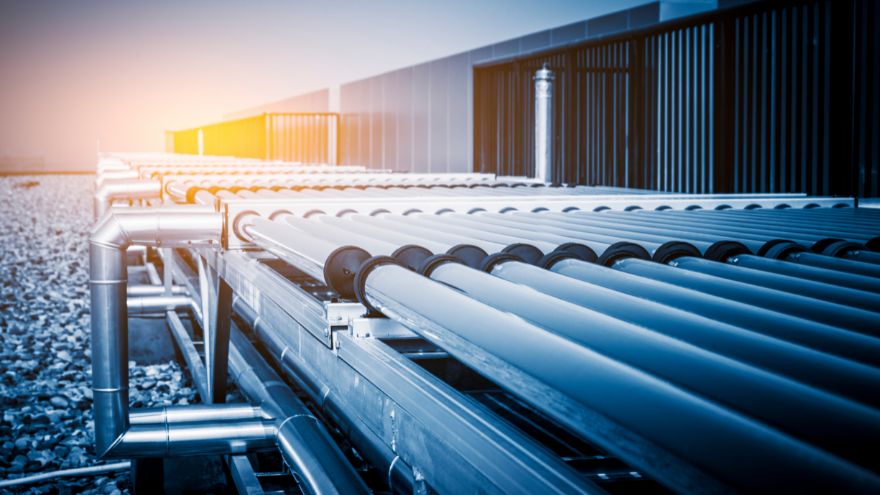
The sun is a widely available and, importantly in times of inflation, free source of energy. Technological progress allows the use of solar rays to convert them into electrical or thermal energy. For example, an increasingly popular solution in single-family homes and other buildings is a solar installation , which is both an ecological and economical way to heat water - it allows annual savings of up to 60 percent of the energy needed for this.
Check out the solar kits at the Onninen wholesaler
How does a solar installation work?
The simplest way to say it is that a solar installation is a system used to convert energy from solar radiation into thermal energy. With the help of a solar collector (solar), it collects solar rays, which are then used in the building's heating system, the configuration of which can be varied. In this way, hot utility water can be obtained. Solar installations can also be easily used to heat water in a swimming pool. It can also be used to support home heating, but this is a solution used a bit less often.
What does a solar installation consist of?
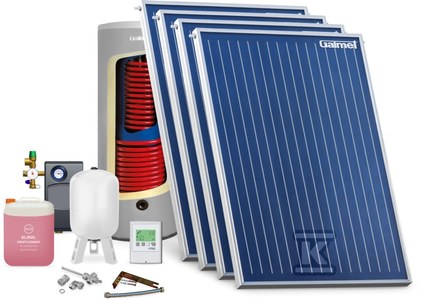 The main elements of a solar installation are solar collectors: flat and tube-vacuum. As mentioned above, they are the ones that convert solar radiation energy into heat, which is used to heat water for washing and bathing, i.e. domestic hot water. The collectors heat "glycol" - a solar fluid that transports heat through pipes.
A very important element of a solar installation is the air vent. It should be located at its highest point, i.e. on the roof by the collectors. Depending on the design, it can operate automatically or manually. It is used to remove air from the installation during filling and during use. Of course, after the air venting process is complete, the air vent must be closed.
A solar installation cannot do without piping, which can be made of steel or flexible stainless steel pipes. The pipes run from the collectors to the domestic hot water tank, and they should be insulated along their entire length to reduce heat loss. They must be resistant to high temperatures, reaching 150-170 degrees Celsius. They are most often made of rubber.
Another element of the solar installation is the pump group, also called a pump set or something else. These are factory-assembled elements of the installation equipment, located in a thermally insulated housing. Depending on the model, they may consist of different elements. The main ones include:
- solar pump - the most important, central device of the pump set;
- dial thermometers;
- safety fittings: safety valve and pressure gauge;
- expansion tank connection;
- filling valve;
- other elements depending on type and model.
 The solar installation is most often equipped with a bivalent domestic hot water tank. Two heat exchangers, or coils, are mounted to it. The main heat source, e.g. a gas, oil or solid fuel boiler, is connected to the one installed in the upper part of the tank, heating water in about half of the tank's capacity. In turn, the solar installation is connected to the lower coil - the collectors heat utility water in the entire volume of the tank.
In addition, there are additional fittings, i.e. valve systems, as well as other elements of the solar installation, depending on its model, type and type.
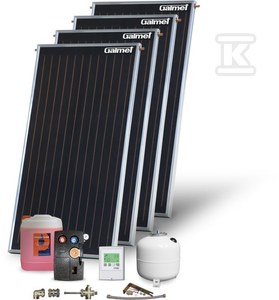
The solar installation can be assembled from individual parts or purchased ready-made. solar kits . A wide selection can be found in the plumbing wholesaler Onninen.pl.
Products for solar installations available at the Onninen wholesaler
A very large selection of accessories for solar installations - i.e. various elements necessary for the correct assembly and operation of the solar collector system - is offered by the Onninen.pl wholesaler. In its assortment you can find all the necessary products: "glycols", pipes, nuts, nipples, pipe holders, structures for mounting solar collectors, safety valves, connectors, rings for connection sets, seals and many others. Individual products are available at attractive prices.