The anchor is a very popular connecting element, allowing for a solid connection of construction fragments - incomparably more durable than those provided by expansion bolts. It prevents unwanted movements, such as shifts and rotations. The enormous strength of the anchor has ensured its versatile use in construction and renovation and finishing works. But what else can an anchor be useful for? You will learn from this article!
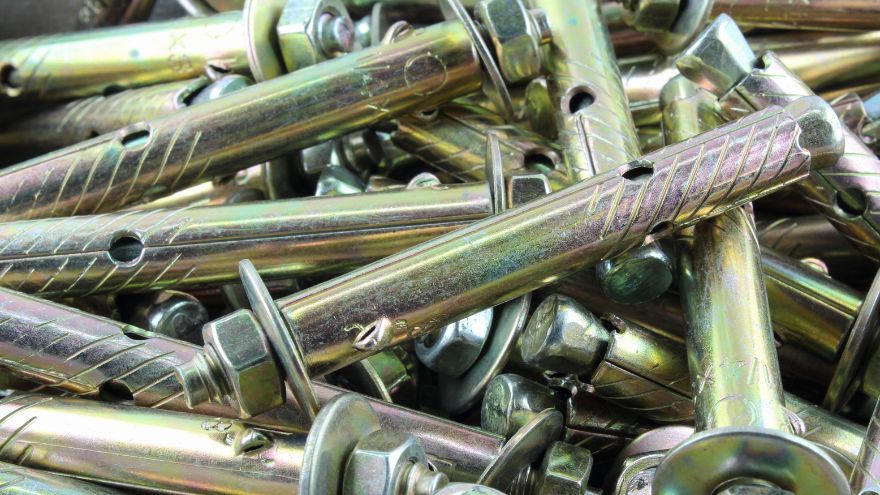
Check out concrete anchors at the Onninen wholesaler
How can a concrete anchor help?
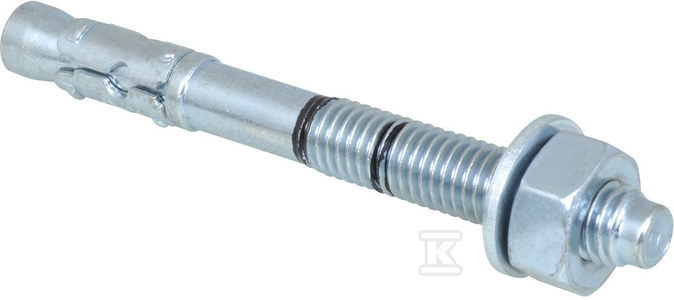 A concrete anchor is a fastener commonly used in construction and finishing projects. Anchoring with anchors most often involves working with concrete. A concrete anchor allows you to quickly obtain a solid, stable and durable attachment. Installing an anchor increases the strength and improves the load-bearing properties of the substrate. It strengthens and integrates the entire structure.
Using a concrete anchor, you can attach very heavy equipment to a concrete wall or even connect another structure to it without risking damage to the internal structure of the substrate. This is a solution often used when installing fences and gates. Anchors work on a similar principle to expansion bolts, but they are suitable for small and medium loads. Anchors provide much greater strength and durability of connections. They are designed for very heavy loads and installation in concrete substrates.
How long can a concrete anchor last?
The strength of a concrete anchor depends not only on the parameters of the fastener itself, but also on the strength parameters of the substrate. The concrete class is not indifferent to the anchor's load-bearing capacity. A distinction must be made between normal concrete with high compressive strength and lightweight concrete with lower strength. For this reason, the anchor's load-bearing capacity is usually given for concrete classes.
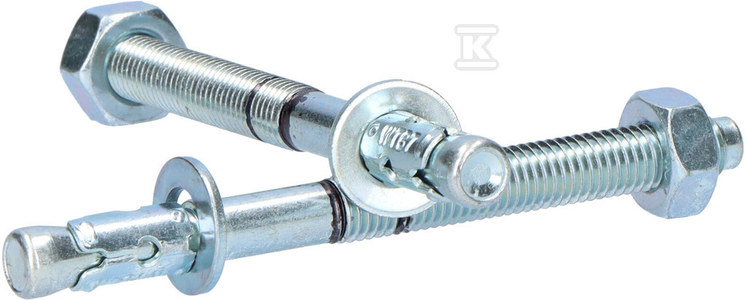 In the technical specifications of some concrete anchors, you can find specific information about the maximum load. The value for most products is several hundred kilograms. Both steel anchors and chemical anchors can withstand such a load. In the case of chemical anchors, the maximum load will depend on the quality of the anchor and the type of substrate - whether it is weak or coherent. With a looser structure with empty spaces, the strength will be about 200 kg.
However, the durable and resistant structure of the substrate, combined with a modern chemical mixture, is able to provide resistance to loads of around 800 kg. Specialized computer programs are used to precisely determine the load-bearing capacity of anchors. They are used primarily by professionals from the construction and geotechnical industries.
What to remember when installing an anchor to concrete?
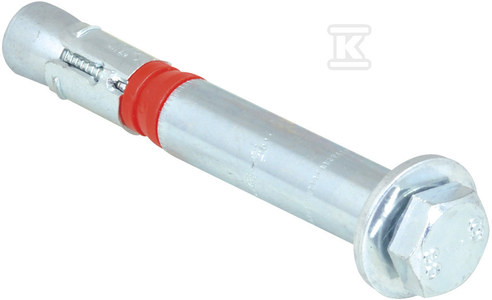
The installation of a concrete anchor should begin with selecting the right type. The most popular division is into mechanical anchors and chemical (glued) anchors. The category of mechanical anchors includes screw-in anchors and driven anchors. Subgroups include sleeve anchors, which have the form of a screw surrounded by an expansion sleeve , and band anchors, designed for through-hole installation, providing flexibility in the anchorage depth. There are also different types of chemical anchors. This segment includes, among others, polyester anchors and epoxy anchors. The latter are suitable for transferring the highest loads. The concrete anchor is selected according to the parameters of the connected elements. You will learn more about the materials from which concrete anchors are made in the next paragraph.
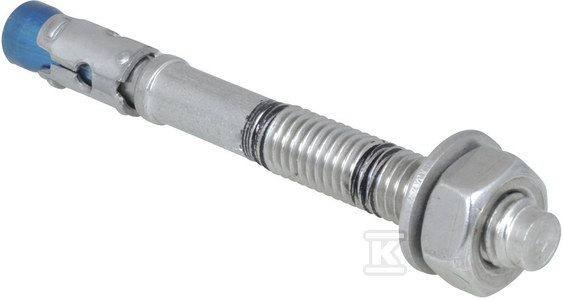 In terms of the assembly process, it is absolutely necessary to follow the anchor manufacturer's guidelines, and treat all generally available tips only as a guide. Screw-in and hammer-in anchors are installed on a similar principle to concrete expansion plugs. You place the anchor in pre-drilled holes (with a diameter the same as the anchor diameter), hammer it in and tighten it with an appropriate wrench. Anchors intended for concreting are installed in various ways. It is important to remember that concreted elements during pouring (inserted into the mix) require quick and precise leveling.
In the case of a chemical anchor, follow the instructions included with the purchased product. The holes must certainly be slightly larger than the diameters of the screws or rods and thoroughly cleaned. Leaving dirt reduces the effectiveness of fastening the elements. You squeeze the prepared mass into the hole using an applicator, then insert the screw or rod and after a specified time you can start assembling the necessary elements.
Check out concrete anchors at the Onninen wholesaler
What should a concrete anchor be made of?
Mechanical anchors, i.e. driven and screwed, should be made of stainless steel or galvanized steel. A steel mechanical anchor is commonly used in construction. It is resistant to moisture, so it works well in damp surfaces. It is used, for example, to attach fence posts or balustrades to a concrete surface. In extremely difficult conditions, especially in aggressive environments, anchors made of acid-resistant steel should be considered.
 On the other hand, a chemical anchor is a mass with resin and hardener. The resin mass is pressed into holes, and then the connectors in the form of screws, bolts or ribbed bars are embedded. Due to their composition, chemical epoxy anchors and polyester anchors are distinguished. Hybrid (mixed) anchors are also available. Their use allows for permanent fastening (gluing) of even very heavy elements.
To select an anchor of the right type and material, the following factors should be considered:
- environmental conditions,
- material and structure of the substrate,
- risk of damage to the substrate,
- anchor load capacity,
- type and direction of loads,
- anchoring guidelines.
Of course, there may be more of these factors depending on the characteristics of a specific project.
How does a chemical anchor work?
Chemical anchors operate on the principle of adhesion. The concrete substrate is connected, or rather glued, to the surface of the connector. The chemical anchor does not exert stress on the substrate - it does not use expansion forces. It can also be used in an old building with a worn or damaged substrate. The chemical anchor is purchased in a container. It is in the form of a resin mass, which is poured (injected) into a previously prepared hole, and then the selected connector is melted into the hole. After the resin hardens, a connection with excellent strength is created.
What can be fastened with a chemical anchor?
The maximum load capacity of the chemical anchor and the substrate material for which it is intended are specified by the manufacturer. The best connection will be obtained in the case of a strong substrate, e.g. aerated concrete or brick wall, but this is not a necessary requirement. The connector can be a screw, bolt or rod. Examples of applications of chemical anchors as a permanent form of fastening elements are:
-
 renovation of old buildings,
 - construction of new houses,
- repairing holes after removing mechanical anchors,
- various renovation and finishing works,
- securing objects in concrete and hollow bricks,
- installation of devices exposed to moisture and temperature changes,
- securing heavy objects around edges,
- ensuring absolute stability of the mounting, despite strong external loads.
Concrete anchors at the Onninen wholesaler
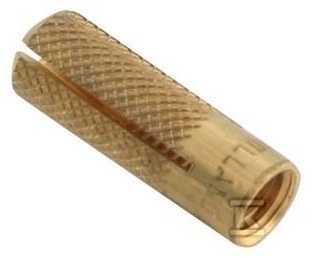
In the Onninen installation wholesaler you will find a wide range of concrete anchors. Regardless of whether you need a brass expansion anchor , a steel expansion sleeve, a special pin anchor for heavy loads or an easy-to-use glued anchor, you will find it on Onninen.pl. All products meet the highest quality and safety standards. Properly selected and implemented, they will become the basis for solid structures.