The selection of heat pumps starts with determining the building's demand for heating power. This stage allows for the selection of a device tailored to the actual needs of users. It is also important to analyze the annual heat losses of the building. The better the insulation, the lower the energy demand, and consequently - lower bills. We also take into account the usable area that we want to heat. A larger house requires a more efficient heat source. Finally, we check the type of heating installation. Underfloor heating works extremely efficiently with heat pumps, while for radiators, we select models adapted to higher operating temperatures.
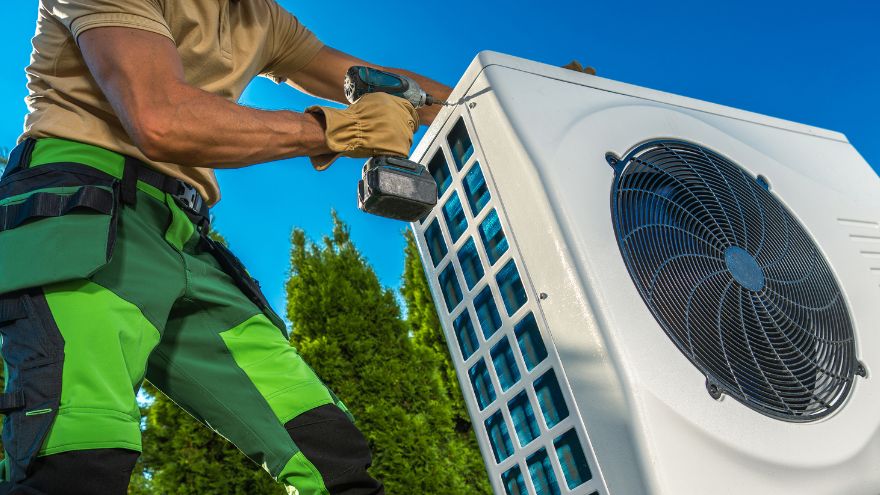
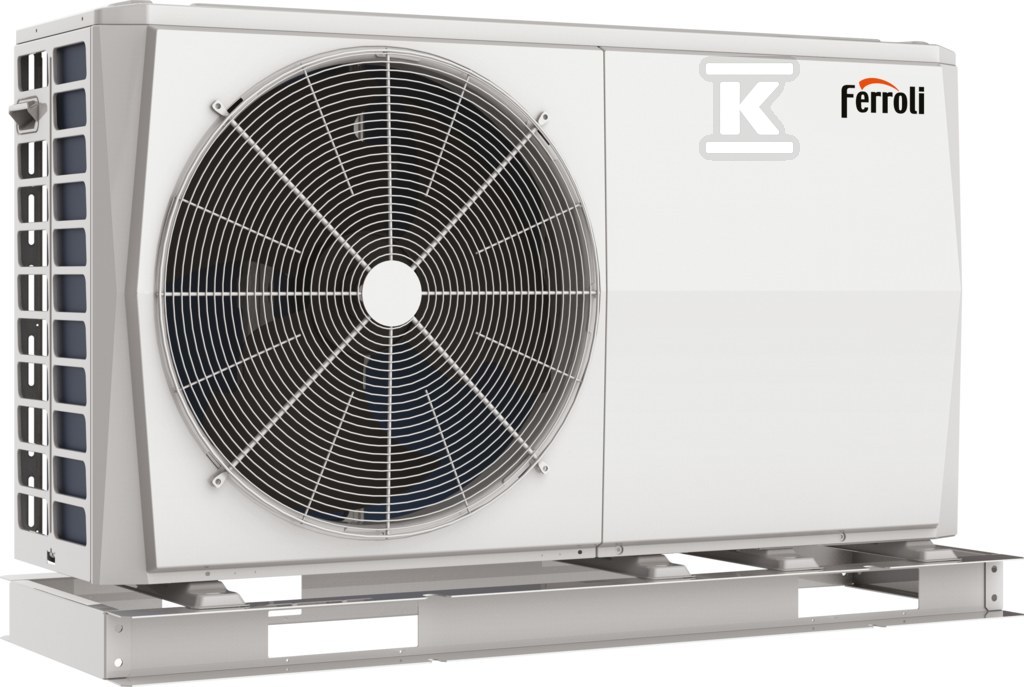
Check Ferroli heat pumps from Onninen wholesaler
Below we present a method for calculating the approximate power of the heat pump that will suit our needs.
Annual heat loss of the building (from the energy audit): e.g. 60 kWh/m²/year,
Heated area: e.g. 150 m²,
Type of heating installation: underfloor heating, radiators (parameters: 35 °C or 55 °C)
Calculation example:
Demand = 60 kWh/m² × 150 m² = 9,000 kWh annually
Approximate power of the pump = 9,000 kWh ÷ 1600h ≈ 5.6 kW
(1600 h is the average annual operating time of the pump at heating demand)
Selection of the pump depending on demand
| Demand (kW) | Model OMNIA M | Model OMNIA SW-T |
|---|---|---|
| 4.0 - 5.0 | OMNIA M 4 | OMNIA SW-T 4 |
| 5.1 - 6.5 | OMNIA M 6 | OMNIA SW-T 6 |
| 6.6 - 8.0 | OMNIA M 8 | OMNIA SW-T 8 |
| 8.1 - 10.0 | OMNIA M 10 | OMNIA SW-T 10 |
| 10.1 - 12.0 | OMNIA M 12 | |
| 12.1 - 14.0 | OMNIA M 14 | |
| >14.1 | OMNIA M 16 or cascade |
When choosing a pump, consider the operating conditions
1. Climate zone
- There are 5 climate zones, Poland has been divided into areas with similar constant maximum design temperatures. In the summer, there are two zones - I (coastal area) with a design temperature of 28 degrees Celsius and humidity at 52%. The rest of the country constitutes zone II, where the air temperature is 30 degrees and humidity is 45%. In winter, Poland has been divided into 5 zones with external air temperatures ranging from -16 degrees (coastal areas) to -24 (mountain areas, Suwałki region). Humidity is equal to 100%.
2. Type of installation
- Underfloor heating installations (so-called "Underfloor heating") (35 °C): higher efficiency, SCOP (what SCOP is, read below) up to 5.2
- Radiators (55 °C): lower SCOP, buffer needed (for OMNIA M), oversized radiators
3. DHW – domestic hot water
- SW-T 100 l is sufficient for 2–4 people
- For a larger family / two bathrooms → OMNIA ST 190/240 l
ADDITIONAL SETTINGS FOR OPTIMIZATION
- Set the G12W/G13 tariff for cheaper electricity
- Enable fast DHW mode (for SW-T models)
- Program the settings for the electric heater to turn on
- Select the appropriate heat buffer (for OMNIA M – e.g. 40–200 l)
- In radiator installations – flushing the installation or installing magnetic filters and a mandatory mesh filter
The table below will help you select the type of pump according to the operating parameters
| Parameter | OMNIA M (Monoblock) | OMNIA SW-T (Split with DHW tank) |
|---|---|---|
| Installation | New or modernized with a buffer | New or modernized |
| Heating type | Underfloor heating, radiators (with buffer) | Underfloor heating, radiators (built-in buffer dedicated to defrost protection) |
| DHW | Requires a separate DHW tank | Built-in 100 l tank + heater |
| Installation location | Outside, one unit | Outdoor unit + indoor unit (split) |
| Higher DHW needs | Possibility to install a larger tank | Possibility to switch to OMNIA ST model (190/240 l) |
SCOP is the average value of COP (coefficient of performance) for the entire heating season, calculated by assuming certain assumptions about how the external temperature will change (the climate zones mentioned earlier). It is assumed how many hours during a typical heating season the temperature is -5°C, how many 0°C, etc. At the same time, the temperature on the upper source side is determined, i.e., the temperature of the water in the central heating. Therefore, we provide SCOP separately for the supply temperature of 35°C, which is a typical value for underfloor heating, and 55°C, the temperature adopted for installations with heat pumps for supplying radiators. These are not small differences, as the same pump can achieve SCOP:
- 3.5 – supplying radiators (water 55°C),
- 5.2 – supplying underfloor heating (water 35°C).
With the electricity price of about 0.76 PLN/kWh in the G12W tariff, in the first case, we will pay 0.21 PLN for 1 kWh of heat, and in the second only 14 groszy! This is a price that is hard to beat using fossil fuels, so a good heat pump will be unbeatable in terms of heating costs. However, we warn that the SCOP coefficient is also not a perfect indicator of the pump's efficiency. Calculating it requires assuming certain temperatures and the time of their occurrence in the heating season. Therefore, to correctly determine SCOP, we assume that in our country there are 5 climate zones for which this parameter may vary slightly.
The installer calculates the efficiency of the system with the heat pump for a specific location by determining the coefficient ηs. This is the designation of seasonal energy efficiency. This coefficient takes into account the demand for electricity, losses in standby modes, the operating time of the device counted in hours, and losses of electrical energy in the installation from the energy source to the device.