Pliers, also known as pincers or nippers, are a hand tool used primarily for gripping, holding, bending, twisting, and trimming various materials. They are commonly used in fields such as mechanical work, electronics, plumbing, carpentry, and many others. What other pliers are worth having in your toolbox, what are the different types of these tools used for, and how to choose the best model for your workshop? We answer these questions in the following article.
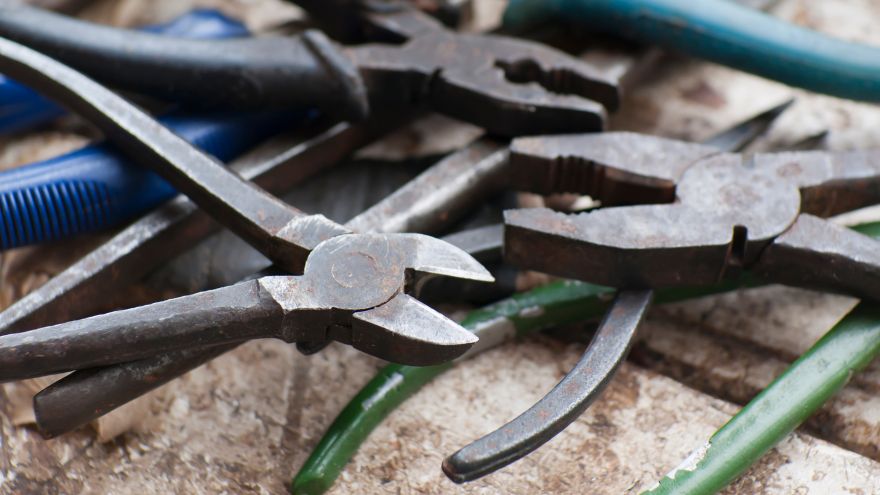
Check out the work pliers at the Onninen wholesaler
What should you consider when choosing pliers?
Universal pliers, commonly called combination pliers , are primarily used to hold various objects, wires and small elements. For this purpose, they have straight and wide jaws, covered with transverse grooves, providing a stronger grip.
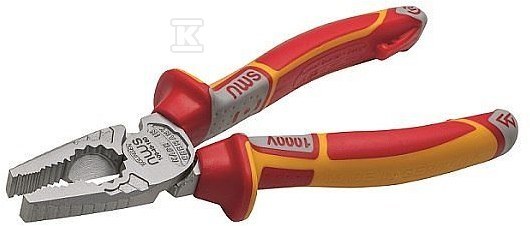 Another characteristic feature is the round hole in the upper part of the pliers, designed for better gripping of rounded objects (rods, tubes, round cables). There is also a sharpened fragment at the hinge itself, allowing for cutting objects. This design ensures high functionality of the pliers, without affecting their strength and durability. This is why this type of pliers is so popular.
What types of pliers are there?
Although pliers are the most popular type of pliers and it is not the only model. Other frequently encountered tools from this group are pincers, also called cutters. They are distinguished by sharp jaw edges and are used primarily for cutting other materials. In this case, we can distinguish front pliers or side cutters. We can also distinguish elongated pliers, with a long jaw surface, or slightly bent pliers, allowing access to the most difficult to reach places (inside the housing of devices). Specialist pliers constitute an almost separate group, such as:
- Pipe pliers with rounded jaws, suitable for gripping pipes of slightly larger diameter.
-
 Crimping pliers for terminals. They have appropriately shaped holes. After preparing the wire and putting the appropriate adapter on it, it is inserted into such pliers and then crimped. In this way, the metal part of the terminal is deformed and permanently blocked on the wire.
 - Seeger pliers are used to remove Seeger rings, securing mechanical elements against slipping, e.g. from shafts or holes.
- Wire strippers have sharp holes the size of standard electrical wires. When you insert one into the pliers and squeeze them, the insulation is broken and can be easily pulled off the wire core.
As you can see from the examples provided, pliers are a very broad category of tools that includes not only commonly used models, but also many specialized solutions.
Overview of combination pliers and tongs in the Onninen offer
The Onninen electrical and plumbing wholesaler has both universal and specialist models of pliers for professionals. We work with well-known companies, famous for their high quality and selection of the best steels. Thanks to this, these tools are durable and can serve for many years without signs of wear.
Combination pliers NWS 180 VDE
 A popular solution is the NWS 180 VDE universal pliers with a typical design that allows for many tasks: holding, cutting, squeezing, etc. Such pliers are suitable for basic repairs and installation work.
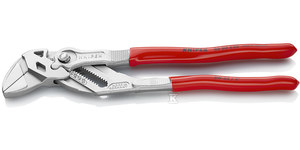
Knipex CYL007 Pipe Pliers
The Knipex adjustable pliers provide a secure grip on both small and large pipe diameters. They also work well on other rounded surfaces. No plumber can do without the Knipex CYL007 pliers in their toolbox. This model has been specially designed with specialists in mind.
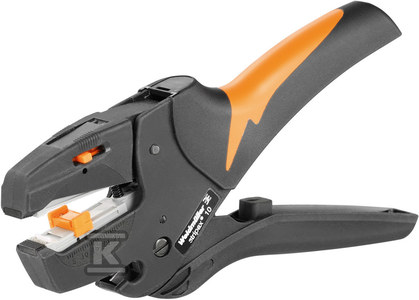
Weidmuller Stripax wire stripping pliers
The processing of wire ends can be not only time-consuming, but also very difficult. But you can make such work much easier by using the Stripax pliers from Weidmuller . The durable design, excellent performance and the ability to process wires with diameters from 0.32 mm to even 3.5 mm are the basic advantages of this tool. In addition, the stripping pliers also have the ability to cut wires, so you do not have to reach for the additional pliers.
Ironside Data Cable Stripper
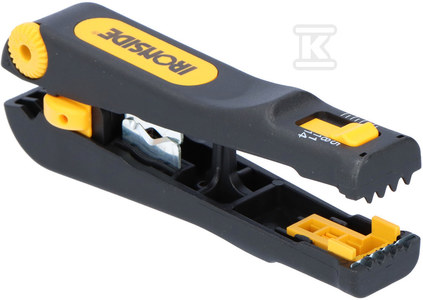 The construction of the insulation stripper slightly distinguishes this device from other pliers (it resembles a stapler more), but the principle of operation is the same as the devices above. The specialized construction of the blades allows for the production of the ends of data transmission cables, most often used in IT. The Ironside transmission cable stripper is characterized by a strong construction and reliability. It is intended mainly for specialists, although it will also work well in the home workshop of electronics and computer specialists.