Today, probably no one can imagine life without electricity at home. It is a huge convenience and a civilizational invention, but an improperly made installation also poses a real threat. What are surges and what threat do they pose? What is the difference between t1 and t2 surge arresters and how to choose the right variant?
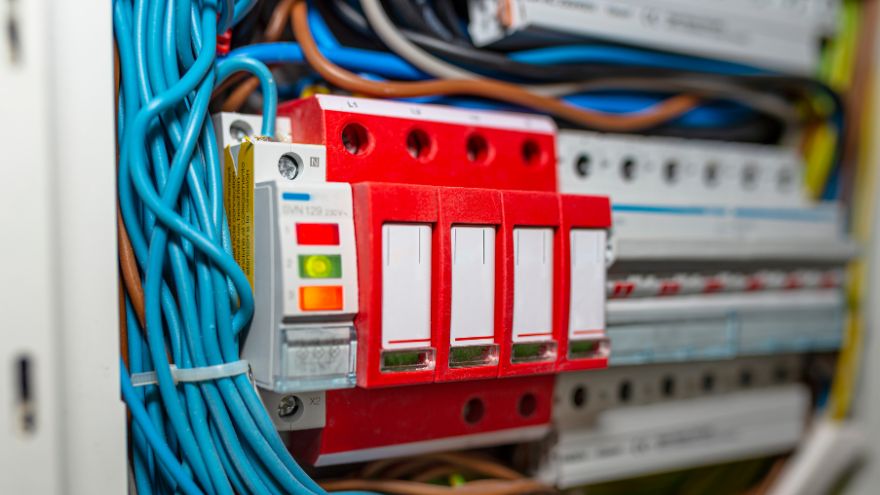
Check surge arresters at the Onninen electrical wholesaler
What effects can a surge cause?
 Not everyone knows that an electrical surge is a phenomenon that can occur quite often. As a standard, the voltage in the electrical network in every home or apartment should be 230 V. However, it sometimes happens that it can be much higher. A characteristic feature of an surge is that the voltage increase is significant and short-lived. Most often, this condition is caused by a failure, ground fault, circuit switching or other factors. In such situations, it is said that internal surges have occurred, and so-called external surges of electrical equipment also occur, which are, for example, a consequence of atmospheric discharges.
Regardless of the source of the surge, it always poses a real threat to devices connected to the network. Although they have insulation protection, the surge can still be devastating to the devices. It is therefore necessary to implement appropriate protection on the home installation side. Power surges are most dangerous to home equipment, which can be destroyed.
What is the difference between t1 and t2 surge arresters?
In order to protect electrical equipment and installations from overvoltages, appropriate protections should be used - surge arresters . In practice, two types of arresters are used. The first ones - spark gap ones - are designed to cut off the voltage. The mechanism of action allows for the discharge of excessively high voltage to the ground. The second type are varistor arresters, the task of which is to limit the voltage level. These devices are characterized by a lower ability to discharge electric charge.
Depending on the location of the surge arresters, there are up to three levels of surge protection. The basic protection is provided by type 1 surge arresters . They are located directly at the entrance of the electrical installation to the building. The mechanism of action consists in cutting off the surge impulse and conducting it to the ground. The second protection is type 2 surge arresters , whose task is to protect devices and equipment located inside the building.
How to select the appropriate t1 + t2 surge arrester?
 Surge arresters t1+t2 provide basic protection, but for it to be effective, individual devices must be properly matched. Before purchasing a device, first of all, consider the threats. The basic selection criterion is the type of network, e.g. TN-S, TNC, and always take into account the appropriate configurations, number and parameters of modules.
Type 1 and type 2 arresters are a solution dedicated to protection against partial lightning currents and induced overvoltages. This device installed in the main switchboard allows to protect objects equipped with LPS classes IV and III and powered from overhead lines.
In type 2 arresters, devices are protected only against induced voltage. Unlike the t1+t2 solution, type 2 arresters themselves are mounted in local switchboards. They can be installed in any facilities, as a second level of protection.
Surge arresters t1 + t2 in the Onninen wholesaler
The Onninen electrical wholesaler offers a wide range of security products, as well as specialist modular equipment and electrical equipment. Thanks to the wide range, you can find everything you need in one place.
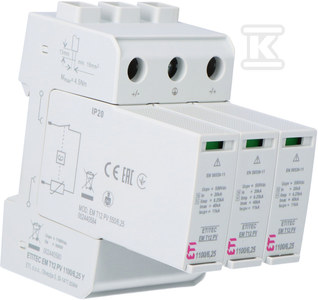
Devices such as the t1 and t2 surge arrester ETI PV ETITEC EM T12 PV 1100/6,25Y are a modular solution characterized by excellent quality and durability. It allows for real protection against surges. It is mounted on a DIN TH-35 mounting rail, has the appropriate certificates and approvals.
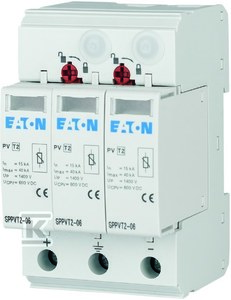
Another noteworthy variant is the EATON 600 VDC SPPVT12-06-2+PE surge arrester type 1+2 , which is characterized by an exceptionally high level of protection. Thanks to this, it will be perfect for protecting photovoltaic installations, as well as all systems that are powered by direct current.