The lack of tightness of pipe connections always poses a risk of failure, whether during assembly or in later use. The procedure of preparing the surfaces to be joined is relatively simple, and yet extremely important. By using the right pipe stripper, the work is carried out efficiently and effectively. What is a pipe stripper? Check what to look for when buying a pipe stripper?
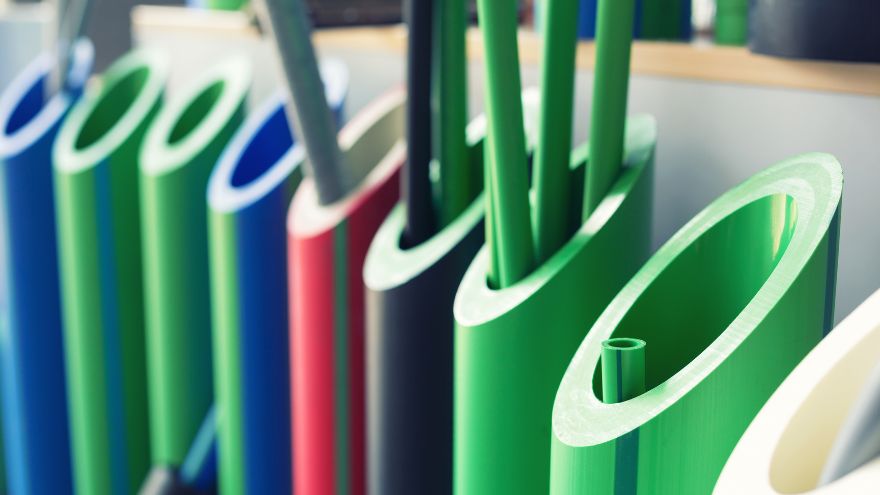
Check out the pipe strippers at the Onninen wholesaler
What is a pipe stripper useful for?
To explain this, we must first focus on the internal structure of the pipes, regardless of the technology used in the production process. The pipes are equipped with aluminum inserts or a middle layer of glass fiber (in the case of PP and PP-R pipes), which are intended, among other things, to maintain operating parameters that do not change with respect to the temperature of the liquid inside the pipe and the temperature prevailing outside.
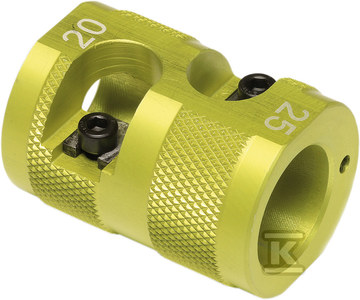 While the above solutions fulfill their functions, improving the functionality of the installation, they are also a certain inconvenience when it is necessary to make new connections between pipes, fittings, connectors, etc. In order to obtain the appropriate tightness before welding, it is absolutely necessary to remove the old insulating layer, which is where a pipe stripper comes in handy.
How to properly connect PP pipes using a pipe stripper?
Pipe connections by their very nature require material preparation to achieve the highest durability and tightness. This means that the working surface must be suitably smooth and clean. With a properly selected tool, you can start work by setting the cutting depth. This depends on the thickness of the insulation that you want to remove.
It is important to maintain even pressure on the tool to avoid damaging the work surface. Remaining pieces of insulation or irregularities are removed with a plastic knife or fine-grained sandpaper.
How long should PP pipes be heated?
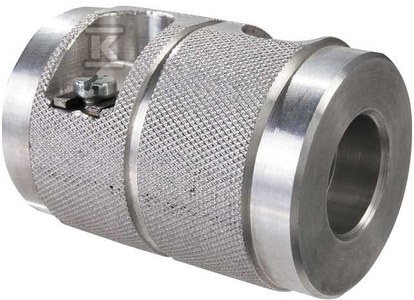 The required welding temperature when connecting PP pipes is 260°C, while the heating time of PP (polypropylene) pipes depends on the pipe diameter, wall thickness, type of heater and even the ambient temperature.
The main factors that determine the correctness of the connection are the pipe diameter and the welding depth. For example, in the case of a 20 mm diameter pipe, the welding depth should be 14 mm, and the welding time 5 seconds. For comparison, a 110 mm pipe requires a welding depth of 32.5 mm, while the welding time is 90 seconds.
Pipe strippers at the Onninen wholesaler
The scrapers available for sale differ in size, application and purpose. The wide range presented in one place is intended to enable the selection of equipment to the preferences and needs of customers.
Wavin Stabi 110 EK pipe stripper
The Wavin Stabi 110 EK pipe stripper uses a single cutting head, which reduces the risk of damaging the working surface while ensuring precise insulation removal.
63 Wavin Bor Plus Scraper
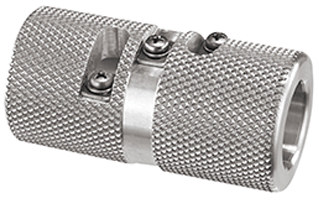 The Wavin 63 Bor Plus pipe stripper for pipes with an aluminum insulating layer. Its design allows for the handling of the outer coating of the material along the entire depth of the weld. The stripper has one shaving head and the possibility of adjustment. Dry shaving is available.
KAN-therm 110 pipe stripper
This stripper is designed for cutting and removing insulation from pipes with a diameter of 110 mm. The tool is adapted to pipes made of various materials, which makes it more versatile and functional in professional and amateur applications. The KAN-therm 110 PP pipe stripper is 80 mm long and its supported diameter is 110 mm.