A conduit is a plastic, corrugated electrical pipe that is an invaluable element for the proper routing of cables and installation wires. Let's find out which conduit to choose for the wire?
 What is a protective pipe?
Conduits may look inconspicuous, but they are of great importance in the case of various types of installations - electrical, telephone, water, sewage, fiber optic, etc. They are simply plastic tubes, the main task of which is to protect cables and wires from external factors, mechanical damage or fires. In order for the conduit to actually provide 100% protection, it should be made of the highest quality materials, characterized by exceptional strength, long life and durability.
Their corrugated surface is striking, thanks to which they can take on various shapes. This allows them to be adapted to many different applications, so that they protect cables in the same effective way. Conduits have very universal applications. They can be easily laid in wall grooves before plastering or in the floor before screeds. There are also no contraindications to using them to create a physical division (e.g. cables in telecommunications shafts).
What conduit to use for a 3x2.5 cable?
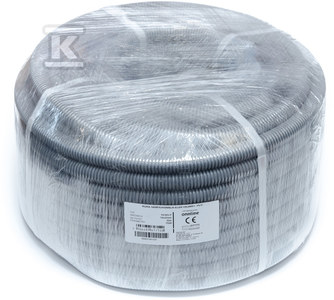 High-density polyethylene (HDPE) is most often used for the production of protective pipes, because it is characterized by exceptional parameters - impressive durability and a wide temperature range. However, it is equally important to skillfully match the conduit to the cable, selecting its diameter to the number of cables in the pipes. In general, it must be remembered that the internal diameter of the protective pipe should be 1.5 times larger than the external diameter of the power cable and 2 times larger than the external diameter of the fiber optic cable. How does this relate to cables of size 3x2.5? The first number "3" is the number of cables, "2.5" is the cross-section of the cable cores in mm2. This gives us the result (minimum pipe diameter in mm) - 13.5 mm. And such a conduit should also be selected for the cable - you will find ithere .
Check out the conduits at the Onninen wholesaler
What conduit to use for a 3x1.5 cable?
When looking for a conduit for a different wire size, we should use the same calculation method. As before, we have the number of wires equal to "3", but their cross-section is smaller, because "1.5". This means that a smaller diameter of the conduit is needed - 11 mm. This is the smallest value for this type of cover. The largest is as much as 48 mm (5x70). Regardless of what conduit we need, we can be sure that we will find it in the Onninen electrical wholesaler.
Ground conduit - which one to choose?
But it's not just the size that counts, because it's equally important to match the cover to the conditions in which it will be used, for example in the ground. It's for this very purpose that conduits are very often used. Before we buy the right product, we should pay attention to a few important factors. First of all, the material is extremely important - it must of course be as durable as possible, protect against moisture and the effects of low temperatures (down to -40 degrees Celsius). As mentioned earlier, polyethylene, which is most often used to produce conduits, works perfectly here. The thickness is of great importance - it should not be less than 2-3 mm. Let's also pay attention to the compression resistance class (it should be from 450 to 750 N).
Photovoltaic conduit - what should it be like?
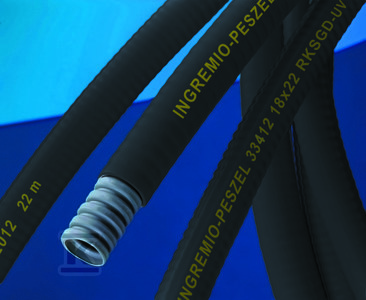 Photovoltaic installations are becoming increasingly popular, which has its justification - lower electricity bills and independence from variable energy prices. So there is no coincidence that so many people decide to invest in this solution. Although the initial costs are quite high, they pay off quickly! It is very important to choose the right conduits for this installation , which are largely responsible for its durability, efficiency, but also safety of use. Without a doubt, the conduit for photovoltaics is just as important as other elements of the system, such as the inverter or the type of connectors used. It must therefore be very resistant to various factors, maximally durable, fully protected against mechanical damage and flames.
Check out the photovoltaic conduits at the Onninen wholesaler
As you can see, the selection of conduits should be preceded by a thorough analysis of the most important parameters. Taking the above factors into account, we will certainly match the right product to our needs.