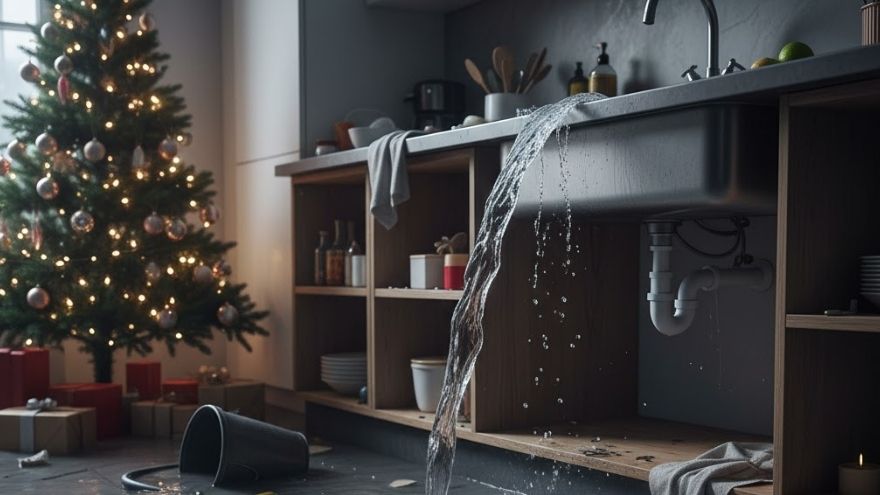
Water and sewage system failures do not choose a convenient time for us. They can happen on a holiday, weekend, or late at night when few plumbing companies are available. In such moments, it is crucial to know what to do to minimize the damage and where to seek help to quickly resolve the problem.
Check hand tools at Onninen warehouse
Most common plumbing failures
1. Clogged drain – when store-bought drain cleaners or manual plunging do not work, it is best to call for professional help.
2. Leaky faucet – the cause usually lies in worn-out seals or a clogged aerator.
3. Sudden drop in water pressure – when a weak stream comes from the faucet or showerhead, it likely indicates too low pressure. If clearing the pipes and cleaning the components does not help or the problem affects multiple faucets in the house, it is worth reporting it.
4. Damaged appliances or pipes - a broken washing machine or dishwasher or a burst pipe can quickly lead to flooding a room.
5. Water supply connection failure – water leaks outside the building or near the water meter may indicate a connection failure. The damage can be significant, so it is advisable to report the problem as soon as possible.
6. Malfunctioning main water meter – this device is responsible for monitoring water consumption. If anything concerns you about its operation, react. Note! A constantly spinning meter, despite not using water at that moment, may not indicate a water meter failure but an invisible leak, e.g., located under the floor.
7. Pump failure in the sewage pumping station – if you have a home pumping station and notice sewage backing up, it likely indicates a pump failure, which requires immediate intervention.
How to quickly cut off the water?
If a system failure and leak occur, the first and most important step is to cut off the water supply – before your apartment and the one below gets flooded. Every household member should know the location of the main valve and the shut-off valves for specific appliances, e.g., toilet, sink faucet, washing machine, dishwasher, etc.
- The main valve is usually located near the main water supply pipe, in the basement, near the meter, in a technical cabinet, in the hallway, or near utility meters. It is used to cut off water to the entire apartment or house. If tools are needed to close the valve, hand tools should be readily available to avoid wasting time searching in case of an emergency.
- Separate, smaller installation valves that cut off the water supply to individual appliances are usually found under or behind them, e.g., under the sink or behind the toilet.
What can you do yourself?
Stay calm, it’s just a failure. Before you call the water and sewage emergency service or a plumber, try to manage the situation yourself. You can:
- cut off the water supply using the main valve or local valves;
- secure the area of the failure by spreading towels or plastic sheeting or placing buckets to prevent further damage;
- remove standing water using a mop, wet vacuum, or special pump;
- try to fix minor issues, such as a clogged drain, limescale buildup on a faucet, or a leaking faucet.
When to call a plumber?
Call a plumber when:
- the water keeps flowing,
- you notice a burst pipe,
- there is a visible leak behind the wall,
- sewage is backing up,
- you have no water in the kitchen or bathroom,
- you cannot unclog the drain,
- the water has a suspicious smell or color.
Call the water and sewage emergency service (24-hour, free emergency number 994) if the failure concerns the municipal network: there is no water in the taps, pressure suddenly dropped, water is pooling on the street, sewage is backing up, etc. The caller does not incur costs for intervention in the case of infrastructure failures 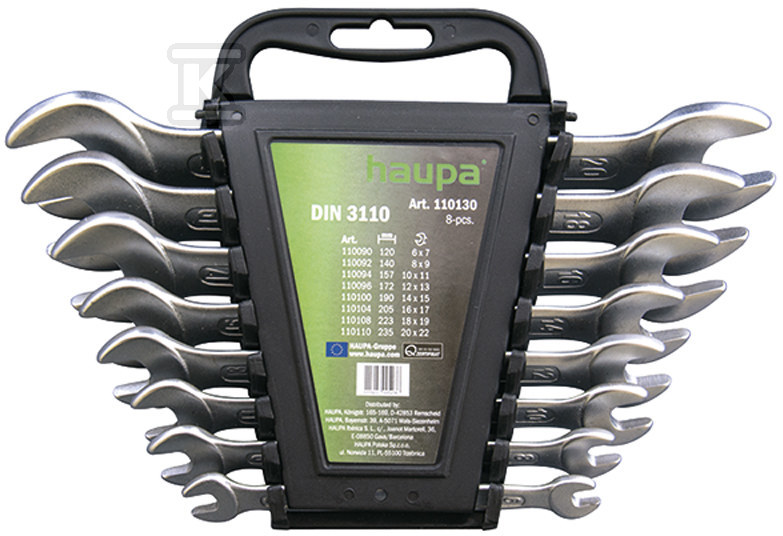 in the city.
It is worth insuring your apartment against the effects of plumbing failures. You will receive assistance in emergencies, both for serious failures and minor issues, such as a leaking faucet.
How to minimize damage after flooding?
Act immediately. The sooner you cut off the supply and remove standing water, the lower the risk of serious and irreversible damage. Disconnect electrical appliances in flooded areas. Water and electricity are a dangerous combination. Move furniture and personal items to dry rooms and dry them according to the manufacturers' recommendations. Document the damage from the moment you notice the failure. Take photos or videos. These materials will help you in claiming damages, e.g., from the insurer. Before laying new plaster or panels, ensure that the moisture has been completely removed.
What should you have on hand at home?
Every amateur plumber should have on hand:
- plastic buckets, plastic sheeting, and towels,
- thicker gloves and rubber boots,
- wrenches and pliers,
- a flashlight,
- the phone number of a reliable plumbing company (operating 24/7),
- the emergency number for your insurer (if you have a policy).
FAQ
1. What to do if a pipe bursts during the holidays?
Shut off the main water valve, secure the area to prevent further flooding, and call a plumber.
2. How to temporarily stop a leak?
Until a permanent solution is implemented, for smaller leaks, you can use a pipe clamp, repair tape, a piece of rubber, or silicone.
3. Will a plumber come at night or on a holiday?
Yes. However, you should look for a company that provides 24-hour services. In larger cities, many services operate during holidays and weekends.
4. How much does emergency plumbing cost at night and on holidays?
An emergency plumber visit at night costs on average 150–350 PLN. On holidays, there is usually an additional charge of several dozen to several hundred PLN.
5. Is it worth insuring your apartment against flooding?
Definitely. Flooding is one of the most commonly reported damages to insurers, and removing its effects costs on average 8-15 thousand PLN.