Although the terms „coupling” and „connector” are sometimes used interchangeably, they do not necessarily refer to the same equipment components. It is therefore worth knowing the differences between these terms and understanding what they specifically mean.
The source of misunderstandings on this topic is primarily the fact that a coupling is a type of connector. In both hydraulic installations and as an element of electrical equipment or telecommunications, it serves the same purpose as other connectors – it allows for the connection of pipes and wires. However, we refer to not only couplings as connectors but also elements with greater functionality. In this new guide, we explain the characteristics of couplings and connectors, the role they play in various installations, and how to choose the right coupling for the type of wire or pipe.
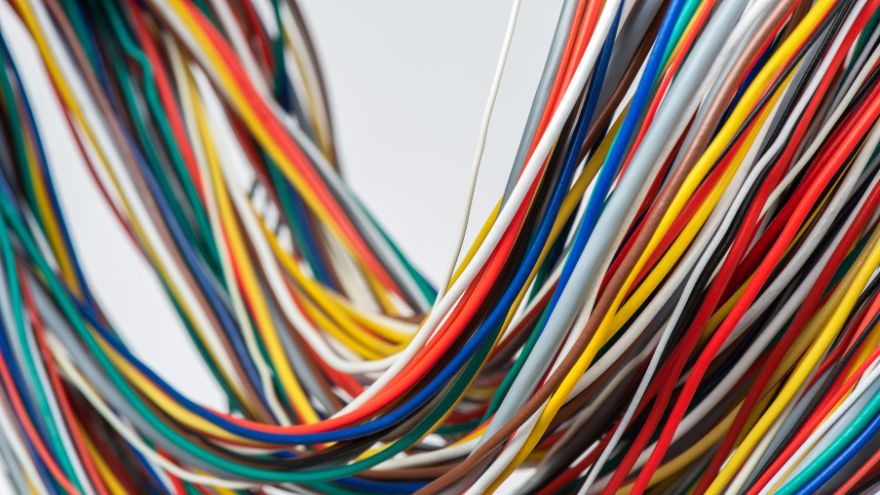
Check cable equipment at Onninen warehouse
What is the difference between a coupling and a connector? Basic definitions
A coupling is a specific type of straight connector used to connect two pipes or wires in a straight line. A connector, on the other hand, is a broader term that encompasses various types of connectors – including elbows or tees. In hydraulic installations, a coupling is a sleeve or cylinder for simply connecting pipes of the same diameter. It usually has a thread but can also be mounted by welding or crimping. In cable installations, it provides a connection for cables and takes the form of a protective housing for the joint.
Applications of couplings in electrical and hydraulic installations
In hydraulic installations, couplings allow for the connection of two sections of pipes or the inclusion of a fitting element – e.g., a valve, filter, or pump. They come in many variants – from simple through couplings to models with threads or fittings. However, they should always ensure the tightness of the connection and maintain the appropriate pressure in the installation.
Currently, the most commonly found couplings in water installations are made of PP plastic. They are distinguished by their resistance to high and low temperatures, high pressure, and corrosion. They are installed using welding techniques, achieving a homogeneous, durable connection. They can have the same diameter on both sides (through couplings) or allow for the connection of pipes of different diameters (reducing couplings).
Threaded couplings are mainly used in hydraulic power and industrial transmission installations. They are made of metal – steel, brass, or stainless steel – and equipped with internal threads, allowing for the connection of pipes or hoses with external threads.
Cable couplings allow for a durable and tight connection of two or more sections of cable terminated with 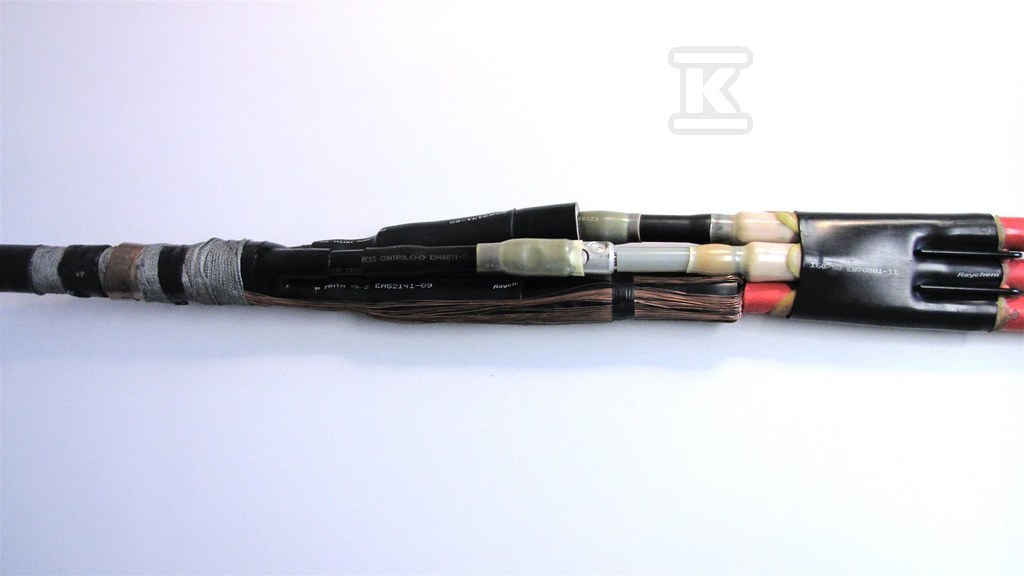 cable lugs. Their task is to connect cables of different cross-sections and insulation types and to protect connections from moisture, dust, and mechanical damage. They are used in energy, industry, and telecommunications. Their use is particularly recommended where connections are exposed to moisture, UV radiation, or aggressive substances. Some models can also be used underwater.
On the market, you will find various types of couplings, each tailored to the specifics of different installations and environmental conditions. In terms of construction, the following types are distinguished:
- through couplings: used to connect cables of the same type and identical cross-sections;
- transition couplings: used to connect cables with different insulations or cross-sections;
- branch couplings: allow for branching of the cable network.
Cable couplings also differ based on the insulation used:
- heat-shrinkable couplings;
- resin couplings: filled with polyurethane or epoxy resin, creating a hard, moisture-resistant, and chemically resistant insulation. Used in external, underground, and underwater installations;
- gel couplings: contain silicone gel that serves as insulation and sealing. Their advantage is the ability to disassemble the connection, making them an ideal solution for temporary or service installations.
How to choose the right coupling for the type of wire or pipe?
The selection of a hydraulic coupling is very important. An inappropriate coupling, in extreme cases, can prevent the connection from being made. Even if the element is successfully installed, the connection may not withstand pressure or temperature and may also corrode. To avoid this, when choosing a coupling, attention should be paid to the following factors:
- diameter and material;
- operating pressure and temperature;
- type of thread or method of connection;
- recommended working environment.
The selection of a cable coupling should be based on an analysis of the technical parameters of the installation and its working conditions. The most important criteria are:
- rated voltage (couplings are divided into those for low, high, and medium voltage);
- type of cable (construction and material of the conductor and insulation).
- purpose (e.g., fiber optic coupling, electrical, etc.);
- cross-section of the conductor and number of conductors;
- recommended environmental conditions (resistance to moisture, UV radiation, and chemical factors).
Couplings are an important element of hydraulic and electrical installations. Thanks to them, it is possible to create durable, tight, and safe connections of pipes and wires. Knowledge of how to choose the right coupling will allow you to create an installation that will operate smoothly for many years.
IN SHORT:
What are couplings?
Couplings are elements of installation equipment used to connect two pipes or wires in a straight line.
How do couplings differ from connectors?
A coupling is one type of connector – a simple connector used to connect two elements of the same diameter. Connectors, however, are a broader category that also includes elbows or tees.
What applications do couplings have?
Couplings are used in hydraulic installations to connect pipes and fitting elements, and in cable installations – for durable and tight connections of cables.