In the age of increasing popularity of LED bulbs, the question often arises of how to convert the power of such light sources into traditional watts used for incandescent or halogen bulbs. Many people check this way to ensure that the room will be effectively illuminated. To make it easier for professionals and home users, we have prepared a short guide in which we describe how to easily convert the power of an LED bulb into watts (W). We also explain why LED bulbs have fewer watts than traditional models.
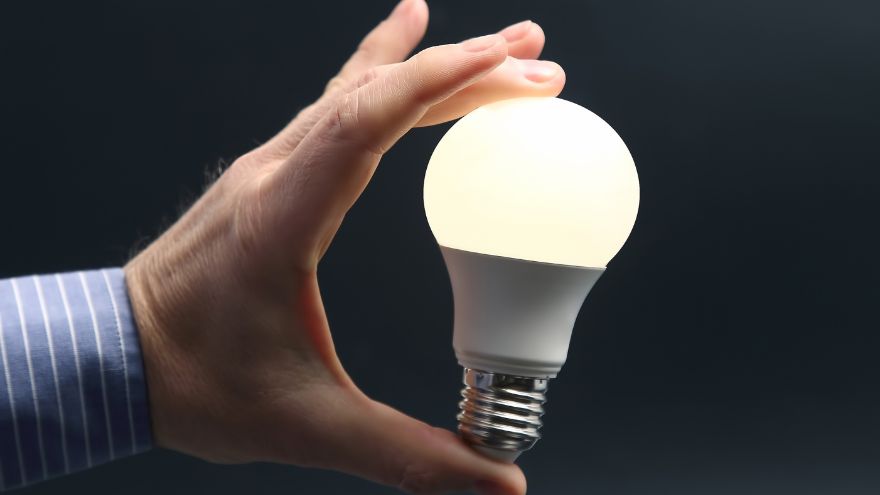
Check lighting at Onninen warehouse
Comparison of traditional and LED bulb power
Both on the packaging of traditional and LED bulbs, there is information about the number of watts. However, identical values do not mean the same brightness of the two products! LED lighting is incomparably more efficient than traditional tungsten bulbs. It generates significantly more light while consuming up to 90% less power. The power of an LED bulb is determined by the luminous flux. This parameter is provided by the manufacturer in lumens (lm). If you want to compare the power of, for example, LED tubes and a classic fluorescent lamp, you can use publicly available, free calculators (LED -> watts / watts -> LED) or ready-made conversion tables, or perform manual calculations according to the following rule:
1W of LED bulb corresponds to 8.3-12.5W of a traditional bulb, and 1W of a traditional bulb is about 0.12W LED bulbs.
Let's assume you plan to replace a traditional 75W bulb with its energy-efficient LED equivalent, emitting light of similar intensity. In this case, an 8W LED bulb should fit, because – as mentioned earlier – LEDs require much less wattage to provide a similar amount of light.
To choose appropriately powerful LED bulbs, you should therefore focus not on watts (W), but on lumens (lm), which inform about the luminous flux, i.e., the amount of emitted light. Watts actually indicate the amount of energy consumed to produce light. The more watts, the higher the power consumption.
Incandescent bulbs – watt to LED conversion table
| Power of traditional bulb (W) | Power of LED bulb (W) | Estimated brightness (lm) |
|---|---|---|
| 15W | 1W | 100 lm |
| 25W | 2 - 3W | 200 - 250 lm |
| 40W | 4 - 5W | 300 - 500 lm |
| 60W | 6 - 7W | 500 - 800 lm |
| 75W | 8 - 10W | 800 - 1100 lm |
| 100W | 11 - 15W | 1100 - 1500 lm |
| 150W | 15 - 25W | 2100+ lm |
Note that the highest power (W) of LED bulbs listed in the table is 25W. Currently, no stronger LED lighting is produced.
Halogen bulbs – watt to LED conversion table
In addition to conventional and LED bulbs, modern halogen bulbs can also be found on the market. They provide natural, bright light. They are significantly more efficient and durable than traditional bulbs - consuming up to 30% less energy, yet still less energy-efficient than LEDs. If you want to compare a halogen bulb with an LED one, you can use the conversion table below.
| Power of traditional bulb (W) | Power of LED bulb (W) | Estimated brightness (lm) |
|---|---|---|
| 20W | 3W | 200 - 250 lm |
| 35W | 5W | 350 - 450 lm |
| 50W | 7W | 500 - 600 lm |
| 75W | 10W | 800 - 900 lm |
| 100W | 12 - 15W | 1100+ lm |
Why do LED bulbs have fewer watts than traditional bulbs?
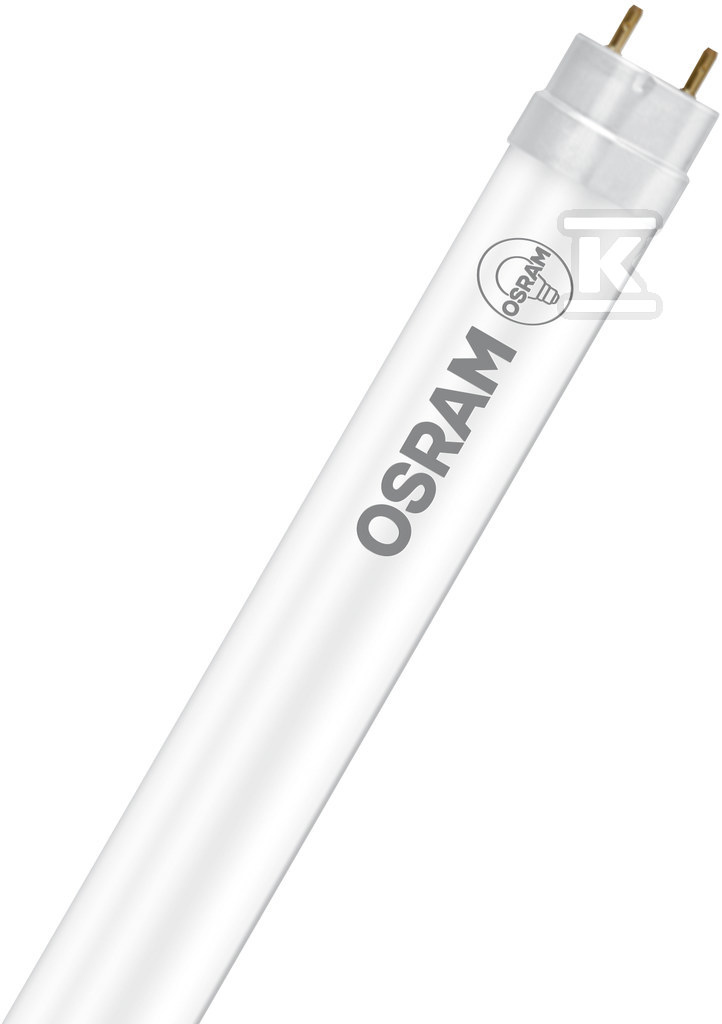 The differences in power arise from the significantly higher energy efficiency of LED technology. Classic bulbs convert most of the consumed electrical energy into heat, and only a small part (5–10%) into light emission, which is why they are considered an outdated, inefficient, and unecological option. LEDs can convert most of the energy into light. Therefore, they require much less power to produce the same amount of light as traditional bulbs. The low power demand means lower electricity consumption, and consequently – lower electricity bills.
Summary
When replacing traditional bulbs with advanced LED models - when the goal is to achieve light of similar intensity, it is worth relying on conversion tables from watts to LED. Modern LED bulbs should be selected based on brightness (luminous flux) determined by manufacturers in lumens.
We encourage you to discover the LED lighting available at the Onninen electrical warehouse. We offer, among others, LED bulbs E27 230V and LED bulbs GU10 230V, which allow for effective and economical implementation of various lighting tasks. Our assortment also includes lighting fixtures and equipment. If you have any questions, please feel free to contact an advisor.
FAQ
1. Can the brightness of an LED bulb and a traditional bulb be compared based on watts?
No. The number of watts indicates the power consumption of the LED bulb, but does not reflect its brightness. It is best to check the number of lumens.
2. How much less electricity does a modern LED bulb consume compared to a traditional bulb?
To produce light of similar brightness, an LED bulb can consume up to 10 times less energy.
3. What do lumens practically mean?
A lumen (lm) is a unit of measurement for luminous flux in the SI system. The more lumens a given 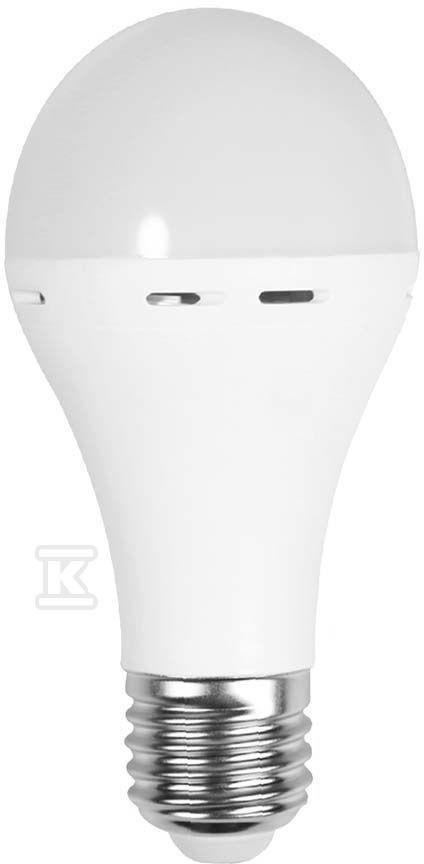 bulb has, the brighter the light it generates.
4. Can I replace a traditional 75W bulb with an 8W LED bulb?
Yes. An 8W LED bulb provides light of comparable brightness to a traditional 75W bulb.
5. How do halogen bulbs differ from traditional ones?
Compared to conventional bulbs, halogens produce more light from each unit of power, are more durable, shine with consistent efficiency, do not change the color of the light, have a smaller size, and emit a glow with a higher color temperature.