Limit switches , commonly called "limit switches", are electromechanical devices used in automation and safety systems to detect the position of objects and control their movement. Their operation consists in mechanically connecting or disconnecting the contacts of a built-in electrical circuit in response to the force acting on the moving part of the actuator.

Check out Eaton brand limit switches at the Onninen wholesaler
Types of limit switches
Limit switches are classified according to the type of actuator and the trigger mechanism:
- With a lever – a mechanical activator in the form of a movable arm (photo 1)
- With a pusher (pin) – contacts switched by pressure and released after it is released (photo. 2)
- With a roller lever – the lever ends with a roller that reduces friction during activation (photo 3)
- With a spring rod ("cat's whisker") - a flexible element that responds to pressure from different directions
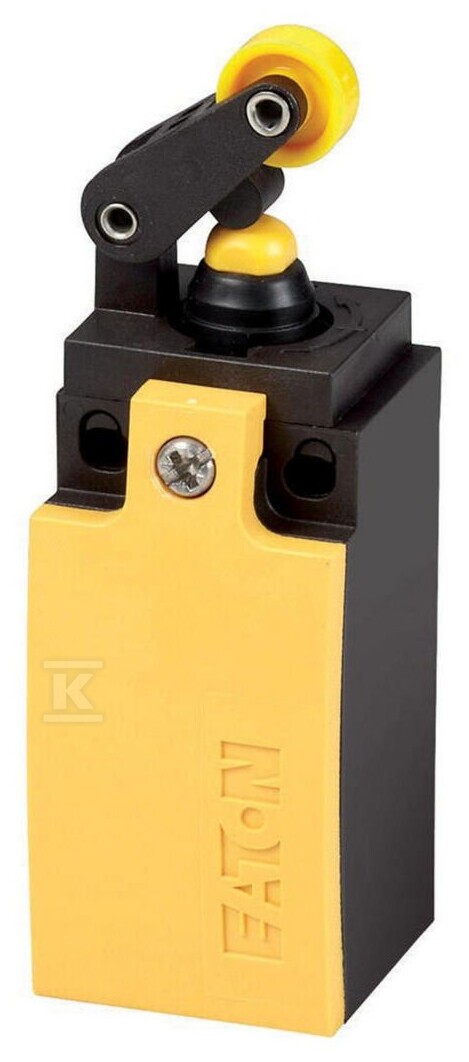 (photo 4)
 - With key – mechanism locking the contacts after inserting the key (photo. 5)
- With a key and an electromagnetic or spring lock - a lock that prevents the key from being removed, depending on the voltage (photos 6a and 6b)
- Magnetic (contactless) – switching performed by coded magnets, eliminating mechanical wear, where one magnet is mounted on the fixed part and the other on the moving part (photo 7)
- Cable operated safety switches – operate in response to cable tension, e.g. in emergency stop systems
- Miniature – versions with reduced dimensions used in precision systems
Configuration and characteristics of contacts
Most commonly used contact configurations:
- NO (Normally Open) – normally open, closes the circuit when activated
- NC (Normally Closed) – normally closed, opens the circuit when activated
- SPDT (Single Pole Double Throw) – NO+NC changeover configuration with common contact C (Common)
In safety systems, NC contacts with forced opening are used (in accordance with IEC 60947-5-1), which guarantees opening of the contacts even in the event of spring damage. Switches can have a slow-action mechanism (photo 8) or a fast-switching snap-action (photo 9). Snap-action allows for immediate switching of the contacts, minimizing the risk of electric arc and signal interference. Slow-action provides more precise control of the actuator position, but requires a minimum activation speed.
Selection of limit switch
The key parameters that should be considered when selecting a switch are:
- Working environment
Will the switch be used indoors or outdoors? Is it exposed to dust, moisture, or extreme temperatures?
Eaton's standard LS-Titan limit switches (IP66/IP67) provide full protection against dust, water and short-term immersion. Their operating temperature range is from -25°C to 70°C, which is fully sufficient for most applications. However, in extreme conditions, such as extremely low temperatures, the "Cold Climate" version is recommended, operating down to -40°C thanks to a special seal.
It is important to select the appropriate cable glands, taking into account the specifics of the application. In outdoor installations, especially those exposed to sunlight, it is worth using ventilated glands that eliminate condensation and protect the device from damage.
· Mechanical loads
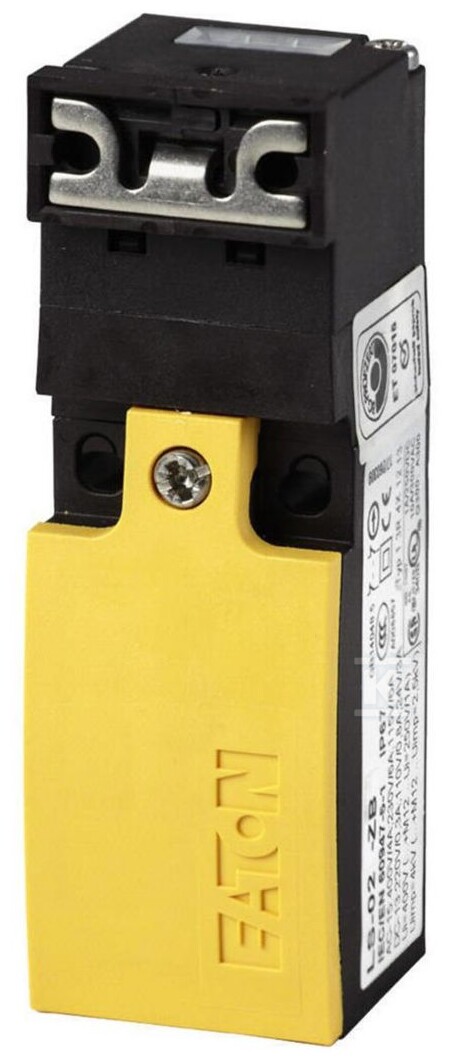
Before choosing a limit switch, it is worth assessing its resistance to mechanical stress and the number of operating cycles. In applications with frequent switching, magnetic contactless switches are a better solution—more durable and more reliable due to the lack of mechanical elements.
- Electrical parameters
You must take into account the voltage and current parameters of the system and ensure that the device can handle the expected load.
- Standards and certificates
The first step is to define the target market for the product. If it will be used exclusively in the European Union, CE marking will be sufficient. However, for machines operating globally, additional certifications may be necessary, such as UL/CSA (USA, Canada) or CCC (China, Asia).
at ISO 14119 – guidelines for interlocking devices, including limit switches,
at IEC 61508 and IEC 62061 – standards for safety-related control systems,
at ATEX Directive – regulations for limit switches used in explosive atmospheres. Ensuring compliance with the appropriate standards is crucial for the safety and reliability of the device.
The selection of limit switches, although seemingly simple, requires consideration of many important factors. This article is not exhaustive, but aims to draw attention to the key features of these devices and their importance in specific applications and applications.
Check out Eaton brand limit switches at the Onninen wholesaler