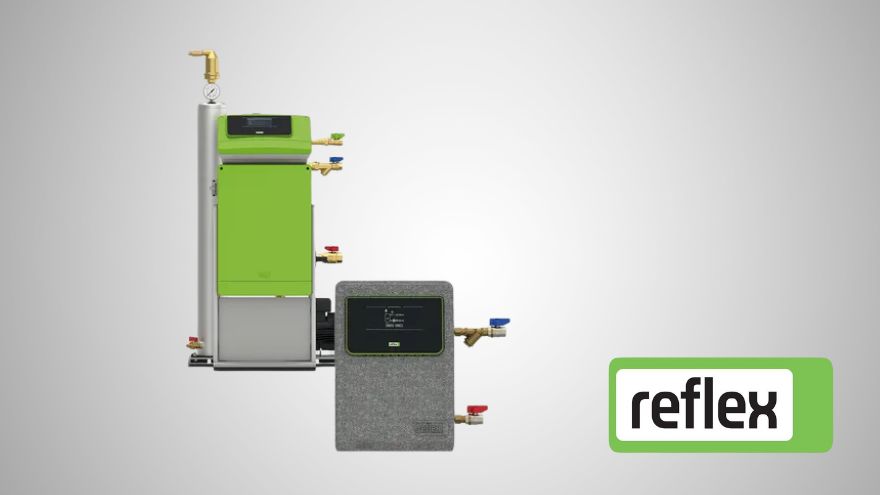
In modern heating and cooling systems, the effectiveness of the system depends on many factors, including the quality of the medium circulating in the system. One of the key challenges is the elimination of gases from the water cycle. REFLEX Servitec is an innovative solution that effectively eliminates gases from the system, increasing its efficiency and service life. Below we will look at the most important aspects related to the problem of gases in systems and ways to eliminate them.
Check out Reflex brand products at the Onninen wholesaler
Problems resulting from the presence of gases in the installation
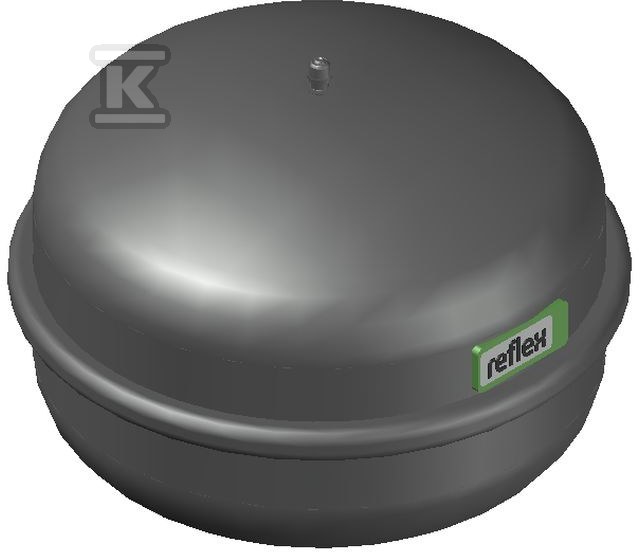 Gases in the system include not only air, but also nitrogen, carbon dioxide, hydrogen and methane. Their presence leads to a number of problems that affect the efficiency of the system and its operating costs. An example is chemical corrosion, which occurs at the contact of oxygen with metal surfaces, causing degradation of radiators, heat exchangers and boilers. Gas bubbles reduce the flow of liquid, which results in noise and difficulties in regulating the system.
The presence of gases also leads to the accumulation of impurities, which reduces the efficiency of heat exchange and increases energy consumption. The effect is an increase in operating costs, resulting from frequent service visits and the need to increase the operating parameters of circulation pumps.
Consequences of air in the installation
Air-filled installation is one of the most common problems. It manifests itself through noise, humming and vibrations of pipes, which can lead to leaks and even damage. In addition, an air-filled radiator or underfloor heating does not reach the required temperature, which affects the comfort of use and the energy efficiency of the system.
Traditional methods of eliminating gases
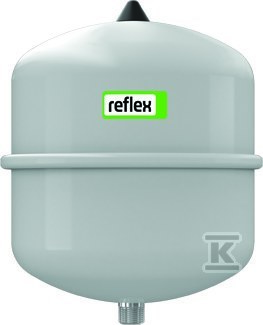 Air vents are standard devices installed at the highest points of the installation. They effectively remove air bubbles during the initial filling of the system, but their effectiveness decreases when removing dissolved gases. In addition, in installations with hard water, air vents can fail frequently.
Separator
Gas separators are solutions installed behind the heat source, which, by reducing the flow rate of the medium, eliminate gas bubbles more effectively. However, their operation is limited at high static pressure and does not include the removal of dissolved gases.
Modern solution – vacuum degassing REFLEX Servitec
Vacuum degassing is the most advanced method of eliminating gases in installations. This technology involves spraying the agent in a vacuum, which allows for the removal of both air bubbles and dissolved gases. Thanks to the automated process of replenishing the agent and the control of the minimum pressure by the controller, the operation of the device is extremely simple.
REFLEX Servitec is distinguished by its high efficiency, regardless of the static pressure in the installation. The device ensures optimal operation of the system, minimizing corrosive processes, noise and energy consumption. Thanks to this, it increases the efficiency of heat exchange, improves thermal comfort and extends the service life of installation elements.
Benefits of using REFLEX Servitec
By using REFLEX Servitec, users can count on full system efficiency, quiet system operation and significant reduction of operating costs. Eliminating gases from the medium minimizes the risk of corrosion, which translates into lower service costs and longer equipment life. Additionally, vacuum degassing allows for maintaining stable operating parameters of the installation, which increases thermal comfort in buildings.
Summary
Gases in heating and cooling systems are a problem that can lead to serious consequences, such as corrosion, noise or increased operating costs. REFLEX Servitec is a modern solution that, thanks to vacuum degassing technology, effectively eliminates gases from the system, ensuring its optimal efficiency and long service life. This is an investment that brings real benefits in the form of lower operating costs, greater comfort of use and long-term safety of the system.