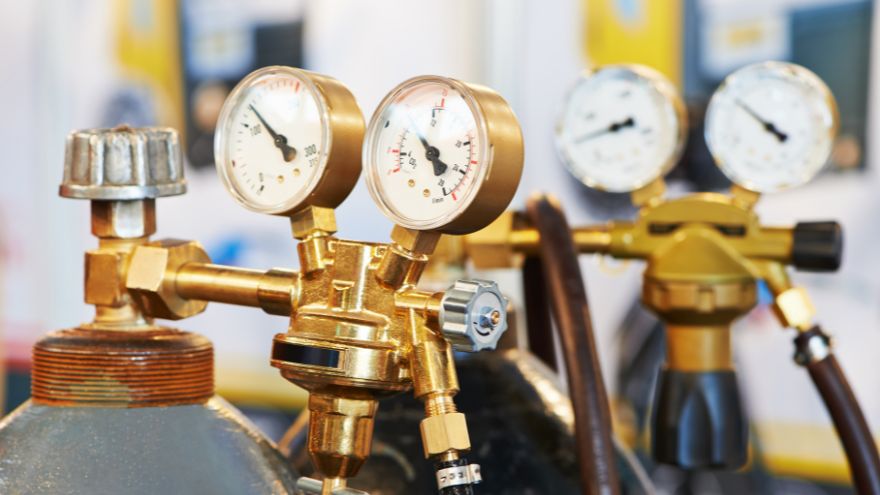
Welding cannot be done effectively without properly selected reducers . It is no coincidence that they are an inseparable element of a welding set. They have a very important task - they maintain the gas pressure at the right level, protecting it from uncontrolled explosions. Let's take a closer look at reducers for acetylene, argon and oxygen .
Check out the gas regulators at the Onninen wholesaler
What is worth knowing about acetylene reducer?
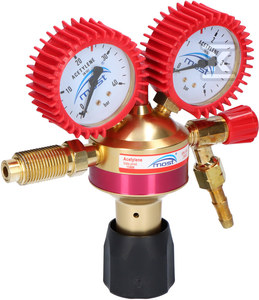 Acetylene reducers are responsible for controlling the pressure of this organic chemical compound. They are easy to connect to any cylinder containing gas to effectively fulfill their task. Especially since the reducer's design is almost identical to other reducers, such as oxygen. However, unlike it, it cannot withstand too high pressure. Therefore, its maximum value (both inlet and outlet pressure) must be marked with a red line on the manometers. Thanks to the pressure adjustment screw, the gas flow rate to the handle can be regulated by setting the gas outlet pressure.
Acetylene is very commonly used for welding, although not as often as in the past. However, it remains the basic welding material for some tasks, for example for thermal processing of metals. If you are looking for a quality gas reducer of this type, we encourage you to familiarize yourself with the offer of the Onninen wholesaler. Reducers adapted to work at an inlet pressure of 200 bar, allowing to maintain the outlet pressure at a constant level set by the user.
Argon reducer - what are its characteristics?
 Argon is a popular gas used for welding. Its important feature is that it is inert, so it does not oxidize. It is no accident that it is used to weld materials exposed to oxygen or nitrogen. These are most often materials such as acid-resistant steel, aluminum and titanium. It can be said that it is suitable for welding almost all metals except carbon steel. It is used without any problems in TIG and MIG methods. This is not surprising, considering the excellent mechanical properties provided by argon. It is very stable and allows for trouble-free arc ignition. This ensures the formation of narrow and clean welds, while limiting the amount of spatter.
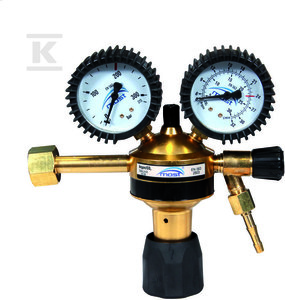
In order for the work to proceed without any problems, it is necessary to match the appropriate reducer to argon. One of the more recommended is the BLACK MOST argon reducer designed for use with compressed gases or gases under pressure, dispersed in pressure cylinders with a filling pressure of max. 300 bar. It can also be used for liquefied gases. The argon reducer reduces the pressure at the outlet of the pressure cylinder to the required working pressure, maintaining its constant value.
Oxygen reducer - what properties does it have?
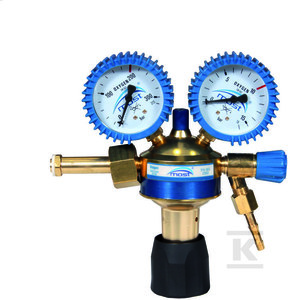 Despite the passage of time, gas welding is very popular. It is one of the oldest welding methods, but reliable and chosen by many professionals. It ensures efficient and fast work, regardless of the thickness of the materials to be welded. Here, as in the above cases, an oxygen reducer is needed for normal operation. It is a mandatory accessory, as it is responsible for reducing the pressure of the gas taken from the cylinder during welding. Its main task is to adjust the gas and maintain it at the indicated level.
Reducers of this type can be characterized by various parameters, such as the degree of throughput or the range of working pressure, thanks to which they can be precisely adjusted to specific requirements. MOST oxygen reducers are perfect for these tasks, because they are adapted to work under the inlet pressure, maintaining the appropriate outlet pressure at a constant level set by the welder. They ensure work without unpleasant surprises, which is ensured by the safety valve.
As you can see, each of the reducers described here plays a significant role during welding, so you cannot forget about them when performing this type of task.