Water is important in every area, it is invaluable for life, but also in a number of important industrial processes. In plants, it is the main technological factor that must be properly controlled, especially its flow. This is crucial for safety and continuity of production. In order to be able to put it into circulation or close its supply, special solutions are needed, such as water valves. And it is them that we will talk about in the article below. We warmly encourage you to read it.
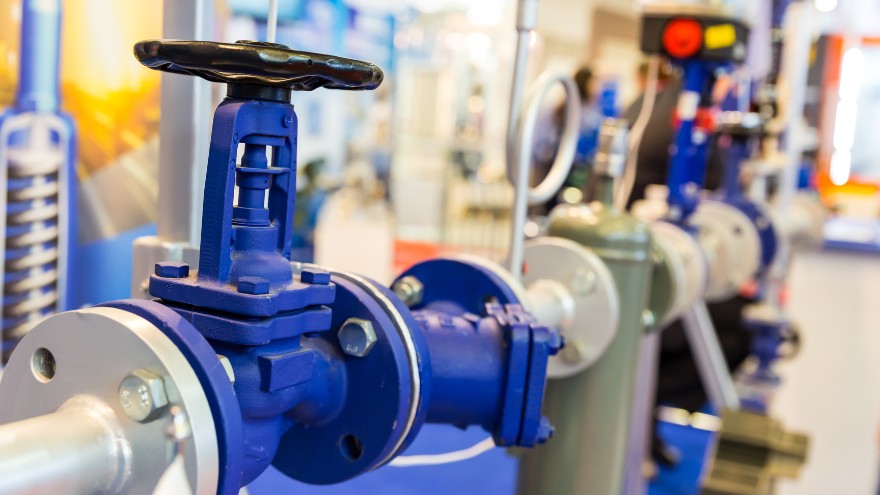
Check out the water valves at the Onninen wholesaler
How does a water valve work?
The water gate valve is made of several elements: a body, a stem and a wedge. The wedge gate valve plays a key role here, changing the position of the working element, the wedge described above. It can be raised or lowered by the rotational movement of the spindle. Such opening of the valve is called multi-turn, which prevents water hammer.
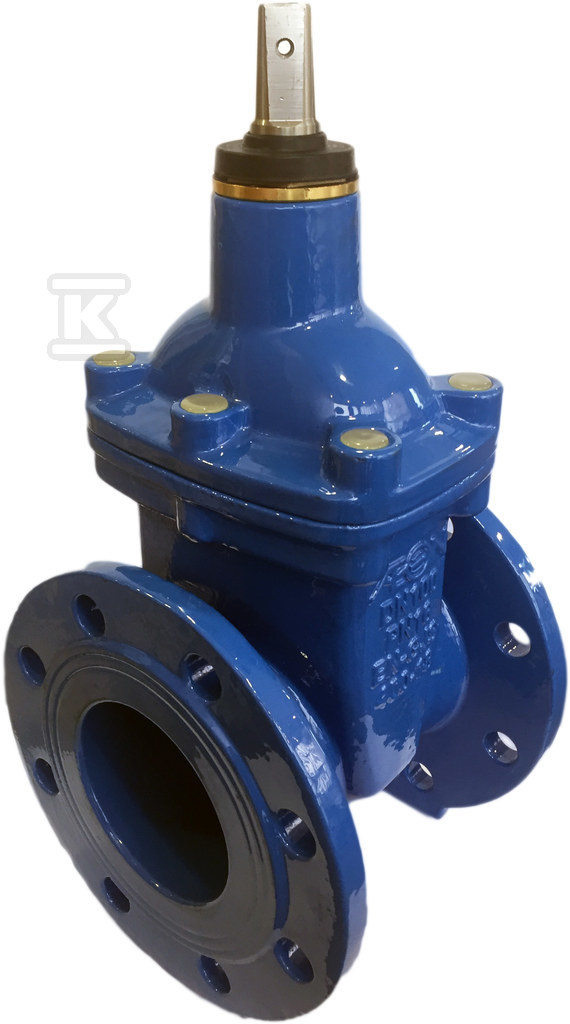 Water gate valves can have different designs, which determines how the stem works. In this respect, we can distinguish 2 types of gate valves: with a non-rising stem and a rising stem. In the case of the first option, the stem is located inside the valve body, thanks to which it is screwed into the wedge of the gate valve, which raises or lowers it in the body. This means that this solution can be used in any place where there is less space above the gate valve. They are therefore suitable for use in the entire hydraulic system, for underground and surface installation. Most gate valves are designed in this way.
However, manufacturers also offer a second type of valve - with a rising stem, especially for applications related not only to water, but also sewage and fire protection. It is also worth knowing that in addition to flanged valves (i.e. mounted to pipeline flanges), socket valves are also offered. They are mainly used to connect fittings with cast iron and steel pipes, but also plastic pipes such as PE and PVC.
What material should a water valve be made of?
It is very important that they are made of solid materials. Usually, grey cast iron is used to produce the body, although ductile iron can also be used. The stem is also solid, because it is made of stainless steel, and the same as the wedge - of cast iron or brass. It is additionally covered with rubber, which provides sealing (cover gasket), which is particularly important in the case of closing the flow of the medium through the valve.
Commercially available wedge gate valves come with hard or soft seals, with the soft wedge seal being the most popular type. Hard, so-called metal/metal, is usually used for aggressive working media, for example in chemical pipelines. Remember that gate valves with exceptional tightness should be used to cut off the flow. For water applications, it is best to use EPDM material. If air and contaminated water are used in the systems, NBR rubber works much better.
In what installations can a water valve be used?
 The water valve is a very important construction, which is why it is used in many tasks, especially where the most important aspects are minimal pressure loss and full, uninterrupted flow. It is no coincidence that they are used in many different areas, such as the chemical, energy, mining, heating and water treatment industries.
Of course, wedge gate valves have different parameters, so always pay attention to the most important features and purpose of a specific type to choose the right model. It is also worth paying attention to the nominal pressure, which differentiates gate valves, so they can be classified as low-, medium- and high-pressure. In general, gate valves are suitable for working conditions in a wide temperature range, from -29 to +425 degrees Celsius. This shows that they can be used in both underground and above-ground installations.
How to properly install a water valve?
Gate valves are installed both on each branch of the network, directly after the branch point, and on water connections and before the network fittings. However, in order for them to serve as they were designed for, we should know how to install them correctly.
- First of all, we need to consider the entire network layout, not only the main pipeline, but also the adjacent sections and nodes. So let's not forget about other pipes in the network.
- First, the valves are placed on the nodes, and only then between the nodes.
- Pipes can be of different sizes, so if we have such pipelines, the larger one should be separated from the smaller pipeline with a valve.
- Moreover, the distribution pipeline must be separated from the main pipeline by a valve.
- It is also necessary to remember about issues related to fire hazard. For this reason, valves should be arranged in such a way that to shut down one section of the water supply network, it is not necessary to close more than five valves.
- Recommendations state that valves on pipelines should be placed at appropriate intervals, from 200 to 400 m, however, on main pipelines this distance must be greater, i.e. 500-700 m. Such pipe arrangement must be adhered to.
- It is also worth knowing that socket gate valves are used for underground installation, but flanged gate valves are not suitable for direct mounting in the ground. This is due to the corrosion of the screws. It is best to mount them above ground. Alternatively, use galvanized screws.
- It is also extremely important that the valves are installed vertically. If the manufacturer allows it, they can also be installed horizontally, i.e. lying down. Under no circumstances should they be installed upside down.
Water valves at the Onninen wholesaler
We’ve almost reached the end of this article, having learned along the way what’s most important about water valves. Now we’ll recommend a few proven solutions.
-
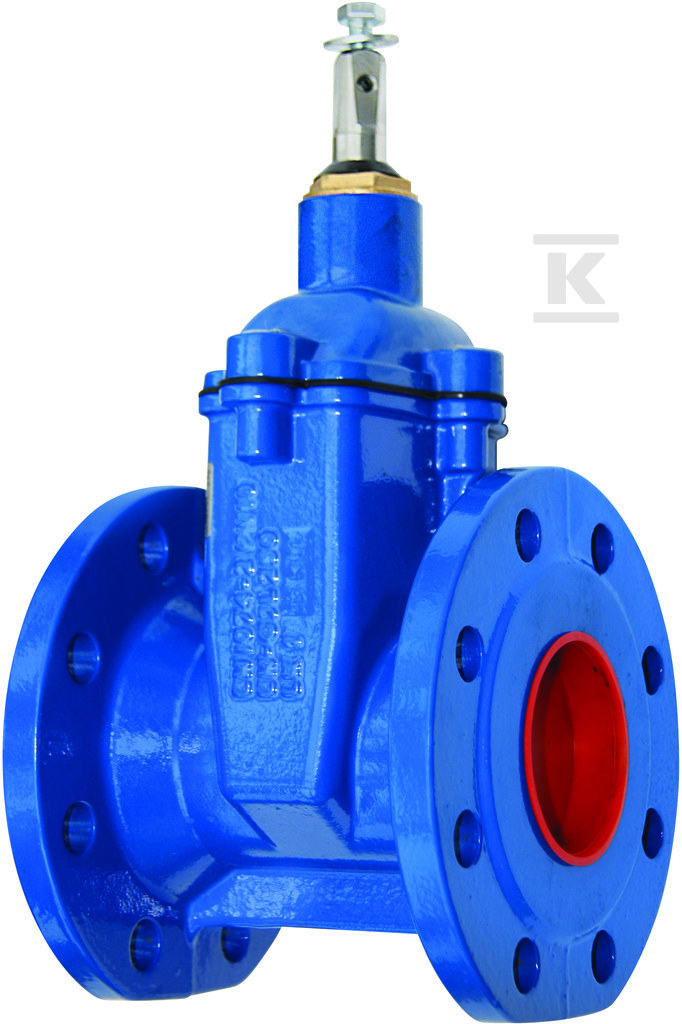 One of them is the AEON EcoValve wedge water valve, flanged DN50, PN16 , short F4, soft-sealed, EPDM, designed for the transmission of drinking water, purified municipal sewage and other non-aggressive media. It provides excellent tightness.
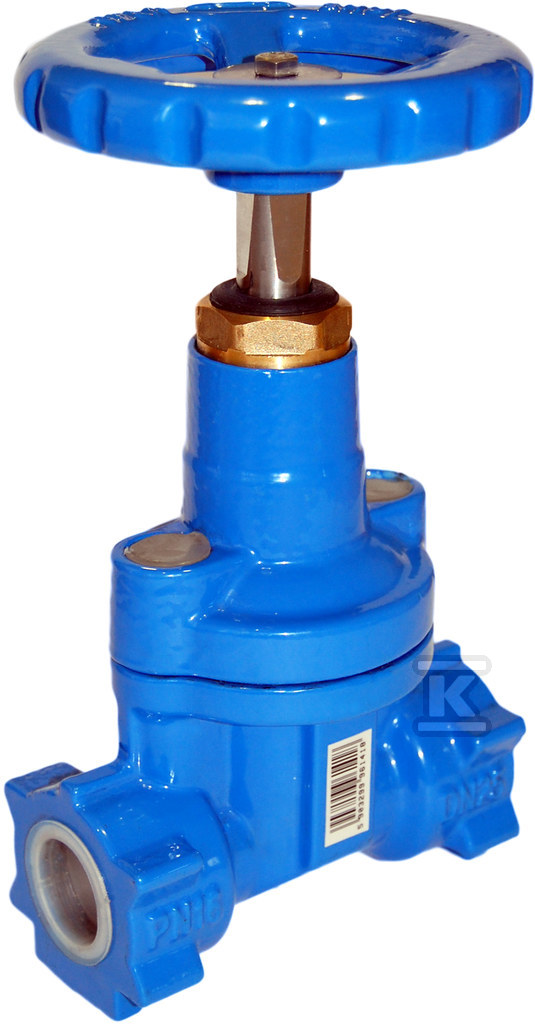
 - Another interesting proposition is the AEON EcoValve wedge water valve, threaded DN40, PN16 , GW 1 1/2", connection, soft-sealed, EPDM - for house connections, made of solid ductile cast iron. Dimensions: length - 0.293 m, width - 0.16 m, height - 0.12 m, weight - 5.328 kg, volume - 0.006 m3.
- And one more suggestion - the Bohamet flanged water valve F4 DN150 with a soft seal - is used to cut off the flow of water in water supply networks and installations for drinking water or non-aggressive liquids.
So we can see how important a role water valves play in regulating pressure and flow. We hope that we have explained the most important issues on this topic in the above article!