Modern electrical installations should be designed in such a way as to meet the constantly increasing requirements for safety and reliability. Surge protection is becoming increasingly important, especially as the number of electrical devices rises. They are exposed to voltage spikes. Such protection is essential to safeguard equipment as well as the entire installation. It is also invaluable in terms of user safety. One of the more important solutions in this area is surge protective devices (SPD) from the HAGER brand. They combine high effectiveness, durability, and ease of integration with existing systems.
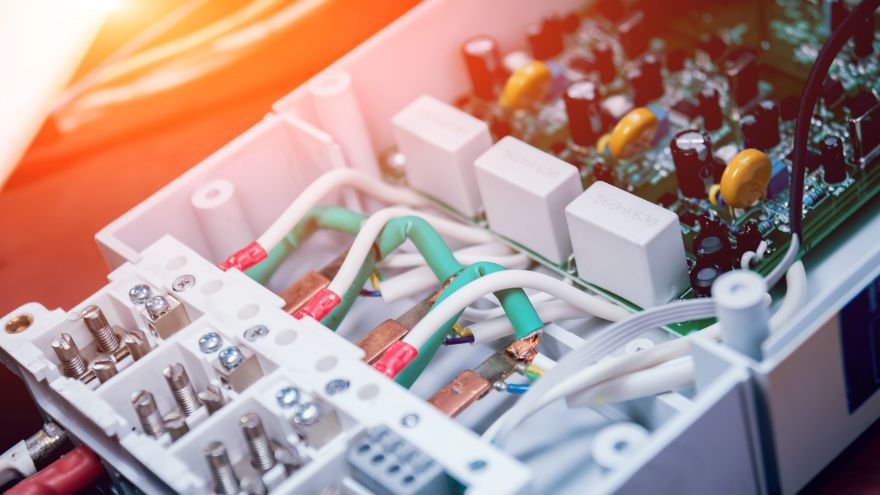
Check the HAGER-SPD series at the Onninen warehouse
Why is SPD protection crucial in modern installations?
Surges can occur in practically any installation; there are no exceptions to this rule. This means that they can appear as frequently in residential buildings as in industrial facilities. They can be caused by many factors, such as lightning strikes, switching phenomena, or failures in the power grid. Let's take a closer look at them!
- Lightning strikes, meaning a direct hit to a building or nearby, causing a sudden increase in voltage in the network.
- Switching phenomena, which means turning large loads (such as motors, pumps) on and off. This contributes to generating voltage impulses.
- Failures in the power grid, such as sudden outages or restoration of power. This can cause short-term surges.
All the phenomena mentioned here are very dangerous and pose a threat to electronic equipment, control systems, or home automation. Modern devices are particularly susceptible to damage, as their electronic circuits operate at low voltages and have little tolerance for spikes. It is no coincidence that the PN-HD 60364-4-44 standard, as well as design guidelines, require the use of SPD protection in many types of installations. The lack of such protection can lead to significant consequences in the form of costly failures, downtime, and data loss.
How does the SPD module work — principle of operation and typical HAGER models
A surge protective device (SPD) is a very important element of the installation that operates automatically: it monitors, reacts, and stands by. Here’s how it works.
- Monitoring voltage in the network
In normal conditions, it remains in standby mode and does not affect the flow of energy.
- Reacting to surges
However, if it detects a voltage spike, it begins to operate, redirecting excess energy to the ground. In this way, it protects the devices.
- Return to standby mode
After activation, the device returns to standby mode, so it is ready for further impulses (unless it has been worn out).
There are different types of SPDs according to the level of protection:
- Type 1 - designed to protect against the direct effects of lightning strikes, installed at the entrance of the installation.
- Type 2 - used in main or local distribution boards. Its task is to protect against induced and switching surges.
- Type 3 - end protection, meaning placed close to the protected devices.
HAGER solutions deserve special attention. This brand offers a wide selection of reliable 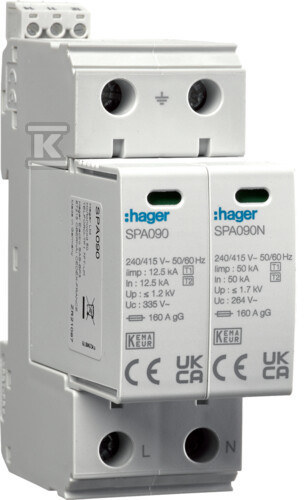 surge protectors, including the SPD series and the SPA911 model.
- SPD Series are modules with high effectiveness, adapted to various network configurations (TN-S, TT, TN-C);
- SPA911 Model is a T1+T2 surge protector with a MOV varistor, capable of diverting surge currents up to 25 kA (Iimp) and 50 kA (In);
- Additionally, other products compatible with modern electrical apparatus systems are available.
Thanks to their modular design, HAGER devices can be easily integrated into existing distribution boards, and the replacement of protective inserts is quick and safe.
Benefits of using SPD — protecting equipment and user peace of mind
The use of HAGER surge protectors provides many tangible benefits. We have gathered them here!
- Protection of electronic equipment
SPDs effectively protect computers, PLC controllers, alarm systems, LED lighting, pumps, inverters, as well as many other devices from damage.
- Increased safety of the installation
Reduction of fire risks that may be caused by overheating of wires or short circuits related to surges.
- Time and cost savings
Avoiding repair and equipment replacement costs as well as downtime.
- User comfort and peace of mind
The awareness that the installation is secured for any eventuality, even when strong storms or power grid failures occur. This provides a great sense of security.
- Compliance with standards
Meeting legal and design requirements. This is always important, especially in commercial, industrial, and public facilities.
In summary, surge protectors from the HAGER SPD series are solutions that should be included in every modern electrical installation. They protect equipment and are also a wise investment in safety, reliability, and longevity of the system.
FAQ
1. Do surge protectors need to be replaced after every activation?
Not always. For example, many HAGER models have the capability for multiple activations. However, after an activation close to the maximum parameters, the device may require the replacement of the protective insert.
2. Where is the best place to install SPD?
Most often at the entrance of the installation, in the main distribution board. In extensive facilities, additional protectors are recommended in subordinate distribution boards.
3. Does SPD protect against power outages?
No. A surge protector only protects against voltage spikes; therefore, UPS systems are used for protection against power loss.