Underfloor heating equipped with an RTL thermostatic valve prevents the ingress of a medium exceeding the permitted value into the pipes. Assuming that the permissible floor temperature is 27°C, a heating parameter of 27°C to 29°C will be necessary to achieve it. Check how to use RTL thermostatic valves for underfloor heating installations? How to properly install an RTL valve?
Check out RTL valves at the Onninen wholesaler
How to properly install an RTL valve?
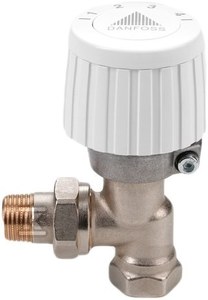 The method of mounting the RTL valve depends on the type of valve that has been selected. In the case of a straight or angle valve, it is recommended to mount it on the manifold beam. In this way, even several underfloor heating loops can be made (each loop with its own RTL valve).
The return temperature limiter should be installed on the return from the radiator, but it should be remembered that in heating systems combining underfloor heating and radiators, the temperature of the medium should be reduced to a value of 27 to 29°C. This is a sufficient level for the room temperature to reach 20°C. It is also important that connecting the temperature limiter to the system eliminates the need to install a mixing valve with an additional circulation pump.
The two most commonly used types of RTL valve boxes are:
-
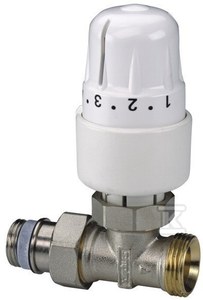 with a return temperature limiting valve, where it is possible to control only the temperature of the flowing water;
 - with an additional thermostatic valve, which extends the functionality of the valve to maintain the temperature in the bathroom at a constant level.
In the case of the second option (thermostatic sensor), the RTL valve actually consists of two valves. The first controls the temperature of the flowing water (heating agent), while the second reads the temperature in the room. Both valves operate independently of each other.
As a result of this solution, too high a temperature of the heating medium will cut off the flow, which protects the entire installation from overheating.
Application of RTL valves in underfloor heating systems
The floor heating with the RTL valve is commonly considered a simple hydraulic system, which results from the fact that the heating medium supplies the loop without the use of additional devices. It is worth remembering that the RTL valve should be installed in one, at most two rooms (up to 20 m²). Otherwise, the floor temperature will be uneven. For larger surfaces, a distributor with a mixing-pump group is used. In each case, the installation of a vent must not be neglected.
RTL valves at the Onninen wholesaler
The simplicity of the underfloor heating system design using RTL valves has contributed to the systematic growth in popularity of this solution. Additionally, limiting the number of underfloor heating components significantly reduces installation costs. Let's check which valves will be the most effective.
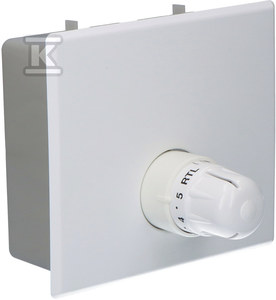 The Flamco er-RTL white regulating valve is a two-way valve that allows precise regulation of the air temperature in the room and limits the temperature of the heating medium in the underfloor heating system. Easy installation is ensured by a set of valves with a vent and a 3/4 GZ conical thread. The whole is complemented by a white protective cover made of plastic.
Another solution worth considering is the RTL Danfoss FJVR 15 angle valve + 10-50 white head . This angle valve is equipped with a 1/2 inch inlet and outlet nozzle. The working pressure is 10 bar, while the Kvs [m³/h] values are 0.68 m³/h.
The Flamco RTL 1/2" regulating valve is ideal for small underfloor heating areas of up to 15 m². It is suitable for use in combined underfloor and radiator heating systems. The operating pressure of the RTL valve is 1.5 MPa with an operating range of 10 to 50°C.