A conduit is a corrugated electrical installation pipe that is used for various types of cables. First of all, it protects the installation not only from mechanical damage, but also moisture or variable temperature. Today we will present you the top 5 best conduits. Check out our ranking.
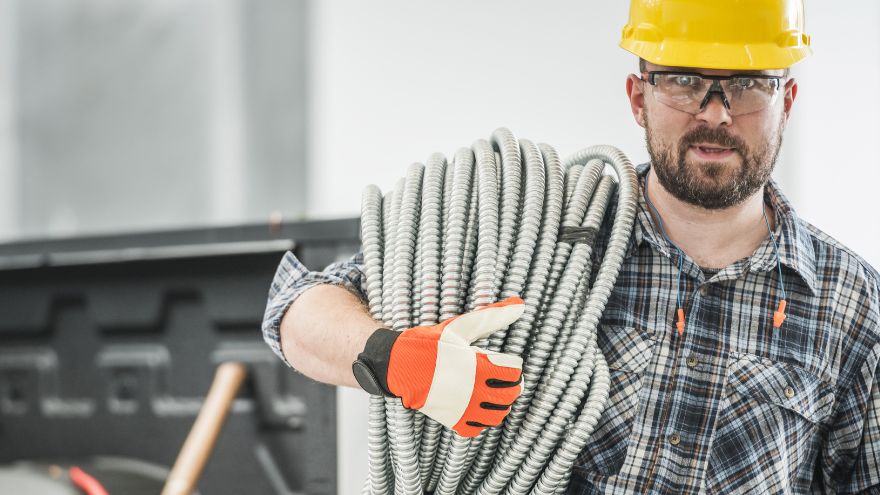
Check out the conduits at the Onninen wholesaler
Non-flammable conduit with remote control 15-20 750 N Onnline
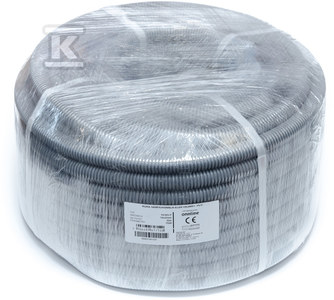 Our list must of course include the non-flammable conduit with pilot 15-20 750 N Onnline . It is made of durable and reliable materials, which ensures high durability. The self-extinguishing material is worth noting. It does not support flames. Thanks to this, it prevents the transfer of fire. It perfectly protects the installation against UV radiation, but also various chemical compounds. Thanks to this product, running electrical cables will be safer and easier. Such a conduit also protects the installation against water or moisture. Of course, you also need to remember to properly select the conduit for the cable, and here the rule is simple, namely the internal diameter of the protective pipe should be 1.5 times larger than the external diameter of the cable and 2 times larger than the diameter of the optical fiber. Also note that this conduit uses a pilot, which makes it even easier to pull cables over long sections.
Flame retardant conduit without pilot 750 N Ingremio
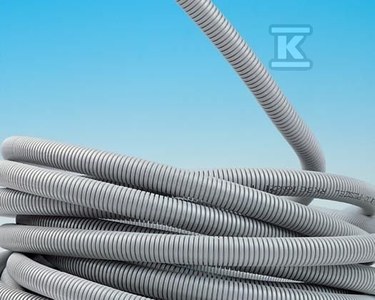 The flame retardant conduit without pilot 750 N Ingremio is another product that deserves attention. It has increased impact strength and resistance to mechanical damage. It is medium flexible. Thanks to this, it has a wide range of applications. It can be used for both wall and flush-mounted installations, or potentially flammable surfaces, such as wood. This type of conduit is also used for underground installations or in industrial installations. It is made of polyvinyl chloride. Note also that the pipe is corrugated, which ensures even greater safety of use of the network. Such a conduit is also used to organize or mask cables.
Conduit dark gray supermonoflex 1216E Kopos
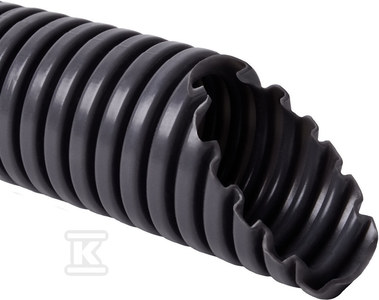 The 1216E Kopos supermonoflex dark gray conduit is made of strong and reliable PVC. It is used to protect electrical and telecommunications cables. It is used in the AC installation system. Its operating temperature range is very wide and ranges from minus 5 to 60 degrees. Unlike the previous model, it cannot be used for underground installations, but it will work very well for installations in concrete or wood. It is characterized by high impact resistance. It is classified as class III.
Self-extinguishing flexible conduit GUS black 10, 30-meter roll F-Elektro
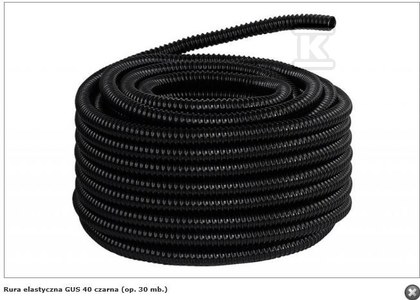 Top 4 in our ranking is the self-extinguishing flexible GUS black 30 meters F-Elektro conduit . It is designed to protect bundles of electrical wires. It meets high requirements in terms of installation protection, but not only that. It also has good dielectric properties. Due to the fact that it is flexible, it is characterized by even greater impact strength. Its operating range is the largest, as it is from minus 40 to 105 degrees. It is made of modified polyethylene.
Flexible corrugated halogen-free conduit 25 m with 320N remote control Elektroplast Stróża
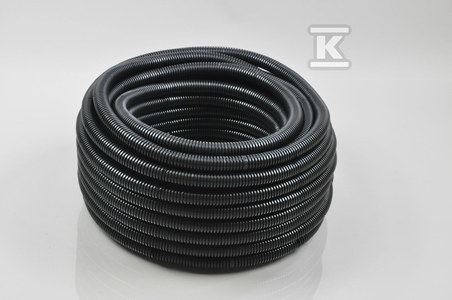 Our ranking ends flexible corrugated halogen-free conduit 25 m with pilot 320 N Elektroplast Stróża . It will work even for large and long installations. It will be an excellent choice in a work environment that is considered difficult. It is oil-resistant, but also fire-resistant. It works in a temperature range from minus 25 to 105 degrees Celsius. It is primarily used in industry or on photovoltaic farms.
The conduit should be made of the highest quality materials that are resistant to damage. You also need to remember to choose it for its intended use. For example, a conduit for the ground must be resistant to low temperatures, and a polyethylene model will work well here. You can also choose conduits for photovoltaics, and in this case the conduit should be resistant to changing weather conditions. Also pay attention to the thickness, which should not be less than 2-3 mm. If you are looking for a conduit for a 1.5 mm cross-section cable, remember that its diameter should not be less than 11 mm. Strong conduits can be laid even in wall grooves.