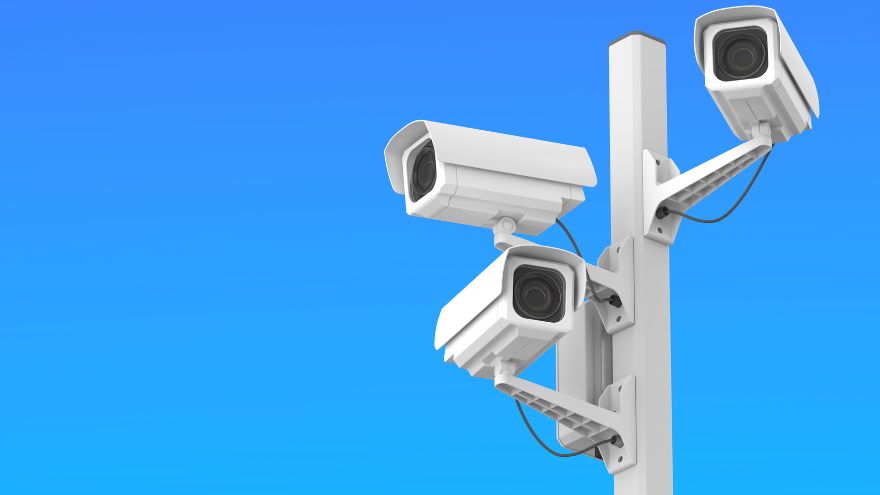
Choosing the right cable for your surveillance camera is crucial for connection stability, image and sound quality, and signal resistance to electromagnetic interference. Learn what cables and wires are used in IP surveillance systems, learn the differences between the different types, and choose the best cable for your IP camera.
Check cables and wires at the Onninen wholesaler
Types of IP surveillance camera cables
The cables available on the market for surveillance cameras differ primarily in their purpose and construction. Two cables are necessary for the operation of a wired surveillance installation - one providing power, and the other responsible for the transmission of the signal (image). There are also hybrid variants that combine both of the above-mentioned functions.
Power cables include:
- twisted pair cables – constructed from four pairs of wires twisted together, which eliminates electromagnetic interference (twisted pairs are usually used for short distances);
- Hybrid cables – combine the power supply function with function transmitting signals to cameras.
Among the signal cables we can distinguish:
- coaxial cables (so-called coaxials) – have a single core made of copper or aluminum, surrounded by insulation and braiding, require a power connection;
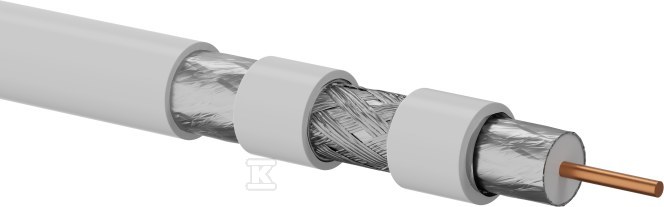
- fiber optic cables – used for network cameras and for signal transmission over long distances;
- HDMI cables – designed for transmitting high-resolution data, i.e. High Definition image quality and sound (there are models available on the market that allow you to transfer images from cameras to TVs and computers in 4K format).
It is worth adding that coaxial cables for IP cameras can have integrated power wires - then they will also be suitable for power supply. Coaxial cables for monitoring are suitable for both small systems and extensive industrial installations, guaranteeing an excellent signal everywhere.
The most popular option among IP monitoring installers is twisted pairs. The choices are UTP twisted pairs (unshielded - without an additional protective layer) and FTP twisted pairs (with a screen - protective foil protecting all pairs of wires). The FTP twisted pair cable is more resistant to electromagnetic interference.
Cable for surveillance cameras – the most important selection criteria
When choosing a cable for your IP camera, consider:
- its purpose (power supply/signal transmission/2in1)
- type of monitoring installation (analog/digital/hybrid),
- power supply method (DC/AC),
- distance of the IP camera from the power source,
- installation location (inside/outside the building)
- image quality expectations.
To make the right choice of cabling components, look at the following features of the CCTV cable:
- number of internal cores – IP monitoring systems generally use cables with integrated power cores and four-core variants
- the material of the cores – affects the stability and reliability of the connection
- core diameter – the larger the diameter, the lower the wave attenuation
- outer sheath – FRHF or PVC insulated cables are used in internal CCTV installations, while PE or gel-insulated cables are used in external monitoring systems
- plug type – BNC or RCA
- wave impedance – 75 ohm
- operating temperature – the range should correspond to actual operating conditions
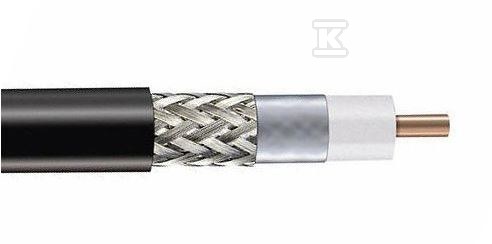
In addition, cables used to transmit the signal should be characterized by the highest possible throughput . This parameter affects the quality of the image and sound as well as wave attenuation.
Consequences of improper cable fit to IP camera
A common consequence of cable mismatch is the occurrence of interference in transmission . The problem usually lies in the distance that the signal or current must travel. For example, at large distances it is a mistake to use twisted-pair cables. Fiber-optic cables are much better at such tasks. If the source of interference is voltage fluctuations, the problem should be solved by a suitable power supply that will equalize the voltage to the right level. If you are sure that you have used the right cable, but you are still having problems achieving high image quality, check the condition of the surveillance camera and the solidity of the connection. It may turn out that the cable was not connected correctly. Remember to work with high-quality cables that meet all safety standards. Even the best cameras and recorders will not function optimally without reliable, precisely matched and well-connected cables.
We encourage professionals and amateurs to familiarize themselves with the cables available in the assortment of the Onninen electrical installation wholesaler. Our offer includes telecommunications cables (including fiber optic cables), installation cables, power cables, cables for mobile receivers, control and signaling cables and many others - a total of over 60 thousand products! If you are not sure which cable for monitoring cameras will be suitable, contact our technical and sales advisors. We provide professional assistance.