Sometimes, inconspicuous elements have a big impact on the convenience or comfort of work. Cable ties undoubtedly fall into this category. They are nothing more than cable ties, which have a very simple structure. It is worth learning more about them and getting to know their use in installation work.
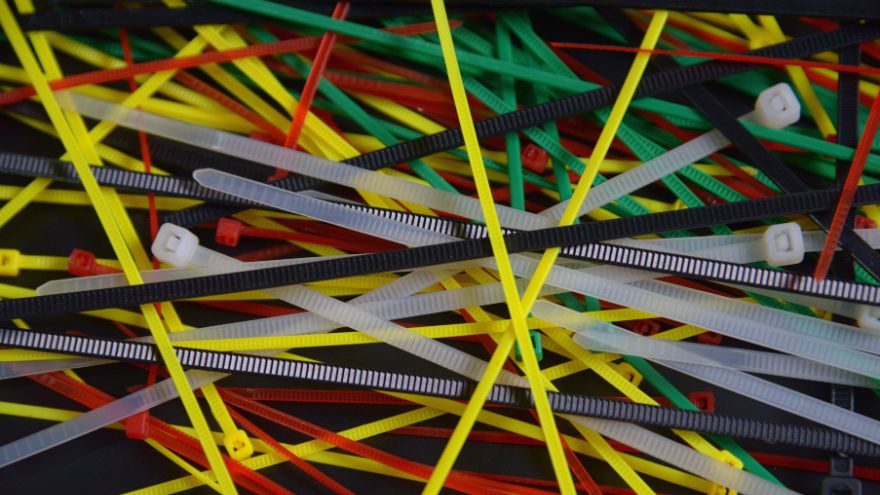
Check out the cable ties at the Onninen wholesaler
When is it worth using cable ties?
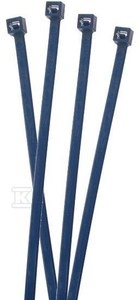 Cable ties have a wide range of applications. First of all, they are used to tie wires, as well as various types of cables or pipes. Of course, they also allow for visual identification. They can also be used to fasten nets or frames. Cable ties are worth using to connect cables in industry, but also pipes in installation and maintenance work. Cable ties are also known by another name, such as a cable tie. It guarantees a strong connection and resistance to loads. To fasten a cable tie, simply thread the end of the tie through the hole located at the other end of the element. Installers most often use them to fasten cable bundles, as well as to tie wires. Plastic clamps can also be used to suspend electrical wires. Therefore, zip ties will work well where you need to connect, for example, two objects.
How much load can a cable tie withstand?
 Cable ties have been known since 1958. At that time, they were used to organize cabling. In this way, a more aesthetic effect was obtained, but also greater safety, by avoiding tangled cables. Although many years have passed since then and the construction of the cable tie has not changed, it has been adapted to the growing requirements and can now withstand really heavy loads. Cable ties can be not only resistant to mechanical damage or the effects of corrosive substances, but also resistant to tearing force. For a 4.5 mm wide cable tie, the tearing force is 22.44 kg, while a 7.5 mm wide cable tie withstands a load of 55.08 kg. When the cable tie is even wider, i.e. 9 mm wide, its strength is estimated at 71.40 kg. A 12.5 mm wide cable tie withstands a load of 110 kg. The cable tie can also withstand a wide temperature range, from minus 40 degrees to 90 degrees. The breaking force in this case is 8 daN.
What types of cable ties are there?
Cable ties are available in many different versions. You can choose colored cable ties, which make it easier to identify cables, for example. Detectable cable ties are also available, which are used in the food industry. They facilitate the analysis of hazards and critical control points. If you intend to use cable ties outdoors, they must be resistant to UV radiation. Of course, reusable models are also available, which are suitable for bundling cables, hoses, and tubes into bundles.
Cable ties with a description plate are also worth considering. In addition, if you need really strong cable ties for installation work, choose cable ties made of steel. You can also choose ball cable ties, e.g. made of polyethylene, which can be installed quickly. They are flexible and stable. For bundling cables, communication cables, but also fiber optic cables, you can use Velcro cable ties, which are particularly useful for connecting delicate cables. Cable ties should therefore be selected according to the needs and the specific installation work.
Cable ties at the Onninen wholesaler
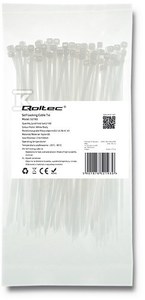
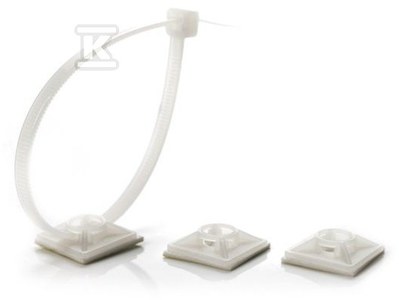 When looking for cable ties for installation work, it is worth choosing the Onnline HW-3AC self-adhesive holder . It is used to attach cable bundles to a smooth surface. In this case, the adhesive is protected by durable silicone paper. They do not contain halogens, phosphorus or cadmium compounds. The Quoltec 2.5*150mm Nylon UV White cable tie is also worth attention. It is narrowed on one side, which makes it even easier to use. It can be used even outdoors and in changing weather conditions. It is resistant to UV radiation. Due to its white color, it is neutral. You can also choose a product such as the Trytyt SCK-100MCB blue cable tie . It is made of strong polyamide. Due to its blue color, it facilitates the identification of specific cables or wires. Its use does not require any tools. Thanks to the serrated profiles, the loop created cannot be easily loosened.