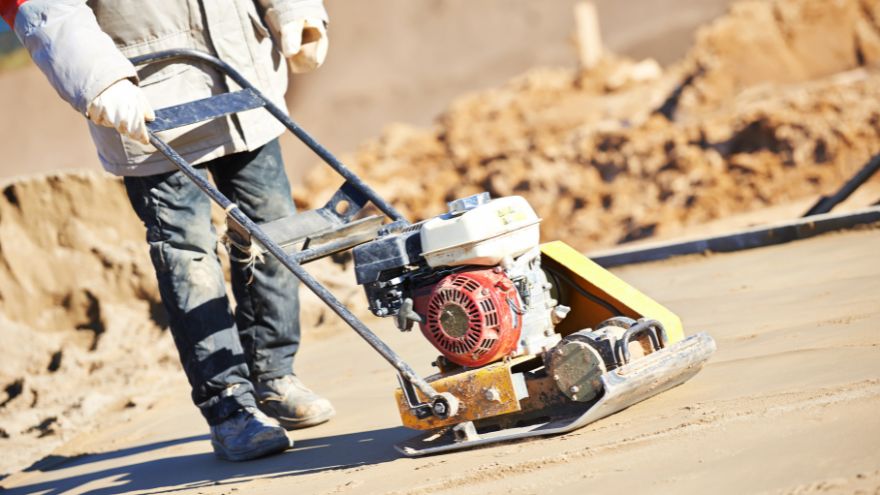
A compactor is one of the devices that cannot be missed, for example, on a construction site, when laying paving stones, etc. Its basic task is to compact the ground to make it more stable. How does a compactor work, what problems can occur when using the device, and which compactor is worth choosing?
Check out the concrete compactors at the Onninen wholesaler
How does a compactor work?
The mechanism of the compactor's operation is not complicated. The equipment is used to increase the density of the subsoil, but the force of its operation depends on certain factors. The operation of the compactor is primarily influenced by two parameters - the value of the centrifugal force and the frequency of operation, referred to as the compaction force.
When looking for the right solution, you should be aware that the power given in kilonewtons depends on the value of the centrifugal force of the device. It is created when the weight is transferred to the tamper plate. In turn, frequency means the speed at which the weights rotate in the device, this value is given in vibrations per minute. It should be taken into account that the increase in the tamping speed does not go hand in hand with power, it is the opposite - the lower the frequency index, the greater the power of action.
Before buying, you should carefully consider which concrete compactor will be suitable for the work to be done. The parameters that must be taken into account in the decision-making process are: the size and weight of the device, the size of the working plate, the number of eccentric rollers, the frequency of vibrations, the working speed and the density of compaction.
Most Common Compactor Problems and Their Solutions
A compactor, like any other device, requires proper maintenance and use to operate reliably. Despite following the rules given by the manufacturers, equipment failure may occur. The most common problems are with the engine and its accessories, as well as with the vibration system.
Among the most common faults are engine malfunctions, which can cause problems with starting the device, uneven engine operation or intense smoking. These situations can result from improper maintenance or the fact that the device is already quite old. Such problems require detailed assessment and repair.
Fuel problems also occur quite often, for example flow problems due to damage to the fuel line or throttle valve, or as a result of a clogged fuel filter. The carburetor can also cause many problems by feeding the device with an incorrect fuel-air mixture.
The failure may also affect the vibration system itself, whose significant wear and negligence in servicing (mainly including maintaining the appropriate oil level in the system) may lead to seizure and damage to individual mechanisms, such as bearings, bushings, as well as the V-belt or control cable.
Why won't the compactor start?
One of the most common failures is damage to the running gear. The good condition of the running gear determines, among other things, the driving properties of the device. It is important to be aware that this system is quite complex, consisting of various components, such as a hydraulic pump, lines, valves and a distributor. When any of the system elements are damaged, hydraulic oil may leak, which will cause the driving properties to deteriorate significantly.
Scheppach HP3000S Compactor
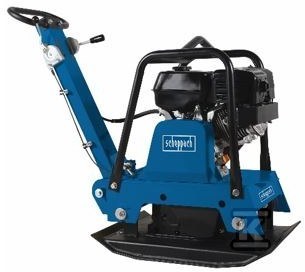 One of the most interesting and very popular devices is the Scheppach HP3000S compactor . It is a reversible device, which means that after properly setting the gear, it can move in both directions. It is ideal for compacting gravel, sand and soft soil. A big advantage is the durable, steel compacting plate with rounded edges. The device equipped with a self-cleaning plate is characterized by high maneuverability and ease of use. The parameters are also worth noting - the plate measuring 730 by 450 mm exerts pressure on the ground of the row, compacting the soil with a force of 30,500 N. To increase work efficiency, it has been equipped with a high-performance engine and a high feed speed of 25 m/min. The device allows for soil compaction to a depth of 50 cm. The equipment weighs 171 kg.