Roof drains are elements placed in the roof structure, the role of which is to drain rainwater from the surface. What types of roof drains are there and how to properly install one?
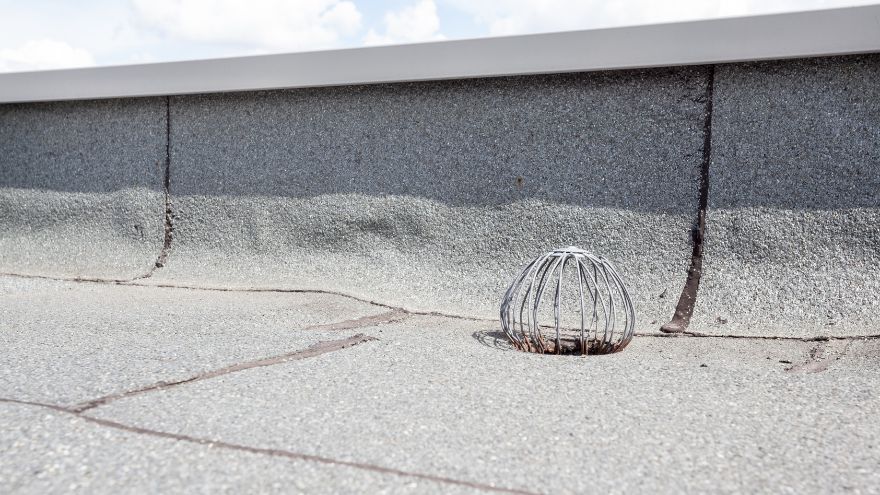
Check out the roof drains at the Onninen wholesaler
What types of roof drains are there?
In practice, roof drains are available in various versions, thanks to which it is possible to choose a solution that is stylistically appropriate for the building. The appropriate versions must be adapted to the specifics and needs of a given building. The basic criterion is single and double drains. The former are also called single-part or single-flange, while the latter - double, are also referred to as two-part or double-flange.
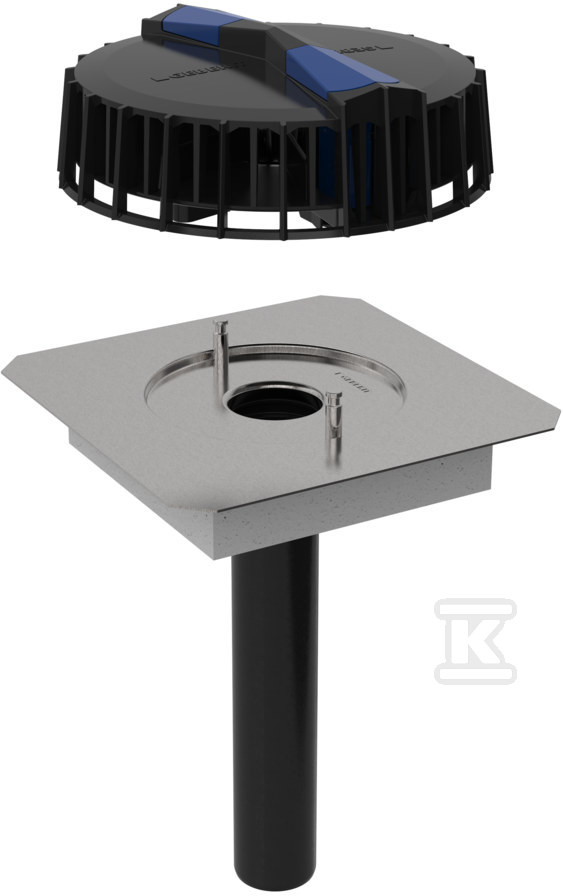 The second way of classification is to take into account the variant based on the arrangement of the pipes. Here, we should mention horizontal models (angular, with a side outlet) and vertical, or so-called straight ones. Each of the variants helps to effectively drain water, but they differ in the mechanism of operation. Vertical inlets are connected to the rainwater drainage pipes, so the water is drained directly from the drain to the rainwater drainage pipes. In the case of horizontal inlets, the installation is slightly more complex, and rainwater is initially drained to the sink basket and then via downpipes, directly to the sewage system. In the case of horizontal inlets, the water is directed to the internal downpipes.
In addition, special variants can be distinguished, such as a heated roof drain . A solution worth considering, because it prevents a serious problem with icing blocking the drain and the permeability of the entire installation. An alternative solution is the attic roof drain , characterized by a specific design and shape. Thanks to this, the method of water drainage is effective.
Roof drain with bituminous collar are durable, solid and strong models. A big advantage is that a specially prepared collar allows for maximum tightness. An additional advantage of the collar is that it is easy to install.
Correct installation of the roof drain
The effectiveness of drainage depends on whether the inlet is properly installed. A very important element is the correct selection of elements for the type of roof. It is important to be aware that moisture and water can damage flat roofs.
Manufacturers of individual models provide detailed assembly instructions with the product. It is assumed that roof drains should be placed at the lowest point of the flat roof, because such a location will ensure optimal water drainage. In addition, they must be located in easily accessible places to ensure easy patency and access to individual elements for maintenance.
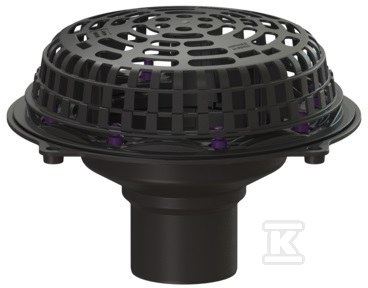 When starting to install the inlet, make sure that the individual accessories are installed precisely. Any leakage has very serious consequences. First, you need to prepare a hole of the right diameter, and then place the body in it. The whole thing must be properly arranged and then attached to the roof surface. In the case of roofs with a waterproofing layer made in a multi-layer model, the inlet must always be attached to the first layer. Then, if the selected model has one, a special bituminous waterproof membrane is installed.
In addition, you should pay attention to whether the roof on which the drains will be installed is designed to be walked on. This will determine the depth at which the subsequent elements will be placed.
How to choose the number of roof outlets for the roof surface?
The number of inlets used in the roof drainage system depends largely on the system chosen. Where it is less than 40 m2 or if the total area is large and the riser height is small, there are no conditions to use a vacuum system. In such a situation, a gravity installation is performed. The number of drains performed will depend on the square footage. It is assumed that one inlet should be for approx. 300-350 m2.
Roof drains at the Onninen wholesaler
At the Onninen wholesaler we have a wide range of roof drains, adapted to various needs. One of the models is the roof drain with a connection collar for Geberit 12l/s (Pluvia) 359.111.00.1 collecting gutters from the Geberit Pluvia series. These models are available in various sizes and diameters, and among the most important advantages is the functional nozzle made of PEHD, which can be shortened to adapt it to the needs. The material from which the element is made is characterized by exceptional durability and solid construction.
Another solution used on flat roofs is the Ecoguss DN100 roof drain, heated 48310.03 . This is a heated solution that must be attached to a plastic pipe. To ensure maximum tightness, sealing collars are used.