The formation of condensate during the operation of air conditioning is a natural effect of condensation of water vapor in the air cooling process. To prevent excessive humidity in air-conditioned rooms or flooding of walls and floors, condensate must be continuously removed. The simplest method to deal with condensate is to drain it into an external container. Which condensate tank to choose for air conditioning? We compare different types and their applications.

Check condensate pumps at Onninen warehouse
When is a condensate tank used?
There are various methods for draining condensate from air conditioning. When selecting the optimal solution, the installer takes into account, among other things, the specifics of the building and the type of air conditioner. The most commonly used solutions, especially in new buildings, are gravity drainage of condensate to the sewage system and condensate pump. If the building is already standing or if it is not possible to connect the drain to the sewage system, a quick and inexpensive option is to install an external tank for draining condensate. It is important to carefully consider the choice of container and ensure its regular emptying, as on hot days it can accumulate even a liter of water per hour, which risks quick overflow. It is worth knowing that a condensate tank is an eco-friendly solution. The collected water can be used, for example, for watering plants.
Types of condensate tanks for air conditioning
Condensate tanks for air conditioning come in various variants. Available models differ in:
- material of construction,
- design and method of installation,
- capacity,
- functionality,
- price.
Plastic and steel condensate tanks
The material of the condensate tank affects its durability and price. The most popular are plastic and steel models. In most applications, plastic tanks work great, while in extreme external conditions, it is better to use a stainless steel container.
Advantages of plastic tanks:
- low price,
- lightweight,
- ease of installation,
- resistance to corrosion and chemicals.
Disadvantages of plastic tanks:
- lower mechanical resistance.
Advantages of steel tanks:
- extreme durability,
- resistance to cracking, deformation, and UV radiation.
Disadvantages of steel tanks:
- higher price,
- greater weight.
Freestanding, unit-mounted, and integrated condensate tanks
Condensate tanks for air conditioning also differ in construction, and consequently – in the place and method of 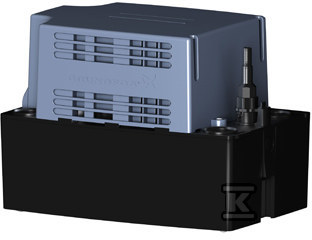 installation. The simplest solution is freestanding containers. They are placed on the floor or windowsill under the condensate drain pipe. Their advantage is mobility. You can move such a tank at any time. The second option is trays for installation under the outdoor unit. The tray collects condensate and directs it to the appropriate place. There are also portable air conditioners with an integrated tank, which, when filled with water, can be removed, emptied, and reinstalled.
Which condensate tank to choose for air conditioning?
To choose the best condensate tank for a given situation, consider aspects such as:
- model of the air conditioner – the tank must be compatible with the device you have, so in case of doubts, contact the manufacturer;
- available space – the tank should be well-suited to the area where it will be installed;
- required capacity – the size of the tank will determine how often it needs to be emptied; the stronger the air conditioning and the more humid the air, the more water will enter the container;
- safety – some models are equipped with a water level indicator or a special sensor that alerts when the tank needs to be emptied, preventing overflow and leakage;
- working conditions – a stainless steel tank will handle even extreme external conditions;
- ease of emptying the tank – this affects the comfort of using the air conditioning.
Everything for air conditioning at Onninen plumbing warehouse
We encourage HVAC professionals to familiarize themselves with the offer of the Onninen plumbing warehouse. We have wall-mounted, commercial, and portable air conditioners, as well as pipes and accessories for air conditioning, including condensate tanks.
Not sure which condensate tank to choose for air conditioning? Take advantage of our specialists' advice!
FAQ
1. How much condensate does an air conditioner produce?
It depends on, among other things, the power of the air conditioner, the intensity of use, the humidity of the air in the room, and the temperature difference. On average, an air conditioner produces from several to several dozen liters of condensate per day.
2. How often should the condensate tank be emptied?
Regularly, e.g., every few days, to prevent the container from overflowing. The frequency of emptying depends on the tank's capacity and the intensity of the air conditioner's operation. On hot days, the container will fill up faster.
3. What to do with the water collected in the tank?
You can pour it down the drain or use it for watering plants (non-demanding species).
4. Can the condensate tank stand on the balcony?
Absolutely! Placing the condensate tank on the balcony is a good idea if you want a mobile, inexpensive solution that is quick to install and does not require any formal procedures.
5. How to know that the condensate tank needs to be emptied?
A water level indicator on the tank serves for monitoring. You can also opt for a modern container with a special sensor.