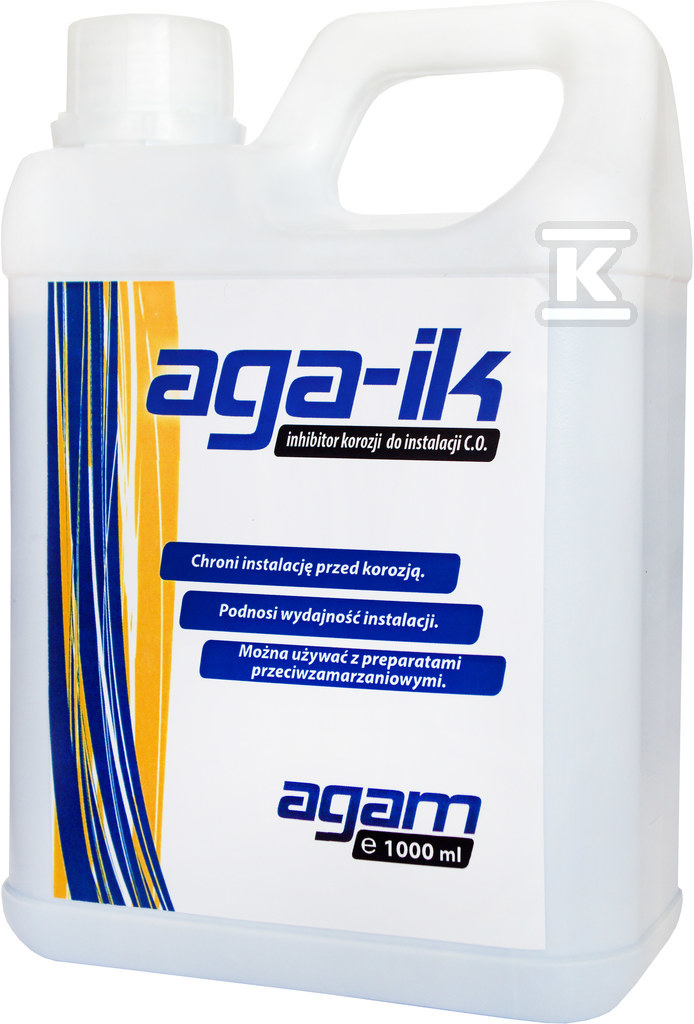
Corrosion inhibitor for central heating systems AGA-IK 1L 1050006
Suggested products
TECHNICAL DATA
Sales unit dimensions and weight: 1 pcs
Corrosion inhibitor for central heating systems AGA-IK 1L 1050006
Protection of the central heating installation against corrosion – inhibitor AGA-IK
This liquid is an effective way to protect the central heating installation from the harmful effects of corrosion. The preparation creates a protective layer on the walls of pipes and installation elements, neutralizing the influence of different metals on each other and preventing rust formation. It can be used in both traditional heating systems and underfloor heating, especially when there is a problem with oxygen diffusion.
Who is this product for?
- Installers: The preparation facilitates the protection of newly installed or modernized central heating installations, ensuring their long-term efficiency.
- End users: Provides peace of mind, protecting the investment in the heating system against costly failures caused by corrosion.
How does AGA-IK work?
The AGA-IK corrosion inhibitor works by creating a thin, protective layer on the internal surfaces of the installation. This layer isolates the metals from each other, minimizing the risk of electrochemical reactions leading to corrosion. The preparation is compatible with glycol and other antifreeze agents, which increases its versatility. The possibility of use with aluminum is an additional advantage – not every inhibitor provides such a wide material compatibility.
Application and how to use:
To achieve optimal results, it is recommended to first clean the installation with a special cleaning agent, such as AGA-SCI (catalog number 1050007). Then follow the instructions:
- Turn off the boiler and drain about 1 liter of water from the installation.
- Pour 1 liter of the preparation for every 100 liters of installation volume – it is convenient to do this through the radiator bleed valve.
- Start the circulation of liquid in the installation for at least 30 minutes to distribute the preparation evenly, and then bleed the radiators thoroughly.
- Check the molybdenum concentration in the installation – it should be around 250 mg/l (you can use strip testers or electronic meters).
- Check the molybdenum level every 24 months and replenish the preparation if necessary, maintaining the concentration in the range of 200-250 mg/l.
CERTIFICATES, APPROVALS, SAFETY, COMPLIANCE AND WARNINGS
Attachments