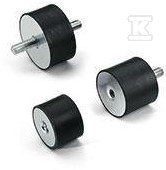
Vibration isolator DVA.2-30-30-SST-M8-20-55 Z038207

Catalog numbers:
- DVA.2-30-30-SST-M8-20-55
Suggested products
TECHNICAL DATA
Sales unit dimensions and weight: 1 pcs
Vibration isolator DVA.2-30-30-SST-M8-20-55 Z038207
Vibration Isolators – Reduction of vibrations and noise in machines and equipment
Vibration isolators from the DVA.2 series are elements designed to dampen vibrations and reduce noise generated by machines and equipment. Their use translates to improved work comfort, increased safety, and extended equipment life. A construction based on a combination of natural rubber and stainless steel ensures effective insulation and corrosion resistance.
Construction and application
Vibration isolator DVA.2-30-30-SST-M8-20-55 is characterized by a cylindrical structure. It has a threaded pin and a molded insert with a non-through threaded hole, made of stainless steel AISI 304. This selection of materials guarantees high mechanical strength and resistance to external factors. These types of vibration isolators are widely used in mounting components of devices, such as motors, fans, or pumps. They are ideal wherever it is necessary to limit the transmission of vibrations to the supporting structure or the environment.
Key features and benefits
- Stainless steel AISI 304: Provides high corrosion resistance, which is particularly important in humid or chemically aggressive environments.
- Natural rubber: Offers good vibration damping properties, minimizing noise and increasing work comfort. Available hardness of 55 on the Shore A scale provides an optimal compromise between damping and load capacity.
- Metric threads M8: Enable easy assembly and disassembly in standard threaded holes.
- Versatility: Suitable for applications in various industries, from agricultural machinery to precision equipment.
- Vibration reduction: Reduces the transmission of vibrations to the device structure or foundation, which translates to a longer service life of mechanical components and improved operating accuracy.
- Noise damping: Limits the emission of noise generated by operating machines, creating a more comfortable working environment.
It is important to choose the appropriate rubber hardness (in this case, 55 Shore A) to specific operating conditions – too soft rubber may cause excessive deflection, and too hard rubber – poor vibration damping. Selecting the right vibration isolator allows for optimal use of its damping properties and protection against the negative effects of vibrations.