Vibration isolator DVA.2-40-20-M8-23-40 Z050389
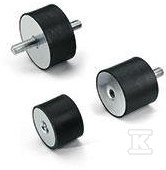

Catalog numbers:
- DVA.2-40-20-M8-23-40
Suggested products
TECHNICAL DATA
Sales unit dimensions and weight: 1 pcs
Vibration isolator DVA.2-40-20-M8-23-40 Z050389
Vibration Isolators – Reduction of vibrations and noise in machines and equipment
The DVA.2-40-20-M8-23-40 vibration isolator is an element designed to dampen vibrations and reduce noise generated by machines and equipment. Its construction, based on a combination of galvanized steel and natural rubber, provides effective isolation from vibrations, which translates to increased work comfort, improved safety and extended equipment life. It is a universal solution, finding application both in industry and in workshops or laboratories.
Construction and application
The vibration isolator consists of a threaded pin and a molded insert with a threaded hole, made of galvanized steel. The damping element is a body made of natural rubber with a hardness of 40 Shore A, providing flexibility and effective absorption of vibration energy. The external thread on the pin and the internal thread in the insert allow for easy mounting in various structures. Therefore, the vibration isolator can be used to mount components of devices such as motors, fans or pumps.
The use of vibration isolators allows you to isolate a vibrating machine from the ground (active vibration isolation) or isolate the device from vibrations coming from the environment (passive vibration isolation). The choice of the appropriate model depends on the specifics of the application, the frequency of vibrations and the load.
Key features and benefits
- Effective vibration reduction: Natural rubber with a hardness of 40 Shore A effectively absorbs vibration energy, minimizing its transfer to the surroundings.
- Durable construction: Made of galvanized steel guarantees corrosion resistance and long-term operation.
- Easy installation: M8 threads allow for quick and convenient installation in standard threaded holes.
- Versatile application: Suitable for mounting various types of machine and equipment components.
- Improved work comfort: Reduction of noise and vibrations translates to better working conditions for the operator.
- Extended machine life: Damping vibrations reduces mechanical loads on structural elements, which affects their durability.
- Availability of different rubber hardnesses: The ability to choose the appropriate rubber hardness (40, 55 or 70 Shore A) allows for optimal adaptation to specific application requirements.
It is important to select the vibration isolator correctly for the load and vibration frequency – an element that is too small or poorly selected may not fulfill its function.