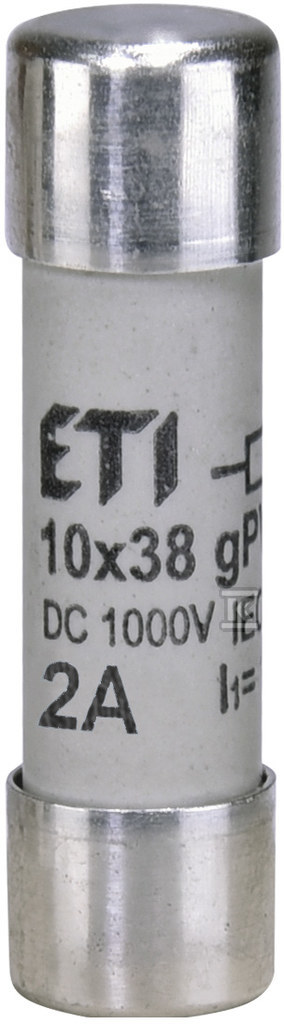
Cylindrical fuse PV CH10x38 gPV 2A/1000V DC 002625065 ETI

Suggested products
TECHNICAL DATA
Sales unit dimensions and weight: 1 pcs
Cylindrical fuse PV CH10x38 gPV 2A/1000V DC 002625065 ETI
Specialized protection for photovoltaic installations
The PV CH10x38 gPV cylindrical fuse with a rated current of 2A and a voltage of 1000V DC has been specifically developed to protect photovoltaic modules in PV systems. It features a high breaking capacity of 30kA DC, ensuring effective protection against short circuits in photovoltaic installations.
Operating parameters and technical characteristics
The device operates in temperatures from -25°C to +55°C, maintaining full functionality in various atmospheric conditions. The gPV characteristic (photovoltaic protection) has been specifically designed for DC circuits, where fast and selective disconnection is required while maintaining compatibility with PV module parameters.
A time constant of L/R = 2ms and I²t values of 2 A²s for both breaking and pre-arcing guarantee optimal protection against overload and short circuits. Power losses are 0.47W at operating current and 1.12W under full load, minimizing the impact on system efficiency.
Construction and materials
The fuse has a standard size of 10x38mm, weighs approximately 8.3g, and features a lead-free construction compliant with ROHS standards. The ceramic body provides excellent thermal and mechanical insulation, protecting the circuit from damage while maintaining the required safety parameters.
Compliance and certificates
The product meets the requirements of the IEC 60269-6 standard and holds UL and ROHS certificates, confirming its compliance with European quality standards. It is part of the GREEN PROTECT-C series from ETI Polam, which specializes in renewable energy solutions.
Designed for mounting in dedicated fuse bases, it provides effective isolation of the damaged part of the PV modules from the rest of the installation, enabling the continued trouble-free operation of the photovoltaic system while minimizing the risk of electric shock in the event of a failure.