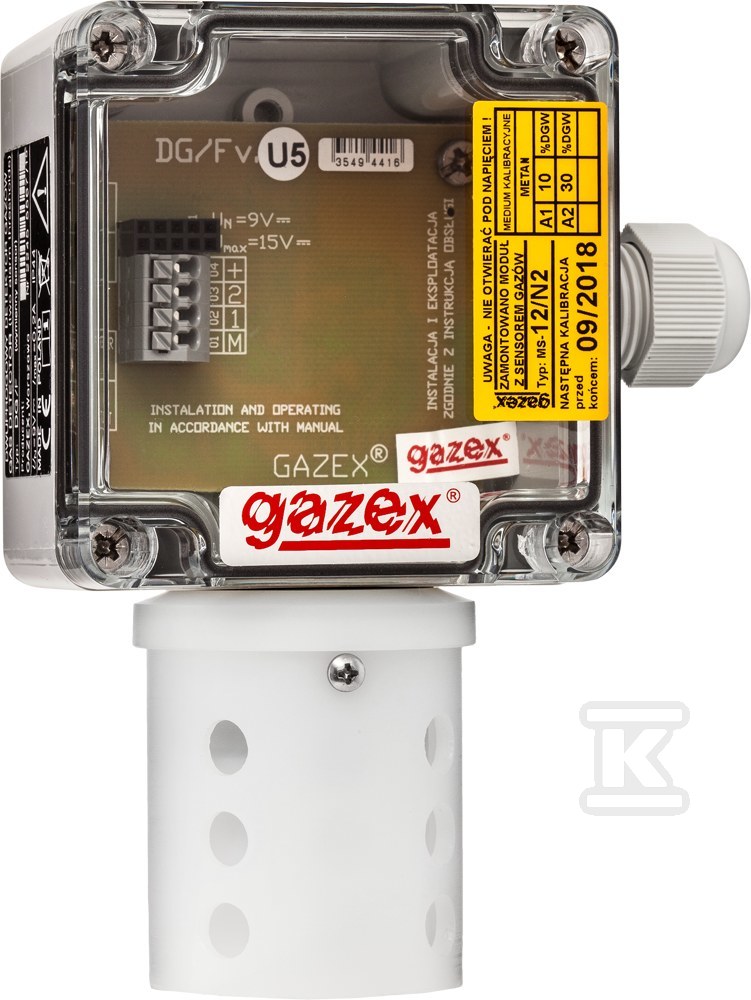
Gas detector DG-7E/N-Nstd hydrogen, calibration on request <1000ppm, electrochemical sensor DG-7E/N-NSTD

Suggested products
TECHNICAL DATA
Sales unit dimensions and weight: 1 pcs
Gas detector DG-7E/N-Nstd hydrogen, calibration on request <1000ppm, electrochemical sensor DG-7E/N-NSTD
Hydrogen gas detector – reliable protection and precise measurement
This hydrogen gas detector is designed for continuous monitoring of hydrogen presence in the air. It is a crucial solution in places where there is a risk of gas leakage, e.g. in battery rooms, laboratories, or in technological processes using hydrogen. The device is characterized by high selectivity and measurement accuracy, which ensures a quick response to potential hazards.
The DG-7E/N-NSTD detector uses an electrochemical sensor, which guarantees stability and long-term operation. Calibration on request (up to 1000 ppm) allows you to adapt the device to specific needs and working conditions. This ensures optimal measurement for a specific application.
Design and application
The device has been designed with ease of installation and use in mind. Compact dimensions (length 16.5 cm, width 7.5 cm, height 12 cm) allow for mounting in various places. The housing made of brass ensures durability and corrosion resistance. The detector is compatible with alarm modules of the MD type (4-wire interfaces), which enables integration with monitoring and alarming systems.
It is worth emphasizing the possibility of replacing sensor modules – this translates into low operating costs and long device life. In addition, the interchangeability of modules with a semiconductor and electrochemical sensor provides flexibility in choosing the right solution for a given application.
Safety and compliance with standards
The detector meets the essential requirements of the ATEX Directive 2014/34/UE, confirming its safety of use in potentially explosive atmospheres. It has ATEX certification and the ability to operate in the EX zone. The device is equipped with two alarm contacts and optical signaling of exceeding the permissible hydrogen concentration values. Built-in thermal and linear compensation algorithms ensure accurate measurements regardless of environmental conditions. Additionally, the detector has a function of calculating weighted averages (NDS, NDSCh) and measurement history, which facilitates data analysis and identification of potential problems.