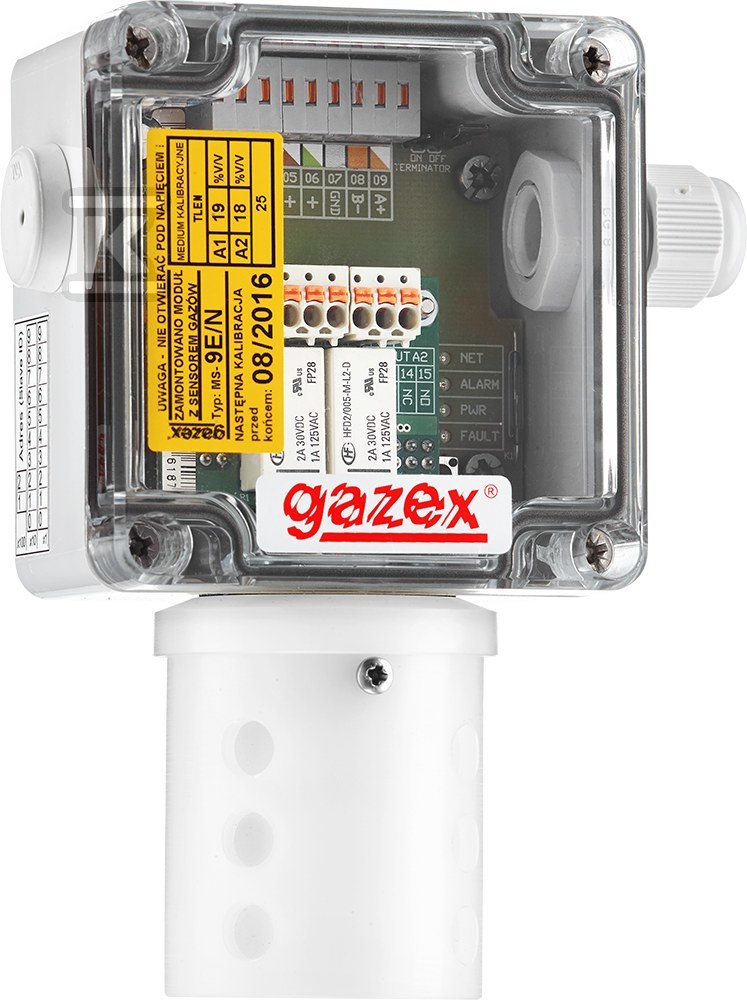
Gas detector DG-P2E/MR-Nstd carbon monoxide, measurement range on request, electrochemical sensor DG-P2E/MR-NSTD

Suggested products
TECHNICAL DATA
Sales unit dimensions and weight: 1 pcs
Gas detector DG-P2E/MR-Nstd carbon monoxide, measurement range on request, electrochemical sensor DG-P2E/MR-NSTD
Carbon Monoxide Detection for Safety and Comfort
This gas detector is designed for continuous monitoring of carbon monoxide concentration in premises. The device utilizes an electrochemical sensor, which ensures precise measurement and a quick response to changes in CO concentration. The detector signals exceeding permissible norms both visually and through built-in relays, allowing for effective protection of people staying in potentially hazardous areas. This is a key solution for ensuring safety in industrial plants, logistics centers, public facilities, and other places where this dangerous gas may be emitted.
Functionality and Communication
The DG-P2E/MR detector offers advanced features that facilitate integration with monitoring and control systems. Communication is via an RS-485 port with the MODBUS RTU protocol, enabling remote data reading and device configuration. Two programmable alarm thresholds allow you to adjust the detector's sensitivity to specific working conditions. Built-in relays with NO/NC contacts allow direct control of external devices, such as ventilation systems or audible alarms. A replaceable sensor module ensures easy maintenance and calibration, reducing operating costs.
Construction and Application
The device is characterized by a compact design (110 x 140 x 55 mm) and easy installation. It has two cable glands, making it easier to connect subsequent detectors to the network. The detector is powered by 24 V= and equipped with a thermal compensation circuit, which ensures measurement stability regardless of ambient temperature. It is important to remember that the device is not intended for use in areas hazardous due to the explosion of gases, vapors or dust - it is a detector of conventional construction. The electrochemical sensor allows measurement in the range of 0 ÷ 500 ppm of carbon monoxide, which corresponds to typical requirements for this type of application. Alarm history allows for event analysis and identification of potential problems.