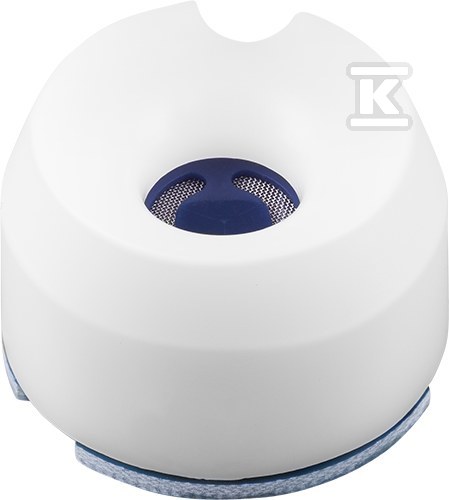
MS-31.K/N GAZEX organic compounds sensor module

Suggested products
TECHNICAL DATA
Sales unit dimensions and weight: 1 pcs
MS-31.K/N GAZEX organic compounds sensor module
Sensory Module MS-31.K/N – Replaceable, Catalytic, with Work History Memory
The MS-31.K/N module is a replaceable sensory element built around a catalytic gas sensor, dedicated to detecting organic vapors and gases in potentially explosive atmospheres. It is designed to work with DEX-31.K detectors and other GAZEX threshold systems – it does not require installing a new device when changing the monitored substance.
Simply replace the module – without dismantling the entire detector. This solution eliminates the need to rewire, perform on-site calibration, or endure long monitoring interruptions. In practice, this means: less service time, lower risk of installation errors, and reduced system maintenance costs.
Calibration Without Interrupting System Operation
The module contains a built-in processor that records work history: number of alarms, duration of alarm states, measurement range exceedances, and failures. This data is available during calibration, allowing assessment of how intensively and under what conditions the sensor operated. If gas concentrations were near the alarm threshold for an extended period, a decision can be made to replace the sensor earlier or switch to a more resistant type.
There is no need to wait for a failure or call a technician just to "check the detector." Module replacement is an operational task available to technical personnel without specialized certification.
ATEX Compliance and Use in Hazardous Zones
The module is part of a system complying with the ATEX Directive 2014/34/EU. It is intended for use in Zones 1 and 2 hazardous due to explosive gases or flammable vapors from explosion groups IIA, IIB, and IIC. Standard alarm thresholds are set at 20% and 40% LEL (Lower Explosive Limit), corresponding to typical conditions in facilities processing solvents, fuels, or chemicals.
The catalytic sensor reacts to most hydrocarbons – from methane to gasoline or acetone. It does not react to CO₂, nitrogen, or oxygen – reducing the risk of false alarms in the presence of other gases.
Construction and Operation
The module has no independent power supply – it operates as part of the DEX-31.K system, which provides voltage. Its specific dimensions are not listed in the documentation (as it is not a standalone mounting component), but its physical compatibility with DEX-31.K detectors is guaranteed by the manufacturer.
In the event of a technological process change – e.g., introducing a new solvent or fuel – there is no need to purchase a new detector. Simply replace the MS-31.K/N with another module (e.g., MS-71.KL/N for hydrogen or MS-41.K/N for ammonia). The system remains the same – only the sensor changes.
This is not merely a "replaceable part" – it is a modular architecture enabling flexibility without modernization costs.