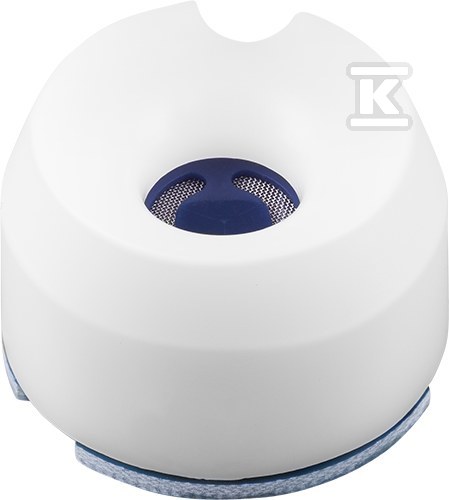
MS-5E/N GAZEX Hydrogen Sulfide Sensing Module, 100 ppm

Suggested products
TECHNICAL DATA
Sales unit dimensions and weight: 1 pcs
MS-5E/N GAZEX Hydrogen Sulfide Sensing Module, 100 ppm
MS-5E/N Sensory Module – Electrochemical Hydrogen Sulfide Sensor
The MS-5E/N module is a standalone, replaceable unit integrated with an electrochemical sensor and a processor, designed for hydrogen sulfide (H₂S) detection. It contains all necessary electronic circuits for calibration and operation within GAZEX gas detection systems. No on-site calibration is required; if replacement or verification is needed, the module can be removed and swapped with a pre-calibrated unit without dismantling the detector.
The internal processor records sensor performance data: number of alarm activations, duration of alarm states, measurement range exceedances, and fault conditions. This information enables analysis of detector operating conditions and decisions regarding sensor replacement or system parameter adjustments—without the need for additional monitoring tools.
The module is compatible with DEX-5E/N, DG-5E/N, and DG-P5E/N detectors. In DEX-5E/N systems, which hold ATEX certification, the MS-5E/N module functions as part of a certified toxic gas detection assembly. The module itself does not possess a separate ATEX certificate; its use in Zones 1 and 2 is permitted only when installed within a properly certified detector.
Standard alarm thresholds set at the production stage are: A1 = 5 ppm (NDS), A2 = 10 ppm (NDSCh). The value of 20 ppm is not listed as an allowable short-term exceedance for this module; it appears only as an additional alarm threshold in certain versions of other sensors, not for the MS-5E/N. The module's measurement range is not explicitly defined as 5–100 ppm; the manufacturer's documentation for the MS-5E/N specifies only the threshold range of 5/10/(20) ppm, not measurement limits.
The module can be replaced with another type (e.g., semiconductor or optical) if technological conditions change, without requiring modernization of the entire detection system.