Compensation cable type K AN 9-022 2x0.22 mm² 48204

Suggested products
TECHNICAL DATA
Sales unit dimensions and weight: 1 m
Compensation cable type K AN 9-022 2x0.22 mm² 48204
Compensating leads – precision temperature measurement
Compensating lead AN 9-022 2x0.22 is a key element in measurement and control systems, ensuring accurate temperature readings. It serves as an extension of the thermocouple to the measuring device, minimizing errors resulting from thermoelectric potential differences. The cable construction, with strands made of special alloys (Fe/Cu-Ni, Ni/Cr-Ni or Pt-Rh/Pt) and various types of insulation, allows it to be adapted to specific applications and operating conditions.
Construction and materials – guarantee of reliability
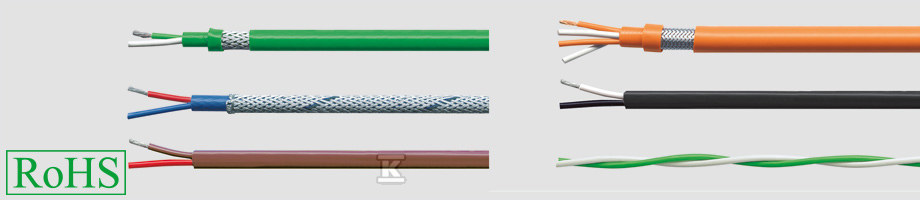
The cable consists of two strands, insulated with a material selected by the customer: PVC, silicone, Teflon or fiberglass. The strands are available in stranded or solid wire versions. A braided screen made of galvanized steel wires (SY type) or copper (CY type) provides protection against electromagnetic interference. The choice of appropriate materials – original or substitute – affects the accuracy and cost of the solution. Compensating wires made of original plastics are made of the same material as the thermocouple, which ensures the highest precision. Alternatively, substitute plastics are used, which are more economical, especially for type K and N thermocouples.
Application and technical parameters
The AN 9-022 compensating lead is used wherever precise temperature measurements are required in control and measurement technology. It meets the DIN 43713 standard regarding wire resistance: Fe: 0.080 Ohm/m, CuNi: 0.327 Ohm/m, NiCr: 0.07 Ohm/m, Ni: 0.3 Ohm/m, PtRh: 0.023 Ohm/m and Pt: 0.041 Ohm/m. Test voltage for cables with PVC, fluoropolymer and silicone insulation is 500V (strand/strand and strand/screen and screen/screen), and for fiberglass insulation – also 500V (strand/strand). Insulation resistance for PVC, silicone and fluoropolymer is at least 10 MOhm x km. Operating capacitance of the cable depends on the type of insulation and strand construction (stranded or solid wire). Indicative inductance for versions with PVC, fluoropolymer and silicone is less than 1 mH/km. Resistance tolerance per meter is +/- 10%.