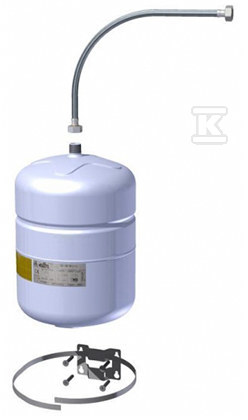
DSV 150 vessel (for glycol) A242L43

Suggested products
TECHNICAL DATA
Sales unit dimensions and weight: 1 pcs
DSV 150 vessel (for glycol) A242L43
Standing expansion vessel HEWALEX DSV 150L for solar installations
The HEWALEX DSV expansion vessel with a capacity of 150 liters has been specifically designed for operation in solar installations using glycol as a heating medium. This model is a key component of heating systems utilizing solar energy, ensuring the safe and reliable operation of the entire installation.
Operating parameters and safety
The device operates at a maximum working pressure of 10 bar, which guarantees safe operation even at high medium temperatures. A pre-charge pressure of 3 bar has been optimally selected for typical solar installation operating conditions, where significant fluctuations in medium temperature and volume occur.
An operating temperature of up to 110°C allows for the use of the vessel in solar systems reaching high operating temperatures, especially during intense sunlight. The standard 1 inch nominal diameter connection ensures compatibility with most installation fittings and enables easy installation.
Diaphragm construction and materials
The vessel is a diaphragm vessel, which ensures the separation of the heating medium from the working gas, preventing oxidation and degradation of the solar fluid and extending the lifespan of the medium.
The standing position ensures stable operation of the device and optimal use of technical space. The white color of the housing facilitates device identification and fits aesthetically into most technical rooms.
Application in solar installations
The DSV model was developed specifically for solar installations, where it functions as a compensator for the thermal expansion volume of glycol during heating and cooling cycles. In solar collector systems, the vessel absorbs changes in the solar fluid volume, maintaining constant working pressure and protecting the installation from damage.
The 150 liters capacity is suitable for medium and large solar installations, where a significant buffer capacity is required for the efficient operation of a heating system utilizing solar energy.