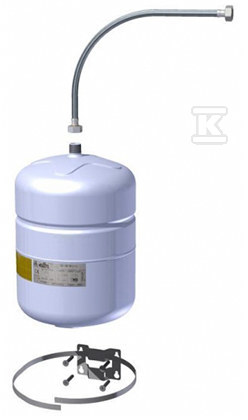
Expansion vessel DSV 50 (for glycol) A242L34

Suggested products
TECHNICAL DATA
Sales unit dimensions and weight: 1 pcs
Expansion vessel DSV 50 (for glycol) A242L34
Diaphragm vessel for glycol installations
The DSV 50 vessel is a key element of heating installations using a glycol medium, including solar systems. The device automatically compensates for changes in the volume of the thermal medium caused by temperature increases, maintaining a constant pressure value throughout the entire installation.
Construction and operating parameters
Designed as a diaphragm vessel with a capacity of 50 liters, it enables effective compensation for the thermal expansion of the heat carrier. Installation in a vertical position simplifies setup and ensures stable operating conditions for the internal diaphragm.
The 3/4 inch connection allows for connection to standard heating installations without the need for additional adapters. The white body is characterized by resistance to the conditions found in boiler rooms and technical rooms.
Operating parameters include a pre-charge pressure of 3 bar and a maximum working pressure of 10 bar, ensuring a wide range of safe operation. A maximum medium temperature of 110°C covers all typical operating scenarios for heating and solar installations.
Principle of operation and volume compensation
The internal diaphragm separates the heating medium from the gas chamber containing compressed air or nitrogen under a pre-charge pressure of 3 bar. As the temperature of the heat carrier increases, its natural volumetric expansion occurs, exerting pressure on the diaphragm and forcing an additional amount of medium into the vessel.
This process occurs automatically without the involvement of control systems or control valves. When the medium temperature decreases, the medium contracts, and the diaphragm returns to its original position, pushing the fluid back into the main installation.
Advantages of the diaphragm construction
The complete separation of the medium from the working gas eliminates the risk of heat carrier contamination and the loss of its physicochemical parameters. This is particularly important when using specialized solar fluids based on propylene or ethylene glycol.
Automatic volume compensation prevents the formation of air bubbles in the installation, which could lead to circulation problems and reduced efficiency of the entire heating system. Maintaining constant pressure translates into maintenance-free operation for many years of use.
Cooperation with automatic safety valves creates comprehensive protection against pressure overload, even during emergency increases in system parameters or regulatory errors in the boiler automation.