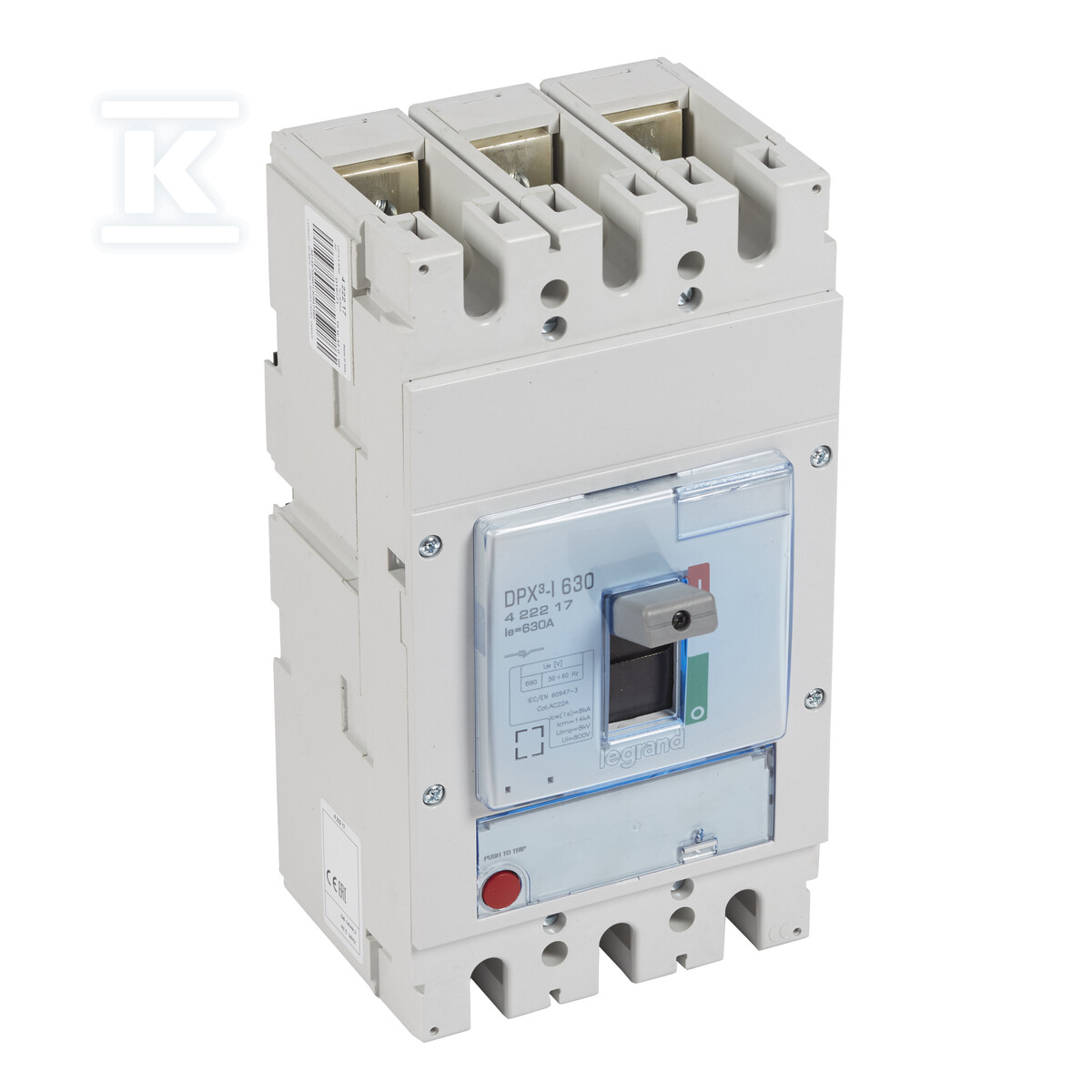
Switch-disconnector DPX3-I 630 3P 630 A 422217

Suggested products
TECHNICAL DATA
Sales unit dimensions and weight: 1 pcs
Switch-disconnector DPX3-I 630 3P 630 A 422217
Disconnector for safe disconnection of circuits under load
The DPX3-I 630 disconnector is an advanced device designed for the safe disconnection of circuits under load and the creation of a safe isolation gap in low-voltage electrical installations. The product complies with the IEC/EN 60947-3 standard and is classified under the AC23 utilization category, making it an ideal solution for professional installers and demanding end-users.
Design and technical parameters
The device is designed as a complete fixed-mount construction with dimensions of 140 × 260 × 105 mm (for the three-pole version) and a weight of 4.5 kg. The disconnector is equipped with a screw connection for the main contacts and a grey-colored control element.
Key technical parameters include a rated continuous current of 630 A at AC21 (400V) voltage, a rated operational power of 252 kW for AC23 (400V), a maximum rated voltage of 690 V AC, a rated conditional short-circuit current equal to 7.6 kA, and a rated short-time withstand current of 8 kA for a duration of t=1s.
Functionality and application
The disconnector can serve as a main switch, an emergency switch, as well as a safety disconnector. The device is adapted for mounting in distribution boards with a front-facing protection rating of IP30.
The design allows for operation at a rated frequency of 50-60 Hz, operation in ambient temperatures from −25°C to +70°C, a mechanical endurance of 20 000 cycles, and an electrical endurance of 5 000 cycles.
Equipment and compatibility
Standard equipment includes 32 mm wide flat screw terminals, terminal insulation barriers, and the possibility of sealing the trip settings.
The device is compatible with DPX3 systems - it has the same connection method as DPX3 circuit breakers. Additionally, it is adapted for cooperation with residual current blocks or relays. Optional accessories include a motor operator (for control automation), an undervoltage release (protection against voltage drops), and two changeover auxiliary contacts (status signaling).