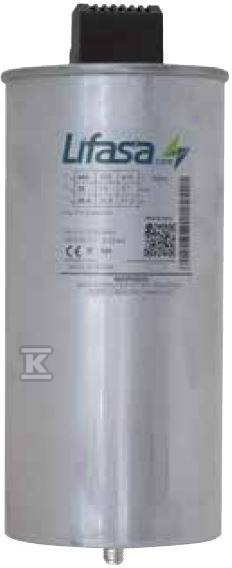
Three-phase capacitor POLB for reactive power compensation 50Hz, 400/460V POLB44015SHD

Suggested products
TECHNICAL DATA
Sales unit dimensions and weight: 1 pcs
Three-phase capacitor POLB for reactive power compensation 50Hz, 400/460V POLB44015SHD
Effective reactive power compensation with POLB capacitors
POLB three-phase capacitors are a reliable solution for improving the power factor in electrical installations. Designed for reactive power compensation in 50Hz networks with a voltage of 400/460V, they allow for optimization of device operation and reduction of energy losses. The POLB44015SHD model with a power of 1.5 kVAR is ideal for use in industrial plants, commercial buildings, and installations requiring voltage stabilization.
Construction and application
POLB capacitors are characterized by a solid construction and high reliability. They are designed for mounting in control cabinets and electrical switchboards. Their main task is to compensate for reactive power, which results in:
- Reduced load on the power grid.
- Improved voltage stability.
- Reduced energy losses in cables and transformers.
- Increased efficiency of electrical devices.
- Lower electricity costs – thanks to the reduction of reactive power consumption, electricity bills can be lower.
Advantages of POLB capacitors
- High quality workmanship: POLB capacitors are manufactured from high-quality materials, which guarantees their long-lasting and trouble-free operation.
- Wide voltage range: The ability to use in 400/460V networks provides flexibility and compatibility with various installations.
- Compact dimensions: Facilitate mounting even in limited space of control cabinets.
- Reliability: The construction of the capacitors ensures their resistance to environmental conditions and long-term use.
- Cost optimization: Improving the power factor translates into lower electricity bills and reduced losses in the network.
POLB capacitors are a good choice for both professional installers and end-users looking for an effective solution for reactive power compensation. Their installation allows for improvement of the operating parameters of the electrical installation and reduction of operating costs.