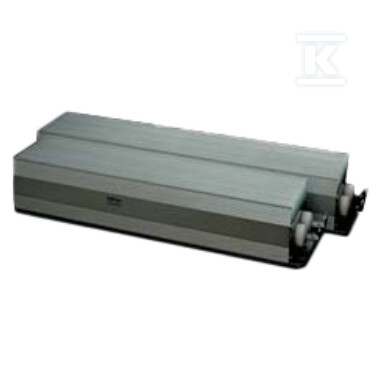
Resistors, dedicated for use with MCRF 800W 50 OHM frequency inverters
Suggested products
TECHNICAL DATA
Sales unit dimensions and weight: 1 pcs
Resistors, dedicated for use with MCRF 800W 50 OHM frequency inverters
Braking resistors for frequency inverters – effective energy dissipation
Braking resistors are a key element of motor control systems using frequency inverters. Their task is to safely dissipate excess energy generated during motor braking, converting it into heat. Without a braking resistor, excess energy could lead to damage to the inverter or interference with its operation. This model, with a power of 800W and a resistance of 50 Ohm, is designed to work with inverters, providing stable and efficient braking.
These resistors are used wherever precise and controlled motor stopping is required – from simple industrial applications to advanced automation systems. Their compact dimensions (300 x 70 x 45mm) make installation easy even in limited space. The resistor design ensures safe operation and long-term reliability.
How does a braking resistor work?
During motor braking, kinetic energy is converted into electrical energy. In the absence of a load or too rapid braking, this energy cannot be returned to the grid and accumulates in the inverter's DC link, causing the voltage to rise. The braking resistor takes on this excess energy, dissipating it as heat. This prevents exceeding the permissible voltage values and protects the inverter from damage.
It is important to remember that selecting the right braking resistor is crucial for the proper functioning of the system. The motor power, braking time and inverter characteristics must be taken into account. A well-matched resistor will ensure smooth and safe braking, minimizing the risk of failure and downtime.