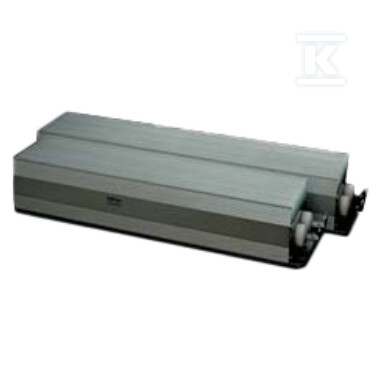
Resistors, dedicated for use with MCRF-ST 6.4kW frequency inverters 10 OHM MCRF-ST 6.4KW 10 OHM
Suggested products
TECHNICAL DATA
Sales unit dimensions and weight: 1 pcs
Resistors, dedicated for use with MCRF-ST 6.4kW frequency inverters 10 OHM MCRF-ST 6.4KW 10 OHM
Frequency inverter braking resistors – effective braking and motor protection
Resistors dedicated to working with frequency inverters, such as this 10 OHM and 6.4kW model, play a key role in regenerative braking systems. Their task is to dissipate excess energy generated during motor braking, converting it into heat. This allows for efficient and safe stopping of the drive, while simultaneously protecting the inverter itself from overload.
Design and application
Resistors from the MCRF-ST series, to which this model belongs, are specially designed to work with LS Electric inverters. They are characterized by compact dimensions and a safe housing, which facilitates their installation and ensures reliability in harsh industrial conditions. They are an ideal solution for applications requiring frequent braking, such as cranes, elevators, conveyors or CNC machines. Using a braking resistor allows you to shorten the stopping time and reduce the load on the power grid.
Key features and benefits
- Dedicated to LS inverters: Ensures optimal cooperation and efficiency with LS Electric devices.
- High power: The 6.4kW model is designed for applications requiring significant braking power.
- Compact dimensions: Facilitates integration with existing systems and reduces the required mounting space.
- Safe housing: Protects against accidental contact and ensures safe operation in an industrial environment.
- Efficient energy dissipation: Allows for effective motor braking without the risk of damage to the inverter or other system components.
- Increased system life: By relieving the inverter of excess energy, the resistor contributes to extending its lifespan.
It is important to remember that the selection of the appropriate braking resistor should be correlated with the parameters of the motor and inverter, as well as the characteristics of the load. If in doubt, it is worth consulting a specialist in electric drives.