TDR-410 reflectometer with inspection declaration WMPLTDR410

Suggested products
TECHNICAL DATA
Sales unit dimensions and weight: 1 pcs
TDR-410 reflectometer with inspection declaration WMPLTDR410
Precise Fault Diagnosis in Metal Conductors
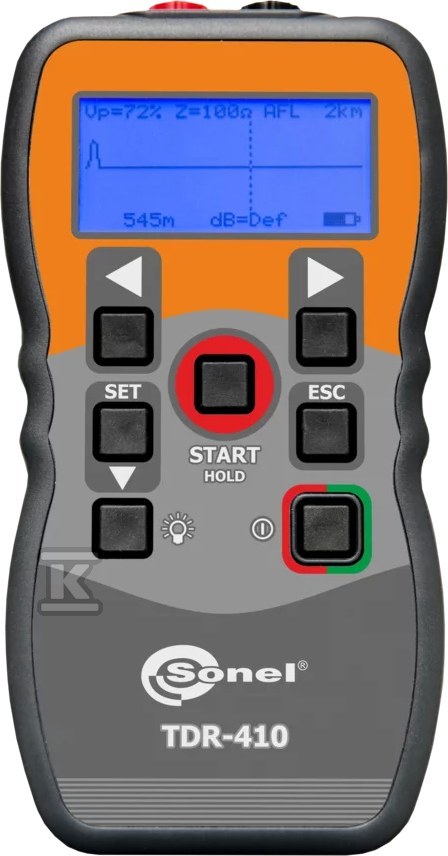
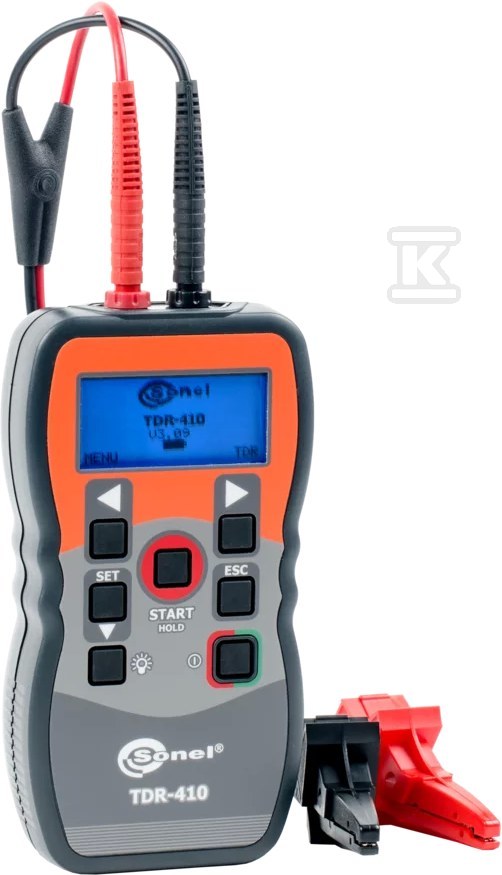
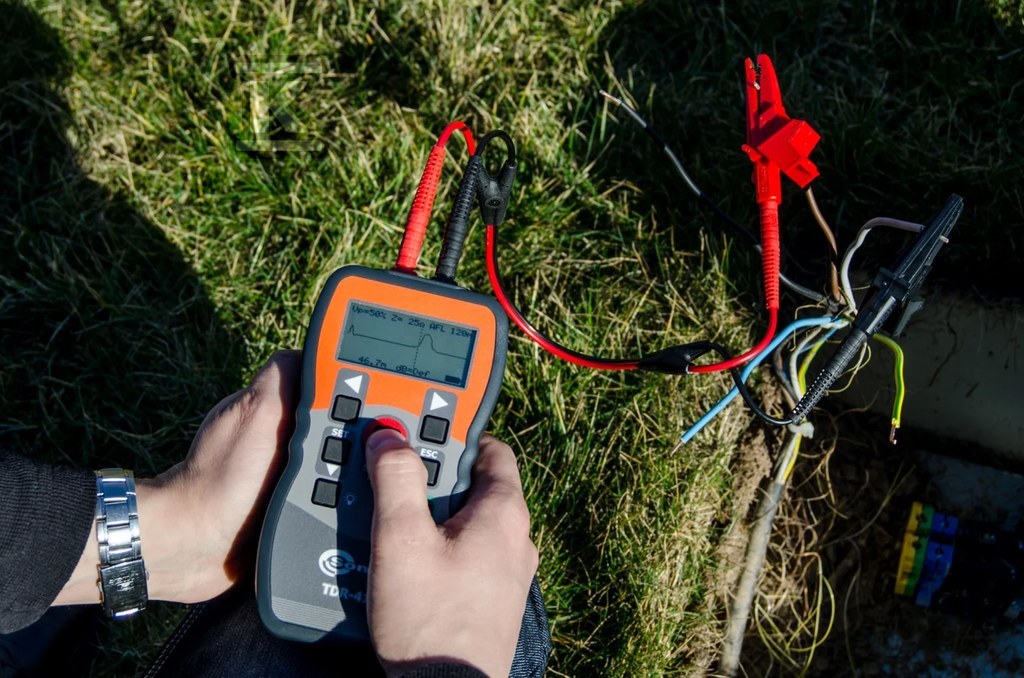
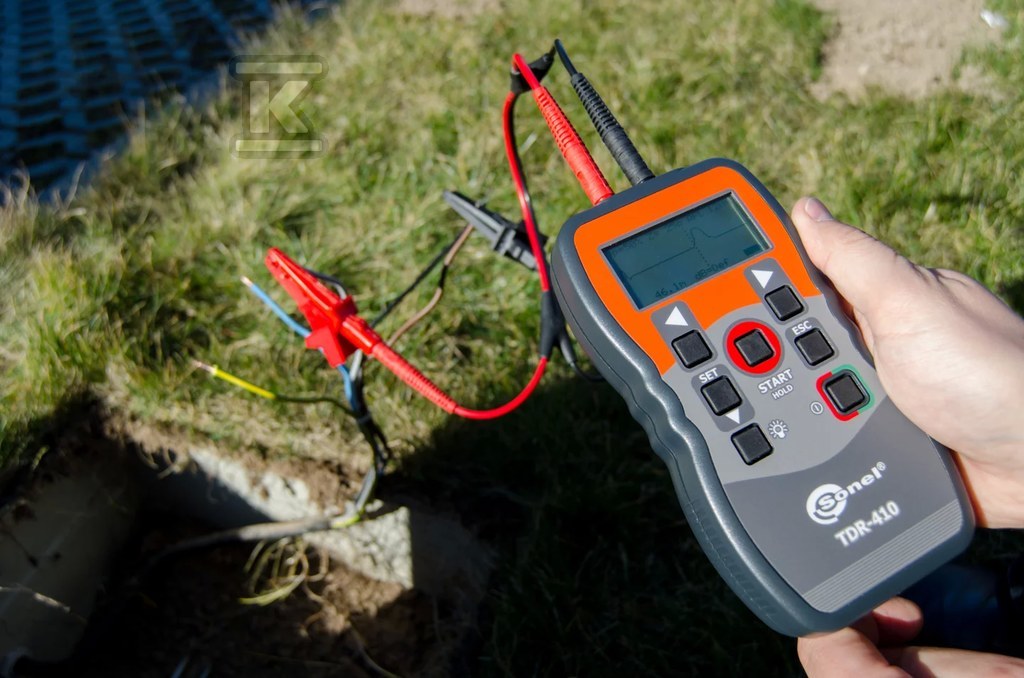
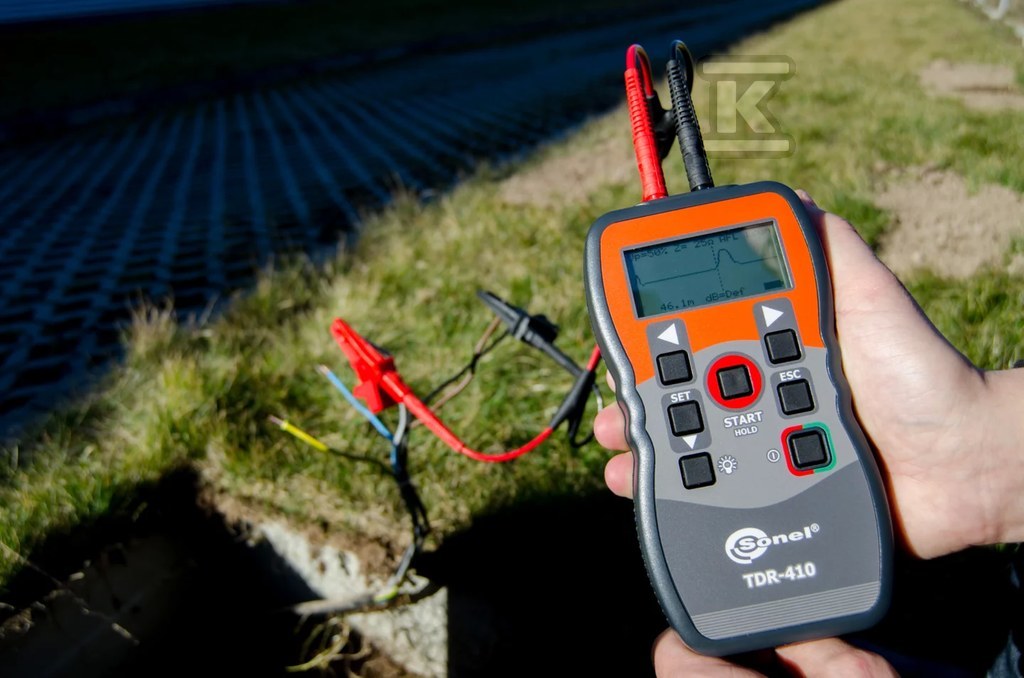
Locating faults in cable installations requires a tool that not only indicates the problem but, above all, provides its exact location without the need for physical excavation of the route. The TDR-410 reflectometer is a device dedicated to the rapid detection of breaks, short circuits, moisture-induced damage, and other impedance changes in metal conductors. It operates by sending a pulse and analyzing its reflection, enabling the creation of a graphical representation of the cable route along with automatic indication of the distance to the fault on the display. This allows both installers and maintenance personnel in production facilities to instantly locate the cause of failures in power cables, telecommunications (copper) cables, or coaxial cables.
Applications and Measurement Range
The device is suitable for a wide range of applications – from short sections of infrastructure cabling to long transmission lines. A key advantage is the ability to work on cable sections ranging from 7 meters up to 4 kilometers from one end of the cable. The user has access to 11 measurement ranges (from 7 m to 4 km), which can be selected manually or left to the automatic scanning mode. This solution significantly accelerates field work by eliminating the need to manually adjust parameters with every change in measurement conditions.
Thanks to the adjustable propagation coefficient (from 1% to 99%) and impedance matching (25, 50, 75, and 100 Ω), the device precisely adapts to various cable types, enabling quick identification of short circuits and breaks in power networks or detection of insulation damage and moisture in copper telecommunications cables. It is also effective for analyzing signal transmission line continuity in coaxial cables and diagnosing internal building networks (infrastructure cabling). Notably, the device's "dead zone" is limited to just 0.5 m, allowing fault detection even in the immediate vicinity of the measurement connection point – a feature often neglected in cheaper locators. Measurement accuracy is approximately 1% of the selected range, and the minimum cable length required to perform a test is only 4 meters.
Work Ergonomics and Reliability in Challenging Conditions
Operation of the TDR-410 is designed to be comfortable even during long measurement sessions in the field. The device features a 2.5-inch LCD display with backlight and a resolution of 64 x 128 pixels, ensuring a clear graph display even under poor lighting or direct sunlight. The scanning mode allows for two measurements per second or operation in single-shot mode triggered manually, providing flexibility depending on the diagnostician's needs. Additionally, an acoustic signal generator (810–1100 Hz) provides audio feedback on the measurement progress, facilitating work while simultaneously monitoring results visually.
The device enclosure has an IP54 protection rating, meaning it is resistant to dust and water splashes – crucial for work on construction sites or in production halls. Dimensions (165 x 90 x 37 mm) and low weight (approx. 350 g without batteries) make the reflectometer easy to fit into a work overall pocket or tool bag. Power supplied by four standard AA alkaline batteries or NiMH rechargeable batteries provides up to 30 hours of continuous scanning, while the automatic power-off function (configurable after 1–5 minutes of inactivity) ensures energy savings during work breaks. The device can operate at temperatures from -10°C to +50°C and be stored from -20°C to +70°C.
The device meets rigorous safety standards IEC61010-1 and EMC PN-EN 61326-1 and carries the CE marking, guaranteeing compliance with European Union requirements for electrical and electronic equipment used in industrial and construction environments. It is a robust tool for professionals requiring repeatable results without unnecessary operational complexity.
CERTIFICATES, APPROVALS, SAFETY, COMPLIANCE AND WARNINGS
Attachments