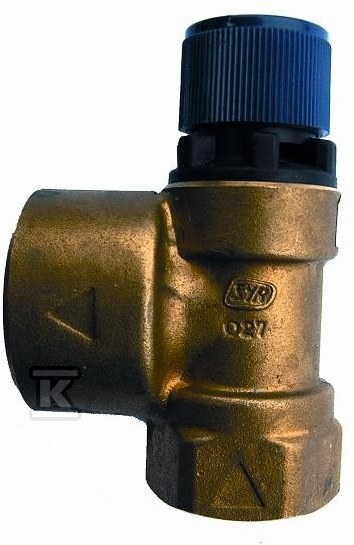
Safety valve 2115, 5.0 bar, 1/2 inch 2115.15.155

Suggested products
TECHNICAL DATA
Sales unit dimensions and weight: 1 pcs
Safety valve 2115, 5.0 bar, 1/2 inch 2115.15.155
Protects heating systems from overpressure
Safety valve 2115.15.155 acts as a membrane protective element in closed water installations, preventing damage caused by overpressure. It is mainly used in heating systems with domestic hot water (DHW) heaters, where stable pressure is crucial for safety and performance. The opening setting of 5.0 bar meets typical requirements for standard tanks up to 300 L — no additional calculation is needed if the installation follows the basic manufacturer guidelines.
Design ensuring durability and easy service
Housing made of brass, and all internal components — also made of brass — guarantee corrosion resistance in humid conditions. The spring coated with a galvanic coating does not wear quickly, even with cyclic opening. The membrane and seals made of high‑temperature and ageing‑resistant material allow safe operation up to a maximum temperature of 110 °C — meaning the valve copes even with short overheating events.
The top insert can be unscrewed for seat cleaning — no need to disassemble the entire valve, which shortens service time and eliminates the risk of damaging other installation components. The design prevents accidental adjustment of the opening pressure — it cannot be manually “turned”, which is important for installation by non‑specialist personnel.
Works with glycol mixtures and in vertical installation
It can be used not only in pure water but also in glycol solutions — provided the glycol content does not exceed 50%. This is important for anti‑freeze systems or hybrid heating installations. Installation should be vertical, with inlet from below — so the membrane operates correctly and is not exposed to sediment or air accumulation.
The valve holds a PZH certification (no. B.BK.60110.0435.2024), confirming its compliance with Polish safety requirements for heating devices. No additional UDT documents are required at acceptance — its presence and correct installation are sufficient.
It is worth noting: a leaking valve often signals an installation issue — e.g., excessive fill pressure, lack of expansion tank, or a damaged expansion tank — rather than a valve failure itself.
CERTIFICATES, APPROVALS, SAFETY, COMPLIANCE AND WARNINGS
Additional information
Information about websites