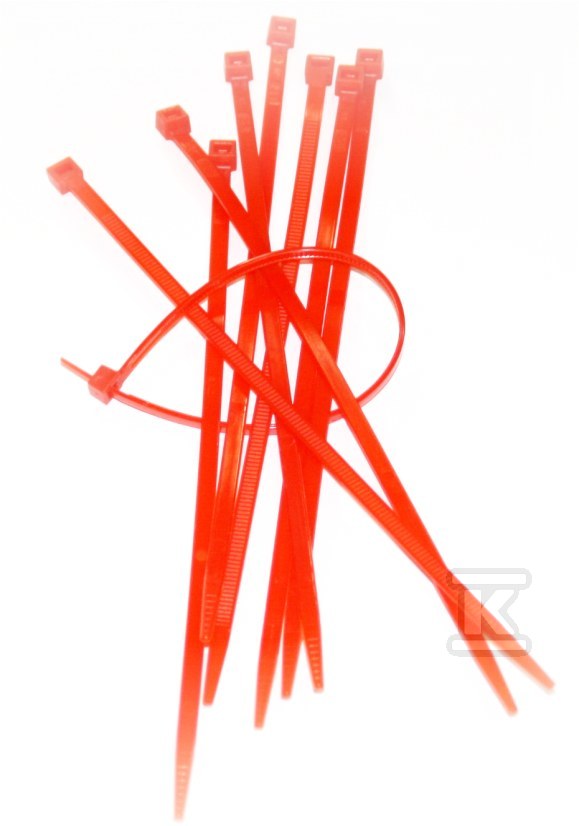
Cable tie SCK-280MCR red (100 pcs) /100pcs/ SCK-280STCR

Suggested products
TECHNICAL DATA
Sales unit dimensions and weight: 1 pkg
Cable tie SCK-280MCR red (100 pcs) /100pcs/ SCK-280STCR
Cable ties SCK-280MCR are reliable and easy-to-use elements for binding and organizing wires and cables. Made of durable polyamide 6.6, they provide a secure hold and resistance to mechanical damage. The red color facilitates identification and segregation of cable bundles, which is particularly useful in installations with a complex structure.
Features and application
The SCK-280MCR tie is characterized by a length of 280 mm and a width of 4.5 mm, allowing it to secure cables with a diameter of 5 to 101 mm. The construction with internal serration ensures a secure closure, and the material – polyamide (PA) – guarantees durability and resistance to weather conditions in the temperature range of -40°C to +85°C. Thanks to the UL94 V2 flammability class, these ties meet fire safety requirements. They are halogen-free, which is important in applications sensitive to the emission of toxic substances during combustion.
Advantages for the installer and user
- Quick and easy installation: The ties can be quickly and easily attached by hand, without the need for special tools.
- Strength and reliability: Polyamide 6.6 provides high tensile strength (min. 220 N), guaranteeing stable cable fastening even in difficult conditions.
- Safety: UL94 V2 flammability class and halogen-free material increase installation safety.
- Color identification: The red color facilitates quick identification of cable bundles, which streamlines service and maintenance work.
- Wide range of applications: SCK-280MCR ties are used in various industries, such as:
- Electrical installations
- Automotive
- Mechanical engineering
- Construction
- Electronics
The ties are supplied in packages of 100 pieces, making them an economical solution for both professionals and home users. The use of internal serration minimizes the risk of the tie opening accidentally due to vibrations or mechanical stress. The installation temperature should be in the range of -10°C to +60°C for optimal results.