In an era of increasing ecological awareness and health consciousness, air quality in buildings has become a priority for owners of commercial and residential properties. Modern HVAC systems require precise monitoring of air parameters to ensure optimal comfort and safety for users. At Onninen, we offer advanced air quality sensors that enable comprehensive analysis of the indoor environment of buildings.
Professional air quality monitoring systems are not only a matter of comfort but, above all, an investment in the health of users and the energy efficiency of the building. With precise measurements of parameters such as CO2, particulate matter PM2.5 and PM10, volatile organic compounds, and humidity, it is possible to automatically control ventilation and air conditioning systems according to actual demand.

Check air quality sensors at Onninen warehouse
Why air quality monitoring is crucial for HVAC systems
HVAC systems that operate at a constant efficiency without considering actual needs generate unnecessary operating costs and can negatively impact user comfort. From our years of experience in the installation industry, we know that demand-controlled ventilation (DCV) can yield energy savings of 20-60% depending on the type of building.
Key monitoring parameters
- CO2 concentration - an indicator of the presence of people and the need for fresh air
- Particulate matter PM2.5 and PM10 - main components of smog and pollution
- Volatile organic compounds (VOCs) - emissions from finishing materials and household chemicals
- Relative humidity - prevention of mold and bacteria growth
- Temperature - optimization of thermal comfort
In Onninen's assortment, you will find air quality sensors from renowned manufacturers that allow for precise measurement of all key indoor air parameters.
How CO2 sensors work in ventilation systems
Carbon dioxide is the most important indicator of indoor air quality, as its concentration directly correlates with the presence of people in the room. A person produces an average of 1 kg of CO2 per day, and in exhaled air, the concentration of this gas reaches 40,000 ppm.
NDIR measurement technology
Professional CO2 sensors use non-dispersive infrared (NDIR) measurement technology. Light with a wavelength of 4.3 μm passes through the measurement chamber, where it is absorbed by carbon dioxide molecules. The more CO2 in the air, the greater the light absorption, allowing for precise measurement of gas concentration.
| CO2 concentration [ppm] | Air quality rating | Impact on users |
|---|---|---|
| 400-600 | Very good | Optimal concentration and well-being |
| 600-1000 | Good | No negative symptoms |
| 1000-1500 | Average | Possible decrease in concentration |
| 1500-2500 | Poor | Drowsiness, headaches, decreased performance |
We recommend from our offer the AWENTA VSPM air quality sensor, which combines CO2, temperature, and humidity measurement in one compact device.
Integration of sensors with building automation systems
Modern air quality sensors offer various communication protocols that allow their integration with BMS (Building Management System). The most commonly used protocols are Modbus RTU, BACnet MS/TP, and analog outputs 0-10V.
Benefits of HVAC automation
- Energy savings - the system operates only when needed
- Better comfort - automatic adjustment of parameters to needs
- Extended lifespan - reduction of HVAC equipment operating time
- Compliance with standards - meeting air quality requirements
As a market leader in the installation sector, we know that proper integration of sensors with ventilation systems requires a professional approach and appropriate selection of components.
Applications in various types of buildings
Air quality sensors are used in a wide range of facilities where maintaining appropriate indoor environmental parameters is crucial.
Office buildings
In office spaces, CO2 monitoring can increase employee productivity by up to 18%. High carbon dioxide concentrations above 1000 ppm cause drowsiness and decreased concentration ability.
Educational facilities
In classrooms, proper air quality has a direct impact on students' cognitive abilities. Regular monitoring allows for the identification of ventilation problems and taking 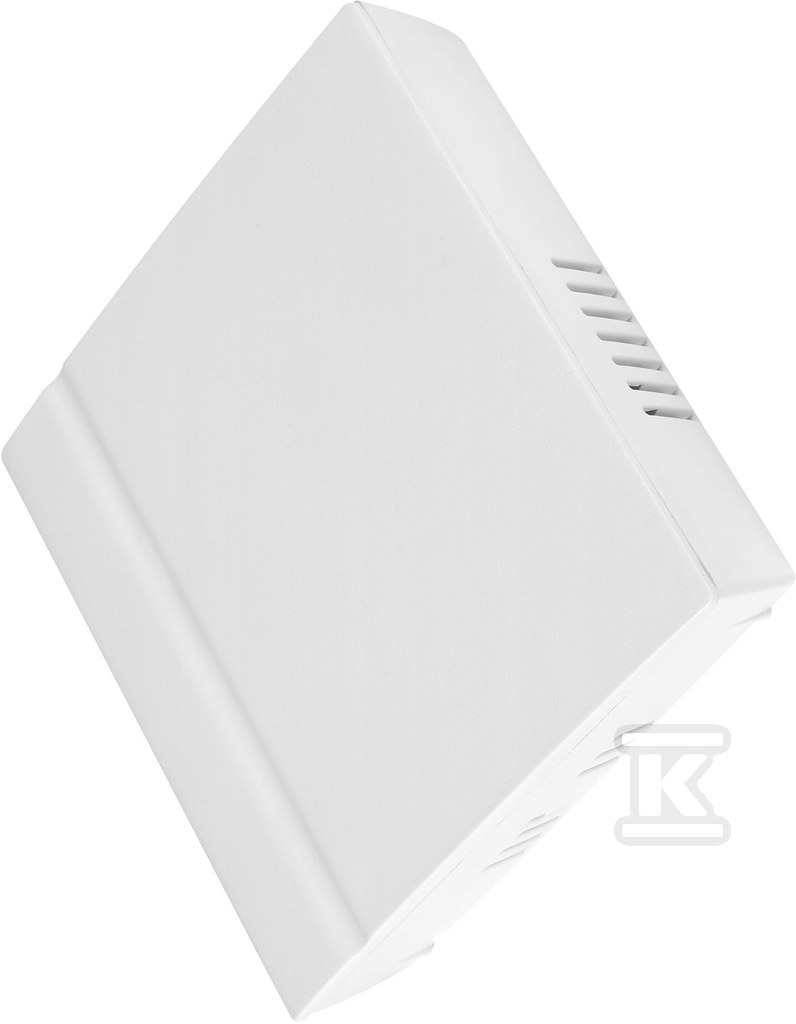 appropriate actions.
Residential buildings
In single-family homes and apartments, air quality sensors work with recuperation systems, automatically adjusting the intensity of ventilation to the actual needs of residents.
Installation and configuration of air quality sensors
Proper installation of sensors is crucial for obtaining reliable measurements. Based on our experience in implementing installation projects, we recommend following these guidelines:
Sensor location
- Mounting height - 1.2-1.8 m above floor level (human occupancy zone)
- Distance from doors and windows - at least 1.5 m from sources of fresh air intake
- Avoid direct sunlight - it may affect temperature measurement
- Representativeness of measurement - typical locations for the entire room
In larger spaces, we recommend installing one display for every 930 m² of area to provide users with access to information about the current air quality.
Frequently asked questions
What parameters should an air quality sensor in an HVAC system measure?
A professional sensor should monitor CO2, temperature, humidity, and particulate matter. Additional parameters include volatile organic compounds (VOCs) and atmospheric pressure. Onninen offers multifunctional devices that measure all key parameters in one compact solution.
How often should CO2 sensors in ventilation systems be calibrated?
Modern sensors with automatic ABC calibration require servicing every 2-3 years. Systems with automatic baseline correction self-compensate for measurement drift. In facilities operating 24/7, we recommend sensors with long-term stability without the need for frequent calibration.
What energy savings can be achieved with air quality sensors?
DCV systems with CO2 sensors can save 20-60% on energy costs. In offices, savings are 20-30%, in restaurants 30-60%, and in schools 10-50%. The greatest benefits are achieved in facilities with variable occupancy, where traditional systems operate at a constant efficiency.
Can air quality sensors be integrated with existing HVAC systems?
Yes, most modern sensors offer standard communication interfaces. Modbus RTU, BACnet MS/TP, and analog outputs 0-10V protocols allow integration with various automation systems. Our sensors are compatible with most HVAC controllers available on the market.
What is the optimal CO2 concentration in office rooms?
The recommended CO2 concentration in offices is a maximum of 1000 ppm. Values of 400-600 ppm ensure optimal concentration for employees. Above 1500 ppm, there is a noticeable decrease in performance and well-being. HVAC systems should maintain the difference between external and internal concentrations below 700 ppm.
How to choose the right air quality sensor for a specific application?
The choice depends on the type of room, the number of users, and the required monitoring parameters. In offices, CO2 is a priority; in industry - VOCs and particulates; in apartments - a complete set of basic parameters. Our sensors are available in various configurations, from basic to multifunctional measuring stations.
Investment in a healthy work environment
Monitoring air quality in a building is an investment that brings multiple benefits - from energy savings, through improved user comfort, to meeting the growing regulatory requirements regarding the indoor environment of buildings. At Onninen, we offer comprehensive solutions - from individual sensors to advanced monitoring systems integrated with building automation.
Our team of experts provides professional advice on selecting optimal solutions for every type of facility. With a wide network of branches across Poland and the availability of products on hand, we can quickly implement even the most demanding installation projects.
Contact our specialists to learn about the full capabilities of modern air quality monitoring systems and their integration with HVAC installations. Together, we will create a solution that ensures optimal air quality in your building with maximum energy efficiency.