In Onninen's offer, we are increasingly reaching for heating mats under panels as a modern solution for underfloor heating. As leaders in installation distribution, we observe a growing interest in electric heating systems among professional installers and their clients. But is a heating mat under panels really a good idea?
From our many years of experience in the installation industry, it follows that electric underfloor heating brings real benefits, but it requires thoughtful selection and professional installation. In Onninen's assortment, you will find proven solutions from renowned manufacturers that have been successful in thousands of implementations.
Our experts have analyzed all aspects of using heating mats under panels – from operating costs, through advantages and disadvantages, to practical installation tips. Let's check when it is worth opting for this technology.
Check heating films at Onninen's warehouse
What is a heating mat and how does it work under panels
A heating mat is a flat structure consisting of a fiberglass mesh on which thin heating wires with a diameter of 2-3 mm are mounted. In our offer, you will find products with heating power from 100 to 200 W/m², which provide effective surface heating.
Principle of operation of the system
Electric heating mats use electrical resistance to generate heat. The current flowing through the wires causes them to heat up, and the thermal energy is transferred to the floor panels, which become the heating surface of the entire room.
We offer in Onninen HEAT DECOR HD-mat heating mats with a power of 150 W/m², which are characterized by a very thin heating cable (3 mm) allowing for a reduction in the thickness of the screed.
Advantages of heating mats under panels – expert analysis
Thermal comfort and even heating
The greatest advantage of heating mats is the even distribution of heat throughout the room. Unlike traditional radiators, which create zones with different temperatures, mats provide a uniform floor temperature and a comfortable feeling of warmth underfoot.
Space-saving and aesthetics
Heating mats are an invisible solution that does not take up usable space. They eliminate the need for traditional radiators, giving greater freedom in room arrangement. Our branches across Poland regularly supply systems for modern implementations where interior aesthetics are of key importance.
Ease of installation and maintenance
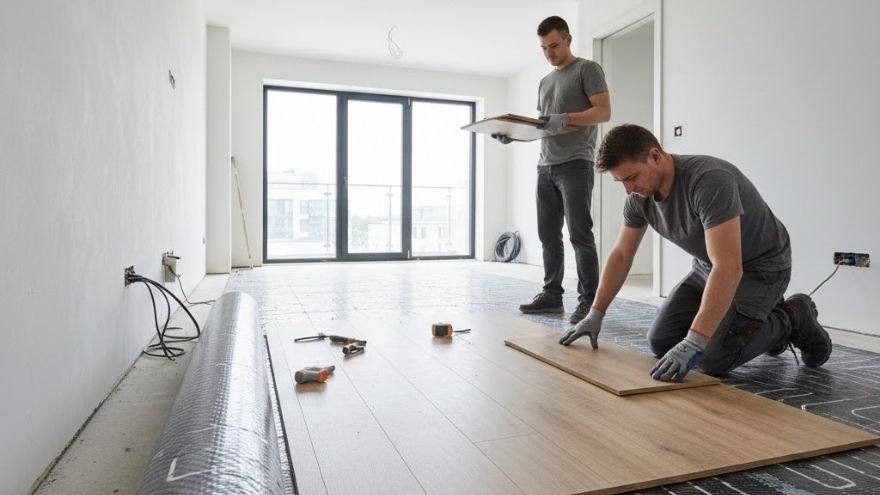
As a leader in the installation market, we know that simplicity of installation is a key factor. Heating mats can be installed directly under the panels, without the need to build a boiler room or run pipes. The system is maintenance-free and does not require servicing.
Energy efficiency
Modern heating films from our offer allow for a reduction in air temperature by 1-2°C while maintaining the same thermal comfort, which translates into energy savings of 10-20%.
Limitations and disadvantages – an honest assessment by experts
Operating costs
The main limitation of heating mats is the operating costs associated with electricity prices. Based on our analyses, a mat with a power of 150 W/m² in a 10 m² room can generate costs from 80 to 150 PLN per month, depending on the working time and energy tariff.
High initial costs
Investing in a complete system can be significant – the prices of mats along with a thermostat range from 200 PLN/m² upwards. However, as experienced suppliers, we emphasize that this is a long-term investment that can pay off with proper use.
Limitations in panel selection
Not all floor panels are compatible with underfloor heating. Products with appropriate thermal conductivity and resistance to temperature changes are required. Our team of experts will help in selecting the right materials for each installation.
| Aspect | Advantages | Limitations |
|---|---|---|
| Comfort | Even heat, no radiators | Slower heating than traditional radiators |
| Costs | No maintenance costs | High electricity bills |
| Installation | Simple installation, no pipes | Requires selection of appropriate panels |
How much electricity does a heating mat consume – specific calculations
From our experience, energy consumption depends on several key factors that every installer should consider in their calculations.
Example cost calculation
A heating mat with a power of 150 W/m² in a 6 m² bathroom:
- Total power: 900 W
- Working time: on average 6 hours a day (30% of the cycle)
- Daily consumption: 1.8 kWh
- Monthly cost at a price of 0.85 PLN/kWh: about 46 PLN
Factors affecting consumption
Our many years of experience show that actual energy consumption depends on:
- Building insulation – in well-insulated buildings, consumption can be 40% lower
- Ambient temperature – in frost, consumption increases by up to 50%
- Thermostat regulation – intelligent control can reduce costs by 20-30%
- Usage method – as primary or additional heating
When is a heating mat under panels a good choice
Ideal applications
In Onninen's assortment, we particularly recommend heating mats for:
- Bathrooms and hallways – where the comfort of a warm floor is of key importance
- Rooms with photovoltaic panels – self-generated energy reduces operating costs
- Heating selected zones – as a supplement to the main heating system
- Renovations – where there is no possibility of running a water installation
When to consider alternatives
As experts, we advise against using heating mats as the main heating in:
- Large rooms over 25 m²
- Buildings without thermal insulation
- Facilities with high electricity costs
- Rooms requiring quick heating
Installation of heating mats – practical tips
Preparing the substrate
Proper installation is the basis for the effective operation of the system. The surface must be:
- Clean and dry – free from dust, oil, and other contaminants
- Even – height differences no greater than 3 mm over 2 m
- Primed – for better adhesion of the screed
Key installation principles
Our experience in implementations shows the most important principles: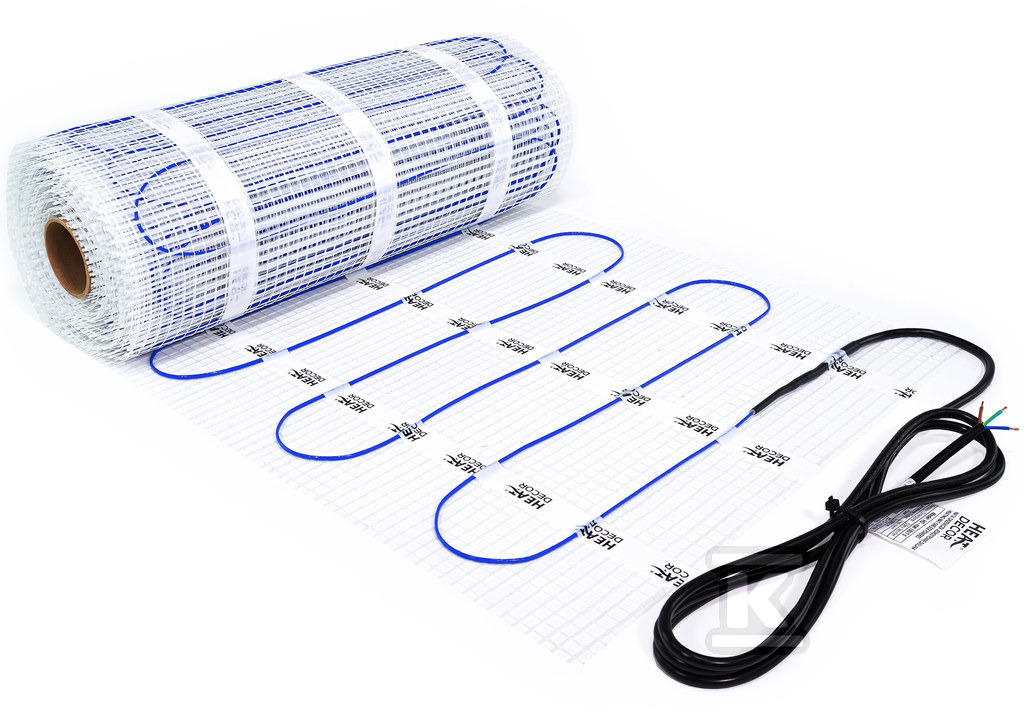
- Never lay the mat under fixed installations (furniture, bathtubs)
- Maintain a minimum distance of 10 cm from walls
- Never cut heating wires
- Before pouring, check the resistance of the cable
- Use a floor temperature sensor
Frequently asked questions
How much does a heating mat under panels cost monthly?
The monthly cost ranges from 40 to 120 PLN for every 10 m², depending on the power of the mat, working time, and energy tariff. In well-insulated buildings, costs can be 30-40% lower. Connecting to a photovoltaic installation significantly reduces operating costs.
Is a heating mat suitable for any panels?
Not all panels are compatible with underfloor heating. Products marked with the underfloor heating symbol, with appropriate thermal conductivity and thermal resistance, are required. Avoid panels with a thick HDF layer or those prone to deformation.
What power of heating mat should I choose for panels?
The standard power is 100-150 W/m² for additional heating and 150-200 W/m² as primary heating. In bathrooms, 120-150 W/m² is sufficient, in living rooms 80-120 W/m². Power is selected based on the heat loss of the room and the method of use.
Can I install a heating mat under panels myself?
Installing the mat is a relatively simple process, but electrical connections require qualifications. Laying the mat can be done by someone with basic construction knowledge, but the electrical installation, thermostat, and resistance measurements must be performed by a qualified electrician in accordance with safety standards.
How long does it take for a heating mat under panels to heat up?
Heating time is 30-60 minutes to reach a comfortable temperature. Laminated panels heat up faster than wooden ones. The system has thermal inertia – it heats up more slowly but also retains heat longer after being turned off, allowing for energy savings.
Are heating mats under panels safe?
Heating mats are completely safe when installed correctly. They have double insulation, overheating protection, and safety certificates. It is crucial to use a thermostat with a floor temperature sensor that prevents exceeding safe temperature values.
Modern solutions in installation practice
At Onninen, we observe a growing interest in hybrid heating systems that combine electric mats with traditional heat sources. Such solutions allow for optimizing operating costs and user comfort depending on needs and external conditions.
Our team of experts recommends combining heating mats with smart thermostats and home energy management systems. We offer complete solutions – from selecting the appropriate power, through professional technical advice, to support in installation at all Onninen branches.
As a leader in the installation market, we see the future of heating mats in integration with renewable energy sources. Combining with photovoltaic installations makes this system not only comfortable but also an economically justified choice for modern heating installations.