Bathroom mirrors easily collect dust, greasy stains, and cosmetic residues, and cleaning them can be problematic due to their scratch-sensitive surfaces and the formation of unsightly streaks. The task can be further complicated by hard water and the use of inappropriate accessories. How to effectively clean a bathroom mirror? Discover home methods recommended by experts.
Check out bathroom mirrors at Onninen wholesale
Preparation — pro tips before cleaning the bathroom mirror
Before you grab a cloth, remove dust and other loose dirt from the mirror with a dry, soft microfiber cloth or a special duster. Rubbing dirt into a damp surface creates streaks, so this quick step will really make a difference. If you have hard water in your bathroom, use distilled water whenever possible. Hard water promotes the formation of dull deposits that hinder achieving the desired effect.
Prepare your accessories. You don't need many products, and importantly, you don't have to buy any chemical cleaners for mirrors. You will need:
- two clean microfiber cloths - one for cleaning, the other for polishing;
- a spray bottle with a homemade cleaning solution (you can read below how to prepare it);
- a handheld squeegee or a cordless vacuum cleaner – useful for large glass surfaces.
Prepare the cleaning solution. It's very simple, as most of the needed products are probably in your kitchen. The following mixtures work great for cleaning mirrors:
- vinegar + warm water (in a ratio of 1:1 or 1:4) — this solution effectively deals with fingerprints and light dirt;
- isopropyl alcohol + water (in a ratio of 1:1 or 1:2) — this solution evaporates quickly and reduces streak formation;
- dish soap + water — this solution easily removes greasy stains, e.g., from creams or colored cosmetics.
Proven technique for cleaning a bathroom mirror
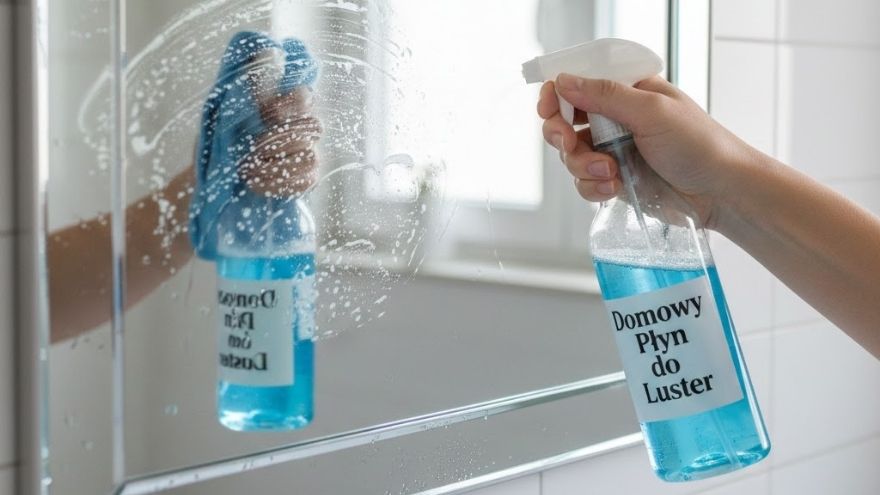
After removing dust, powder, and hair from the mirror, you can start cleaning. Begin by moistening the microfiber cloth with the prepared cleaning solution. Yes! Do not spray the solution on the mirror, but on the cloth. This will protect the decorative frames from damage and prevent flooding the surfaces and items under the mirror. Apply the solution sparingly. The cloth should be damp, not wet. Now, using gentle, circular motions, remove visible dirt from the surface. Then move on to long, straight strokes in one direction. Thoughtful movements are key to avoiding unsightly streaks. Time to polish! Put down the wet cloth and take the second one – dry. If you have a large-format mirror in your bathroom, it’s worth using a squeegee or cordless vacuum cleaner to remove the cleaning solution from the surface. Avoid using paper towels, as they leave lint and be careful when cleaning around delicate frames.
How to remove stubborn stains and deposits from the bathroom mirror?
For tough stains and deposits that remain on the mirror despite following the above instructions, try removing them with other home methods. Mix baking soda with water to a paste consistency and apply it to the stains for a short time, then clean the mirror. If you see tough dirt before you start cleaning the mirror, begin with this step. You will avoid double cleaning and polishing the surface. Do not scrub one spot too hard, as you may scratch the mirror. A quicker alternative to the above method is to wipe the stains with isopropyl alcohol.
Which mirror is the easiest to clean, and which will require more work?
Not all bathroom mirrors are cleaned the same way. Solutions used by manufacturers can significantly affect the comfort and speed of cleaning. If you plan to buy a new mirror, it’s worth considering your choice carefully. The more minimalist and smooth it is, the less effort it will take to keep it clean. The easiest to clean are classic, smooth, frameless mirrors. Nothing in them traps water or hinders cleaning. In modern models, the glass is often coated with a hydrophobic layer. Water droplets run off its surface, effectively preventing dirt and reducing cleaning frequency. Of course, the mirror can also be impregnated with a hydrophobic coating on your own. Special products are available for this purpose. You can buy them in stores offering bathroom equipment. Additionally, anti-fog mirrors with heating are easier to maintain. Heating prevents fogging. Water droplets do not dry on the surface.
Onninen wholesale - bathroom equipment in one place
Do you need to equip your home or business with modern mirrors or professional cleaning accessories? At Onninen sanitary wholesale, you will find a wide range of bathroom mirrors, as well as cloths, squeegees, professional cleaning products, and accessories – ideal products for cleaning teams and renovation companies, as well as for home use.
If you have any questions, please contact us. Our technical and sales advisors will be happy to help you with your choice.
FAQ
1. Can vinegar-based cleaners damage the mirror?
No, as long as we use a mixture of vinegar and water in the right proportions (not pure vinegar), and the solution does not have prolonged contact with the decorative elements of the mirror, e.g., the frame.
2. Why do streaks form when cleaning the mirror?
The causes can be various: from hard water, through the wrong cloth, to improper cleaning technique.
3. How often should the bathroom mirror be cleaned?
The bathroom mirror, especially in a frequently used bathroom, should be cleaned at least once a week to avoid the accumulation of dirt and difficult-to-remove streaks and to maintain the aesthetics of the interior.
4. Which bathroom mirrors are the easiest to clean?
Minimalist glass without frames and embellishments, models with a hydrophobic coating, and modern anti-fog mirrors with heating.
5. Are vacuum cleaners and window squeegees also suitable for mirrors?
Of course. They are extremely helpful, especially with large bathroom mirrors.