What is a manometer used for? How to read the measured value on it? Where to use this type of device? If you cannot answer even one of the above questions, be sure to check out our article and learn more about pressure measurements.
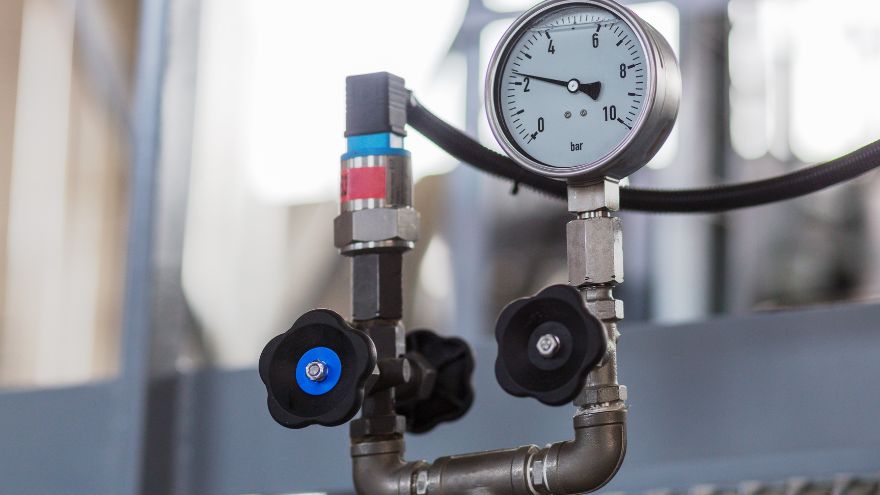
Check the manometers at the Onninen wholesaler
What is a manometer used for?
A manometer is used to measure the pressure of a liquid or gas, most often in a closed space. It is most often installed in home installations. Examples include:
- Central heating. The pressure gauge allows you to determine the water pressure in the pipes. If it is too low, it means that water needs to be added to the system. If it is too high, it may indicate problems with the tightness of the pipes.
- The pressure gauge can be connected directly to the furnace or heat pump to measure the pressure of the working fluid.
- It is a very popular measuring device for industry, especially in power hydraulic systems.
- Manometers can also be found in any other place where the pressure of any gas or liquid should be measured.
The great popularity of manometers also results from their simple construction and universal application. It can be easily installed in any system. But how to read the desired value?
How to read the measured value on a manometer?
Under the influence of the pressure of a liquid or gas in a closed container, a small spring in the manometer is compressed, causing the pointer to rotate. The value is marked on the dial, usually given in two units: atmospheres (bar) and inches of mercury (a measure used in English-speaking countries). It is enough to read the value indicated by the manometer to know what pressure is inside the system and take appropriate action.
Standard or logarithmic manometer - which one to use?
With high pressure dynamics, a regular manometer will not be convenient. In such cases, logarithmic manometers are used. The logarithmic scale applied to the dial provides better reading of both lower and higher values. The first half of the dial is occupied by values from zero to three atmospheres. The next quarter of the dial allows for measurement from 3 to 5 atmospheres. The last one measures pressure up to 25 bar. In this way, the value for low pressure can be read very accurately, while the full scale also includes high measurement values. This type of device is great in industry, where the pressure in the press or in the cylinder can increase dynamically during operation.
Thread types - how to choose the right pressure gauge?
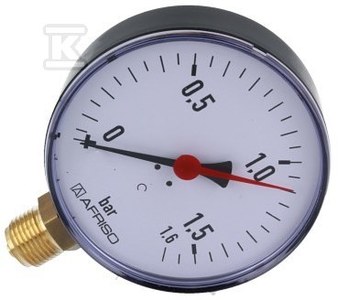 In hydraulics, inch dimensions still prevail. An example would be central heating pressure gauge with a scale of 0-1.6 bar and a 1/2 inch thread , suitable for classic hydraulic systems. For systems operating at higher pressures, there are pressure gauges with a scale of 0-10 bar .
However, not all installations have to be done in the inch system. Metric systems are also becoming more common. In such a case, you need to choose the right thread, for example the popular M20x1.5 pressure gauge with a scale of, for example, 0-6 bar. A universal solution that works well in both home and production installations.