A sewage manhole is one of the elements of the installation that must be made in accordance with applicable standards. How to properly make sewage manholes?
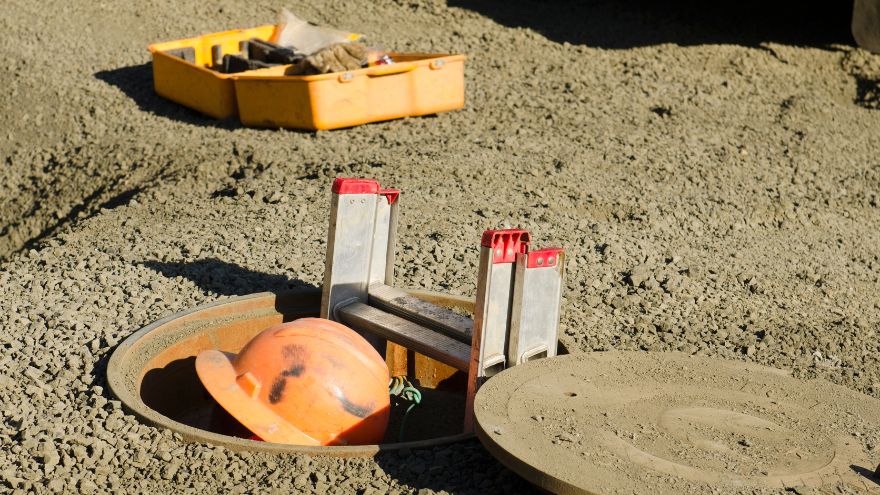
Check out the sewage manholes at the Onninen wholesaler
Technical design of sewerage networks
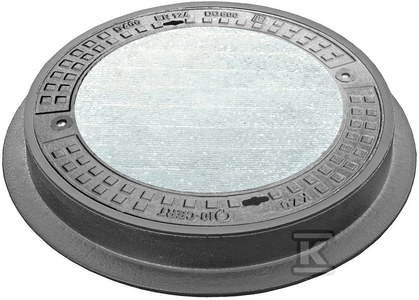 A manhole is one of the elements of a system, made based on a precisely executed technical design. It allows for the arrangement of individual elements so that the whole works properly. It should be prepared by an entity with the appropriate authorizations. The specialist will precisely indicate not only the arrangement of subsequent elements, but also variants of individual pipes, manholes, etc.
In practice, various types of manholes are used. The basic criterion for division is the distinction of manholes and non-manholes, the former allow entry into the interior, while the latter are used exclusively for inspections and revisions. Specialist equipment is used for this purpose, and the person performing the inspection is on the surface. The technical design takes into account all aspects and needs of a given system, thanks to which it is possible to indicate which manhole variant will be appropriate and where it should be located. Manholes can include through-flow manholes, junction manholes (collective manholes), manholes with an inlet, settling manholes, cleaning manholes, cascade manholes, expansion manholes, energy-absorbing manholes, and special tanks in sewage pumping stations.
The current provisions of the construction law do not specify precisely the requirements that should be met by the prepared technical design, while the details regarding the acceptance of the sewage network indicate, among other things, the scope of the test performed before acceptance. Technical designs are prepared based on the applicable regulations and the guidelines contained therein, including, among others, the Act on collective water supply and collective sewage disposal, the Construction Law Act and a number of detailed regulations.
Location of the sewage manhole
Sewer manholes cannot be  made in any place. Sewer systems require the placement of pipes and manholes in the roadway so that the manhole is located halfway along the roadway, between the vehicle wheels. Currently, many designers of sewer networks indicate that the optimal solution is for 1000 mm manholes to be located at a distance of 50 to 70 m, while 1200 mm manholes at a distance of 70 to a maximum of 100 m. In turn, for buildings connected to the external sewer network, inspection manholes are used. In the case of concrete ones, they must be located at a depth of no more than 10 m, and in the case of plastics, in accordance with the PN-EN13598 standard, at a maximum depth of 10 m. The regulations also regulate the issue of the location of the manhole in terms of the distance from the foundations of the house, because this distance cannot be less than 1.5 m. In turn, with regard to the external sewer network - the inspection manhole cannot be located further than 3 to 5 m.
Sewer manholes available at Onninen wholesaler
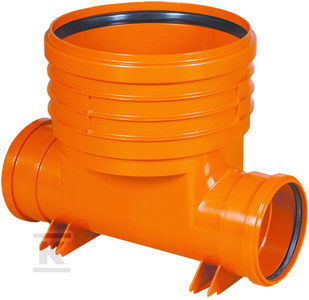 Currently, a sewage manhole can be made not only of concrete, but also of high-quality plastics. Each solution has its own advantages and disadvantages. The components available in our wholesaler, necessary for the construction of entire installations, are made of the highest quality materials, ensuring excellent tightness, which is the basic parameter checked during acceptance. Plastics provide high resistance to corrosion and adverse effects of factors such as moisture or frost. Made in accordance with standards that ensure resistance to chemicals that may be present not only in sewage, but also in the ground.
The Onninen range includes PVC and PP plastic sewage pipes of various diameters, which allows you to choose the right version for your needs. When shopping at Onninen, you can buy all the necessary elements for the construction of a manhole and installation, including continuous sewers with inlets, cast iron bodies, and concreted manholes.