Plastic sewerage chambers
(381 )
(2)
Shipping on Monday

Delivery from
146,37 zł
(5)
Shipping on Monday
Delivery from
24,48 zł
(4)
Shipping on Monday
Delivery from
146,37 zł
(1)
Shipping on Monday
Delivery from
146,37 zł
(3)
Shipping on Monday
Delivery from
146,37 zł
(1)
Shipping on Monday
Delivery from
194,34 zł
(3)
Shipping on Monday
Delivery from
24,48 zł
Shipping on Monday
Delivery from
24,48 zł
(1)
Shipping on Monday
Delivery from
9,84 zł
Shipping on Monday
Delivery from
24,48 zł
(1)
Shipping on Monday
Delivery from
24,48 zł
(3)
Shipping on Monday
Delivery from
24,48 zł
(1)
Shipping on Monday
Delivery from
24,48 zł
Shipping on Monday
Delivery from
9,84 zł
Shipping on Monday
Delivery from
24,48 zł
(1)
Shipping on Monday
Delivery from
24,48 zł
Shipping on Monday
Delivery from
24,48 zł
Shipping on Monday
Delivery from
24,48 zł
(1)
Shipping on Monday
Delivery from
24,48 zł
Shipping on Monday
Delivery from
24,48 zł
(2)
Shipping on Monday
Delivery from
24,48 zł
Shipping on Monday
Delivery from
24,48 zł
Shipping on Monday
Delivery from
24,48 zł
(1)
Shipping on Monday
Delivery from
24,48 zł
Shipping on Monday
Delivery from
24,48 zł
Shipping on Monday
Delivery from
24,48 zł
Shipping on Monday
Delivery from
24,48 zł
(4)
Shipping on Monday
Delivery from
9,84 zł
(4)
Shipping on Monday
Delivery from
9,84 zł
(1)
Shipping on Monday
Delivery from
9,84 zł

Shipping on Monday
Delivery from
9,84 zł
(2)
Shipping on Monday
Delivery from
24,48 zł

Shipping on Monday
Delivery from
9,84 zł
(1)
Shipping on Monday
Delivery from
9,84 zł
Shipping on Monday
Delivery from
9,84 zł
Shipping on Monday
Delivery from
9,84 zł
Shipping on Monday
Delivery from
9,84 zł
Shipping on Monday
Delivery from
9,84 zł
Shipping on Monday
Delivery from
9,84 zł
Shipping on Monday
Delivery from
146,37 zł
Shipping on Monday
Delivery from
146,37 zł
Shipping on Monday
Delivery from
146,37 zł

(1)
Shipping on Monday
Delivery from
146,37 zł
(1)
Shipping on Monday
Delivery from
146,37 zł
Shipping on Monday
Delivery from
146,37 zł
Shipping on Monday
Delivery from
9,84 zł
Shipping on Monday
Delivery from
24,48 zł
(1)
Shipping on Monday
Delivery from
9,84 zł
What is a sewage well?
A sewage well is one of the basic elements, next to pipes and connectors, of a non-pressure (i.e. gravity) external sewage system and drainage system. A well has many functions, including an inspection (revision) function, as it provides easy and convenient access to pipes and other elements of the sewage system located underground.
Application and purpose of a sewage well
Sewer manholes are used as an element not only of the sewer network (i.e. sanitary/domestic, storm or combined), but also in drainage systems and in industrial sewage systems. Thanks to their inspection function, manholes enable periodic maintenance of the sewer channel, as well as ongoing repair of pipelines.
Types of wells
Wells, depending on the criteria, can be divided:
- Due to the material from which they are made , we distinguish:
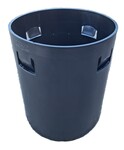
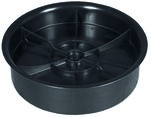
- plastic wells – monolithic or assembled from elements; made of plastic (PP, PEHD, PVC) – usually used on private properties, in areas of pedestrian or vehicular traffic of moderate or low intensity;
- concrete/reinforced concrete - monolithic or made of prefabricated elements connected with a seal or mortar; they are used in road lanes, hardened roadsides, parking lots;
- stoneware – made of stoneware;
- GRP - made of polyester resin reinforced with glass fibre.
- Due to the function they perform , we distinguish:
- inspection (inspection) - provide access to the channel for repair or maintenance of the pipeline;
- connecting - thanks to the use of flow-through chambers, they enable the continuation or change of the direction of sewage flow;
- sewage distribution – thanks to the use of collecting chambers and inlets, they enable the distribution of sewage in the desired direction; they are installed at the point of intersection of channels;
- settling tanks – without outlet, placed in the place where sediment accumulates in the installation;
- cascade – used in the construction of pipelines with large differences in terrain height, they are used to overcome height differences when changing channel depths;
- expansion - used to dissipate energy and reduce high flow rates; they are used in mountainous areas where the sewage flow rate is high due to large terrain slopes;
- protective/special – as chambers for technological and measuring devices (e.g. water meter wells).
- Due to their size and the possibility of inspection , we distinguish:
- manhole – large enough for inspection to be performed by a human; equipped with access steps;
- non-entrance – smaller, in which inspection can only be performed from the surface using specialist inspection equipment.
Well elements
Plastic wells include the following elements:
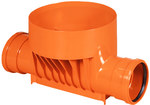
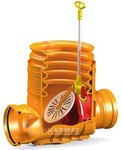
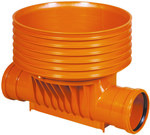
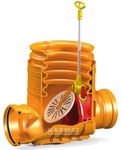
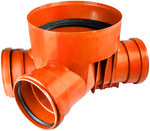
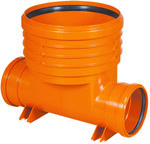
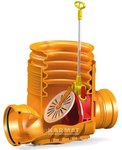
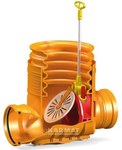
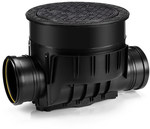
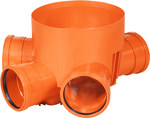
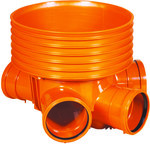
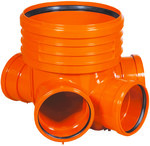
- base – the base of a well, the lower, channel-shaped element of a sewage well that allows for the connection of sewage pipes embedded in the ground; it has branches that determine the direction of sewage flow; the base may be flow-through, collective, with inlets on the right or left side to the direction of flow, and blind (e.g. settling tank);
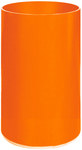
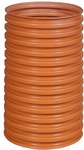
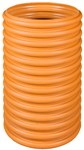
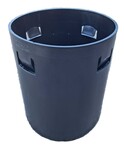
- riser/riser pipe or riser rings – an element determining the height of the well, made of PP, PEHD or PVC in a smooth or corrugated (corrugated) pipe version;
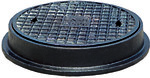
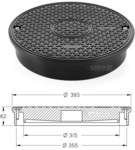
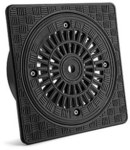
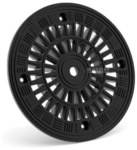
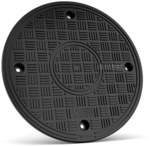
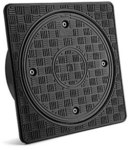
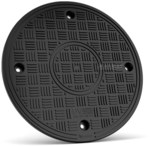
- manhole top elements – cast iron or cast iron-concrete manholes, concrete cones, plastic and reinforced concrete covers, street or rain inlets; they differ in load class according to EN-124 (class A15, B125, C250, D400, E600, F900);
- connecting elements – telescopic tubes, cuffs, seals, “in situ” inserts.
The wells differ in size. We encourage you to familiarize yourself with our entire offer. Order high-quality plastic wells from the Onninen wholesaler. If you have any questions, contact us - we will provide comprehensive answers to all your questions!