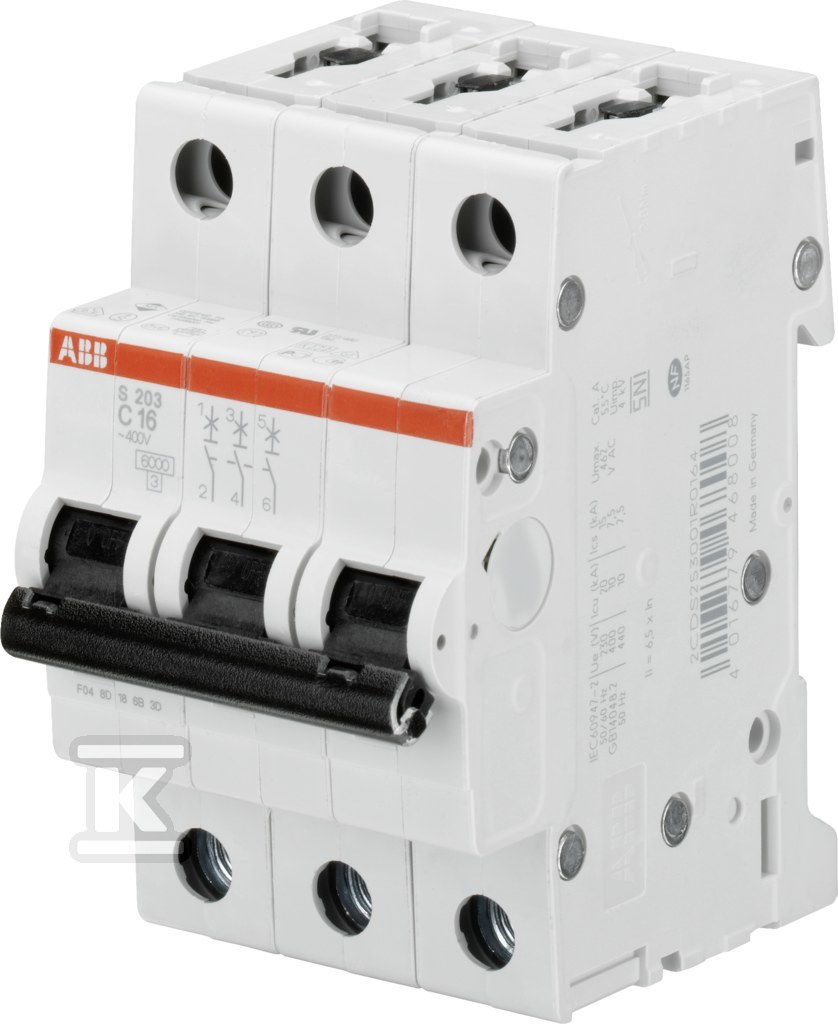
Overcurrent circuit breaker, 3P, C characteristic, 10A, 6kA, AC | S203-C10 2CDS253001R0104



Suggested products
TECHNICAL DATA
Sales unit dimensions and weight: 1 pcs
Overcurrent circuit breaker, 3P, C characteristic, 10A, 6kA, AC | S203-C10 2CDS253001R0104
Overcurrent circuit breaker from the S200 series is a reliable protection for electrical installations against overloads and short circuits. Designed for use with AC installations, it provides effective protection for both end users and installers. The construction based on the proven C characteristic guarantees appropriate selectivity and minimizes the risk of unnecessary circuit tripping.
Protection and functionality
This three-pole (3P) circuit breaker with a rated current of 10A is designed to operate in networks with a voltage of 400V. Its short-circuit breaking capacity of 6kA (at 400V) and 20kA (at 230V) ensures safety even in the event of large surge currents. The C characteristic means that the circuit breaker reacts with a delay to short-term current surges, which is particularly important when connecting devices with motors or other elements generating high starting currents – this avoids unwanted circuit disconnection when starting the device. In addition, energy limitation class 3 and surge category III confirm its resistance to network disturbances.
Installation and compatibility
The S203-C10 circuit breaker occupies 3 modules on a DIN rail, which facilitates its installation in electrical distribution boards. Adapted to operate at temperatures from -25°C to 55°C, it can be used in a wide range of environmental conditions. The possibility of connecting wires with a cross-section from 0.75 mm² to 35 mm² (solid) or from 0.75 mm² to 25 mm² (stranded) provides flexibility when selecting supply wires. The IP20 degree of protection protects against accidental contact, but does not provide protection against water or dust – remember to use a suitable enclosure for the distribution board. Power losses of 6.3W are typical for this type of device and should not significantly affect the energy efficiency of the installation.