Residual current devices
(393 )
(8)
Shipping tomorrow

Delivery from
11,07 zł
(5)
Shipping tomorrow
Delivery from
11,07 zł
(2)
Shipping tomorrow
Delivery from
11,07 zł
(4)
Shipping tomorrow
Delivery from
11,07 zł
(3)
Shipping tomorrow
Delivery from
11,07 zł
Shipping tomorrow
Delivery from
11,07 zł
(3)
Shipping tomorrow
Delivery from
11,07 zł
(2)
Shipping tomorrow
Delivery from
11,07 zł
(1)
Shipping tomorrow
Delivery from
11,07 zł
(3)
Shipping tomorrow
Delivery from
11,07 zł
(4)
Shipping tomorrow
Delivery from
11,07 zł
Shipping tomorrow
Delivery from
11,07 zł
(2)
Shipping tomorrow
Delivery from
11,07 zł
(3)
Shipping tomorrow
Delivery from
11,07 zł
Shipping tomorrow
Delivery from
11,07 zł
Shipping tomorrow
Delivery from
11,07 zł
(1)
Shipping tomorrow
Delivery from
11,07 zł

(2)
Shipping tomorrow
Delivery from
11,07 zł
Shipping tomorrow
Delivery from
11,07 zł
(1)
Shipping tomorrow
Delivery from
11,07 zł
(1)
Shipping tomorrow
Delivery from
11,07 zł
(1)
Shipping tomorrow
Delivery from
11,07 zł
Shipping tomorrow
Delivery from
11,07 zł
Shipping tomorrow
Delivery from
11,07 zł

(1)
Shipping tomorrow
Delivery from
11,07 zł
Shipping tomorrow
Delivery from
11,07 zł
Shipping tomorrow
Delivery from
11,07 zł
Shipping tomorrow
Delivery from
11,07 zł
Shipping tomorrow
Delivery from
11,07 zł
Shipping tomorrow
Delivery from
11,07 zł
Shipping tomorrow
Delivery from
11,07 zł

Shipping tomorrow
Delivery from
11,07 zł
Shipping tomorrow
Delivery from
11,07 zł
Shipping tomorrow
Delivery from
11,07 zł
Shipping tomorrow
Delivery from
11,07 zł
Shipping tomorrow
Delivery from
11,07 zł
Shipping tomorrow
Delivery from
11,07 zł
Shipping tomorrow
Delivery from
11,07 zł
Shipping tomorrow
Delivery from
11,07 zł
(1)
Shipping tomorrow
Delivery from
11,07 zł
Shipping tomorrow
Delivery from
11,07 zł
Shipping tomorrow
Delivery from
11,07 zł
Shipping tomorrow
Delivery from
11,07 zł
_t.jpg)
(1)
Shipping tomorrow
Free delivery
Shipping tomorrow
Delivery from
11,07 zł
Shipping tomorrow
Delivery from
11,07 zł
Shipping tomorrow
Delivery from
11,07 zł
Shipping tomorrow
Delivery from
11,07 zł
(1)
Shipping tomorrow
Delivery from
11,07 zł
(1)
Shipping tomorrow
Delivery from
11,07 zł
Differential circuit breaker, "differential circuit breaker"
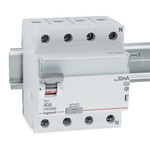
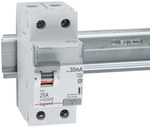
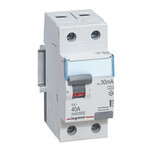
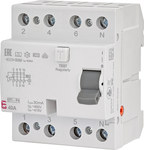
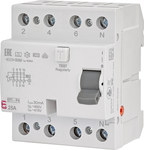
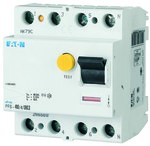
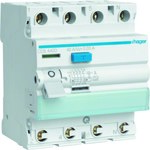
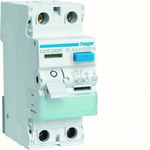
A differential circuit breaker, also known as a "differential circuit breaker", an electric shock circuit breaker, also referred to by the English abbreviations RCD and RCCB - is a safety device whose task is to disconnect the electrical circuit when a difference is detected between the current flowing into the installation and the current returning to the network.
The "differential protection" is used to protect people against electric shock in the event of direct and indirect contact and limits the effects of damage to devices connected to the installation.
It is mandatory equipment of the electrical installation.
How do differential circuit breakers work?
The residual current circuit breaker monitors the amount of current in the circuit. This means that the phase and neutral wires pass through the circuit breaker. In the event of a fault in electrical installations, where current appears in the housing of an electrical device, current leaks to ground. A similar situation occurs when the current and the human body come into direct contact. Then the circuit breaker should interrupt the current flow.
Where are differential circuit breakers used?
In TN-C installations, differential switches are not used because they do not function properly due to the lack of a protective conductor (PE) and the connection of the neutral conductor (N) to the device housing and thus to the ground.
In TN-S installations (the most common systems used in houses and apartments), where the protective and neutral wires are separated, we can use differential circuit breakers.
Experts also advise to check the correct operation of the "differential" at least once a month using the device's test button. However, do not perform too many tests so as not to wear out its mechanisms.
What types of residual current circuit breakers are there?
There are three basic types of differential circuit breakers. The first are type A circuit breakers , which are sensitive to the flow of sinusoidal and rectified pulsating current.
Type B circuit breakers are suitable for more advanced electrical installations and sense sinusoidal differential current, direct current smoothed to a frequency of 1000 Hz and direct current pulsating.
Finally, AC type circuit breakers are sensitive to sinusoidal differential current.
Division of switches according to sensitivity
Switches can also be divided according to their sensitivity. Highly sensitive switches responding to a current of 10 mA or 30 mA can be distinguished. They are most often used in single-family homes. They are also used in apartment installations.
The second type is medium-sensitivity switches, which disconnect the power supply to the circuit when a current exceeding 100 mA, 300 mA or 500 mA flows through the electrical installation. The third type is low-sensitivity switches, whose mechanisms allow for the detection of current exceeding 500 mA. They are usually used as protection in industrial enterprises.
How is a differential connected?
The differential switch should not be used as a separate element between the power source and the receiver in the installation. The device will detect when there is a current leakage, but will not protect against overheating or short circuit. Therefore, an overcurrent circuit breaker should also be installed, at least one for each differential switch.
The phase and neutral wires are connected to the differential in a single-phase circuit. The protective wire can be connected, for example, using a terminal strip.
The installation of the device in the electrical installation must be carried out by a person with permissions. Check the switches available in the Onninen wholesaler and make sure that everything in your phase cables works without any problems and with the appropriate protection.