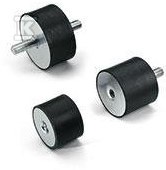
Vibration isolator DVA.1-75-40-M12-37-40 Z049930

Catalog numbers:
- DVA.1-75-40-M12-37-40
Suggested products
TECHNICAL DATA
Sales unit dimensions and weight: 1 pcs
Vibration isolator DVA.1-75-40-M12-37-40 Z049930
Vibration Isolators – Reduction of vibrations and noise in machines and equipment
Vibration isolators from the DVA.1 series are resilient-damping elements designed to reduce vibrations and noise generated by machines and equipment. Their task is to isolate the vibrating mass from the environment, which translates to improved work comfort, increased safety, and extended equipment life. They are particularly useful when mounting components such as motors, fans, or pumps.
Design and application
Vibration isolator DVA.1-75-40-M12-37-40 is characterized by a cylindrical design with a threaded pin made of galvanized steel and a damping body made of natural rubber. The external M12 thread facilitates mounting in the device or foundation structure. Rubber hardness at 40 Shore A provides effective vibration damping while maintaining adequate flexibility. This particular model, with a diameter of 75 mm and a height of 40 mm, is intended for applications requiring moderate vibration isolation.
Advantages and benefits
- Noise and vibration reduction: Reduces the noise level generated by operating machines, improving the comfort of the operator and the surroundings.
- Protection against damage: By damping vibrations, it protects delicate machine components from damage caused by resonance or dynamic overloads.
- Extended service life: Reducing dynamic loads translates to a longer service life of equipment and machines.
- Simple installation: The threaded M12 pin allows for quick and easy installation in standard threaded holes.
- Versatility: Suitable for a wide range of industrial and engineering applications where vibration isolation is required.
- Durability: Construction from galvanized steel ensures corrosion resistance and long-term reliability in harsh environmental conditions.
- Availability of different rubber hardnesses: The ability to choose the rubber hardness (40, 55 or 70 Shore A) allows you to match the damping properties to the specific requirements of the application.
Choosing the appropriate rubber hardness is crucial for the effectiveness of the isolation – soft rubber better dampens low-frequency vibrations, and hard rubber copes better with high-frequency vibrations. It is worth remembering this when selecting a vibration isolator for a specific application.