Vibration isolator DVA.2-10-10-M4-10-40 Z049853
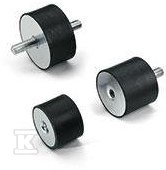

Catalog numbers:
- DVA.2-10-10-M4-10-40
Suggested products
TECHNICAL DATA
Sales unit dimensions and weight: 1 pcs
Vibration isolator DVA.2-10-10-M4-10-40 Z049853
Vibration Isolators – Reduction of Vibrations and Noise
Vibration isolator DVA.2-10-10-M4-10-40 is an element that dampens vibrations, impacts, and noise generated by machines and equipment. Its construction, based on a combination of galvanized steel and natural rubber, allows for effective vibration isolation, which translates to increased work comfort, safety, and extended equipment life. It is a universal solution used both in isolating machines from the ground (active vibration isolation) and in isolating equipment from external vibrations (passive vibration isolation).
Construction and application
The vibration isolator consists of a threaded pin and an insert with a non-through threaded hole, made of galvanized steel. The damping body is made of natural rubber (NR) with a hardness of 40 Shore A ±5. This combination of materials provides optimal damping properties with simultaneous strength and durability. It is used in mounting components of devices such as motors, fans, or pumps. Thanks to the precise selection of parameters, the vibration isolator effectively reduces the transmission of vibrations to the device structure or foundation.
Key features and benefits
- Effective vibration reduction: Natural rubber with a hardness of 40 Shore A provides high vibration damping, minimizing noise and increasing work comfort.
- Durable construction: Made of galvanized steel guarantees corrosion resistance and long-term operation.
- Easy installation: Threaded pin and insert allow for quick and secure installation in various applications.
- Versatile application: Ideal for isolating machines, equipment, and structural elements exposed to vibrations.
- Increased equipment life: Damping vibrations reduces mechanical loads on structural elements, which translates to a longer equipment life.
- Improved safety: Reducing vibrations improves working conditions and reduces the risk of accidents.
- Availability of different rubber hardnesses: The ability to choose the appropriate rubber hardness (40, 55 or 70 Shore A) allows for optimal adaptation to specific application requirements.
It is important to select the correct vibration isolator for the load and vibration frequency to ensure optimal damping efficiency.